
Is Schizophrenia Curable? What Recovery Really Looks Like
Is schizophrenia curable? Learn why doctors say there is no cure yet, how many people recover, what helps, and what recovery can look like.

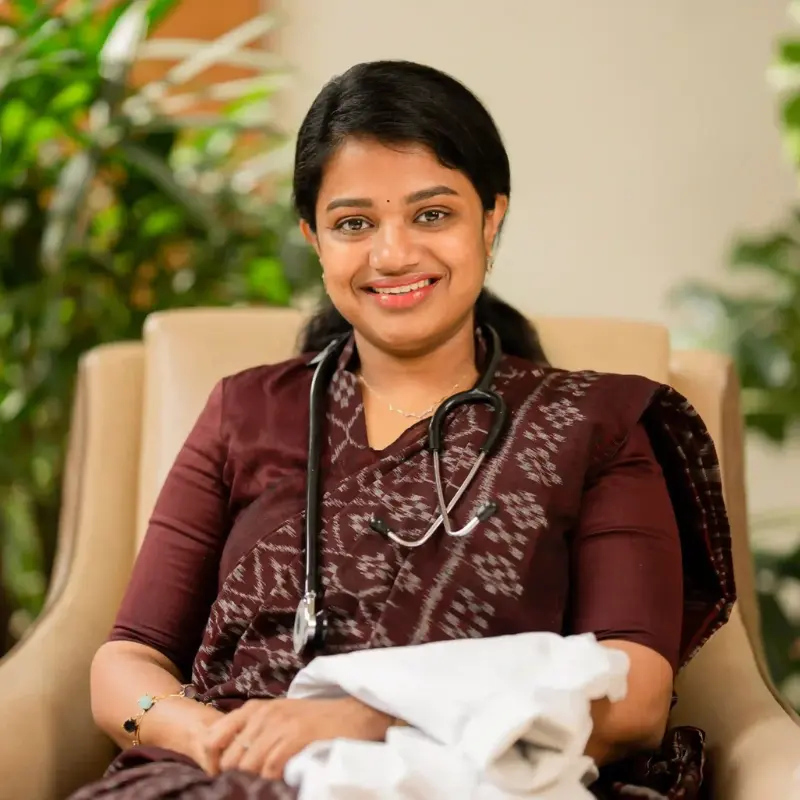
MBBS, MD, DNB(Psychiatry) brings over 12 years of clinical experience in psychiatry to her work at Abhasa Rehab and Wellness.
Dr. Shree Aarthi
MBBS, MD, DNB(Psychiatry) brings over 12 years of clinical experience in psychiatry to her work at Abhasa Rehab and Wellness.
- Last Medically Reviewed: 2026-10-15
- Published: 2026-10-15
- Last Updated: 2026-10-15
- 19 min read

Key Takeaways
- Schizophrenia has no cure today, but it is treatable. The WHO and the American Psychiatric Association (APA) both say so.[1][2]
- Recovery is common. The figure you hear depends on the definition: about 1 in 7, 38% or at least 1 in 3.[3][4]
- Cure, remission and recovery are three different things. Remission and recovery are real goals even when there is no cure.
- Starting care early and staying with it improves the odds. So do family support, therapy, work help and staying away from cannabis.
- Never stop medicine on your own. Be careful with anyone who promises a guaranteed cure.
- Overview
- Evidence
- What Helps
- Outlook & Support
If someone you love has been told they have schizophrenia, one question usually comes first. Can it be cured? You may have heard “yes” from one person and “no” from another.
Both can be said honestly, because people use the word “cure” in different ways. The World Health Organization (WHO) says at least one in three people with schizophrenia will be able to fully recover [1].
This page explains what cure and recovery mean, what the research shows, and what helps. To read about the illness itself, see our guide to schizophrenia.
QUICK ANSWER
What is schizophrenia? Schizophrenia is a lasting mental health condition that changes how a person thinks, feels and understands what is real. It can cause hallucinations, delusions and disorganised thinking. It is treatable, and many people recover well with the right care [1][2]
Is Schizophrenia Curable?
Schizophrenia is not curable at present, if cure means the illness is gone for good. It is treatable, and many people recover. The WHO says at least one in three people can fully recover, and the American Psychiatric Association says many people under treatment do well with minimal symptoms. [1][2]
So, curable or not? The honest short answer is this: no treatment can remove schizophrenia for good right now, but it is very much treatable. The APA puts it plainly. There is no cure, yet many patients under treatment do well with minimal symptoms [2]
Families often ask, “Can schizophrenia be cured?” because they want to know if life can go back to normal. Here is what “not curable” does and does not mean.
- It does not mean nothing helps. With treatment, most symptoms greatly improve [2]
- It does not mean the illness only gets worse. In a review of long-term studies, a worsening course was not typical after the first two years [4]
- It does not mean a person cannot study, work or have close relationships. Many do.
- It does mean care often continues for a long time. Stopping treatment is linked to relapse, which is when symptoms return [9]
Some doctors say “curable” when they mean “the person can get well.” Others say “not curable” when they mean “the illness can come back.” Neither is wrong. The next section explains the words, so you can follow what your own doctor means.
At least 1 in 3 people with schizophrenia will be able to fully recover [1]
– World Health Organization
What Do Cure, Remission and Recovery Mean?
A cure would mean the illness is gone for good and no treatment is needed. Remission means symptoms have eased to a low level.
Recovery means symptoms are low and the person is also managing daily life, study or work, and relationships. Doctors can talk about remission and recovery today, but not cure [2][6]
These three words are often mixed up, so here they are side by side.
| Word | What it means | What it does not mean |
|---|---|---|
|
Word
Cure
|
What it means
The illness is gone for good, and treatment is no longer needed.
|
What it does not mean
Not available for schizophrenia today [2]
|
|
Word
Remission
|
What it means
Symptoms have eased to a low level and stay there. Experts have agreed criteria for how to judge this [6]
|
What it does not mean
The illness is gone. Care usually continues.
|
|
Word
Recovery
|
What it means
Symptoms are low and the person manages daily life, study or work, and relationships [3]
|
What it does not mean
A life with no ups and downs. Some symptoms may come and go.
|
Remission is the “quiet” stage. In 2005, an expert group published the first agreed criteria for symptomatic remission in schizophrenia. They set levels of improvement a person must reach and then keep [6]
Recovery is wider. It looks at the whole person, not only symptoms. One review of 97 papers on personal recovery found five common parts: connectedness, hope and optimism, identity, meaning in life, and empowerment [7].
The same review found that studies from minority ethnic groups often added spirituality, stigma and collective ideas of recovery. Many Indian families will recognise this. Recovery is rarely only one person’s task.
How Many People Recover?
Estimates run from about 1 in 7 to more than 1 in 3, because researchers count different things. A strict test of clinical and social recovery found 13.5%. Studies of people after a first episode of psychosis found remission in 58% and recovery in 38%. The WHO says at least one in three can fully recover [3][4][5]
If the numbers seem to disagree, that is because they measure different things. The table sets them side by side.
| Source | Who was studied | What counted | Result |
|---|---|---|---|
|
Source
WHO, 2026 [1]
|
Who was studied
People with schizophrenia worldwide
|
What counted
Full recovery
|
Result
At least 1 in 3
|
|
Source
Jääskeläinen et al., 2013 [3]
|
Who was studied
50 studies of schizophrenia and related conditions
|
What counted
Better clinical and social life, with at least one lasting 2 years
|
Result
Median 13.5% (range 8.1% to 20.0%), about 1 in 7
|
|
Source
Lally et al., 2017 [4]
|
Who was studied
79 studies, 19,072 people after a first episode of psychosis
|
What counted
Remission (mean follow-up 5.5 years)
|
Result
58%
|
|
Source
Lally et al., 2017 [4]
|
Who was studied
Same review
|
What counted
Recovery (mean follow-up 7.2 years)
|
Result
38%
|
|
Source
Harrison et al., 2001 [5]
|
Who was studied
18 groups followed for 15 and 25 years
|
What counted
Favourable long-term outcome
|
Result
About 50% of those still alive
|
A few things stand out.
The 13.5% figure needed improvement in both symptoms and social life, with at least one lasting two years [3]. The more general measures give higher numbers.
In studies that followed people for 15 and 25 years, about half of those still alive had a favourable outcome. Outcomes differed a lot between places [5].
Among people whose early illness did not ease, 16% still reached recovery later [5].
Why Do Doctors Say There Is No Cure?
Doctors say there is no cure because no treatment yet removes schizophrenia for good. Medicine eases symptoms and lowers the chance of relapse, but it does not make the illness disappear. Genes carry a large share of the risk, yet they are not the whole story. [2][8]
Medicine matters a great deal. In 65 trials with 6,493 people, symptoms returned within about a year in 27% of people taking antipsychotic medicine and in 64% of people taking a dummy tablet [9].
The APA says treatment lowers the chance of a recurrence, and that therapy should continue after symptoms are under control [2].
What about causes? A Danish study of 31,524 pairs of twins estimated that genes explain about 79% of the risk of schizophrenia. But when one identical twin had it, the other did too in only 33% of pairs. In non-identical twins, it was 7%. The authors concluded that risk is not set by genes alone [8].
Two things follow for families. Nobody caused this: not a parent, not a partner and not the person themselves. And research is moving, with newer and safer treatments in development [2].
What Does Recovery Look Like in Daily Life?
Recovery shows up in everyday life. It may look like steadier sleep and eating, taking care of oneself, handling stress, returning to study or work, and closer relationships.
Voices or suspicious thoughts may still come and go. Recovery measures include both symptoms and social life.[3]
Families often watch for symptoms alone. It helps to watch for life as well. These are signs many people and families look for.
- Sleep and routine. Sleeping at regular times, eating steadily and keeping a daily rhythm.
- Looking after oneself. Washing, dressing, taking medicine and going to appointments.
- Handling stress. Knowing what makes things worse and what helps.
- Study or work. Going back to college, a job or a daily activity with meaning.
- Relationships. Spending time with family and friends, and taking part at home.
- Knowing early warning signs. Therapy and support can help a person spot early signs of relapse, which can prolong remission.[2]
Remission is not all or nothing. Some symptoms can remain while a person still does well. The APA says many people under treatment do well with minimal symptoms.[2]
Our family support page has more guidance for relatives who want to help day to day.
What Improves the Chances of Recovery?
Starting treatment early, staying with care, involving the family, adding therapy and work support, avoiding cannabis and staying active all improve the chances of recovery.
These steps work alongside medicine, not in place of it. No single step guarantees recovery, but together they give a person the best footing.
The steps below show how a good plan often grows.
- See a psychiatrist early. Do not wait for things to settle by themselves.
- Agree a plan with medicine at its centre. Take it as prescribed.
- Add family sessions and education. Families learn what helps and what to avoid.
- Add therapy and rehabilitation. This can include cognitive behavioural therapy (CBT) for psychosis, cognitive remediation, and daily-living or work training.
- Plan for early warning signs. Agree who to call and what to do.
- Review often. The plan changes as the person changes.
| Step | What the research found |
|---|---|
|
Step
Early treatment
|
What the research found
A review of 33 samples found that a longer time with untreated psychosis went with worse outcomes: more symptoms, less chance of remission and poorer social life. The links were small (r 0.13 to 0.18), and the authors said early treatment may have "subtle" benefits. It was not linked to work or quality of life.[11]
|
|
Step
Early-intervention services
|
What the research found
Across 10 trials with 2,176 people, specialist early services did better than usual care on all 13 measures. The chance of a hospital admission was lower (RR 0.74), and involvement in school or work was a little higher (RR 1.13).[12]
|
|
Step
Family work
|
What the research found
Across 53 trials, family intervention may reduce relapse (RR 0.55 in 32 trials) and help people keep taking medicine. The authors warned that effects may be overestimated because many trials were of poor quality.[13]
|
|
Step
CBT for psychosis
|
What the research found
A small effect on symptoms overall. It shrinks further when raters did not know who got the therapy.[14]
|
|
Step
Cognitive remediation
|
What the research found
Across 40 studies with 2,104 people, it improved thinking skills and daily functioning. The gain in functioning was stronger when given with other rehabilitation.[15]
|
|
Step
Supported employment
|
What the research found
Across 14 trials with 2,265 people, supported employment raised the chance of getting some paid work (RR 3.24). The evidence quality was rated very low.[16]
|
|
Step
Exercise
|
What the research found
Aerobic exercise improved thinking skills in 10 trials with 385 people.[17]
|
|
Step
Avoiding cannabis
|
What the research found
Across 24 studies with 16,565 people, those who kept using cannabis after psychosis began relapsed more than non-users. Stopping was not linked to more relapse.[18]
|
|
Step
Taking medicine regularly
|
What the research found
After a first episode, stopping medicine raised relapse risk about 4 times. Ongoing substance use raised it about 3 times.[10]
|
"Recovery is built from many small, steady steps. The medicine is one step. The family, the routine and the right therapy are the others. None of them has to be perfect."
- Dr. Divya, MBBS, MD (Psychiatry), MBA (Healthcare), Residential Psychiatrist, Abhasa Rehab and Wellness
You can read more about how treatment is put together on our schizophrenia treatment page. Our schools of therapy page explains the talking therapies in plain words.
What If Treatment Has Not Worked So Far?
A poor response to one treatment does not mean recovery is out of reach. Doctors first check the basics: the right diagnosis, whether doses are being taken, and alcohol or drug use. If two suitable antipsychotics have not worked, NICE advises offering clozapine, which has the strongest evidence for treatment-resistant schizophrenia[23][24].
Doctors use the term “treatment-resistant” with care. An expert group agreed that it should mean at least two different antipsychotic trials, each with enough dose and time, with adherence checked.[22] That means a medicine that was skipped or stopped early does not count as a failed trial.
Clozapine is the usual next step. A review of 21 papers found it better than other antipsychotics in treatment-refractory schizophrenia, with a number needed to treat of 9.[23] Your psychiatrist will explain what monitoring it needs before starting. Our schizophrenia treatment page covers medicines in more detail.
There is also hope in the long view. In the 15- and 25-year studies, 16% of people whose early illness did not ease still reached recovery in later years.[5] The early years are important, but they are not the only years.
Is the Outlook Different in India?
The picture in India is mixed. A 20-year study from Chennai found that of 61 people with complete data, 5 had recovered fully, 5 were continuously ill, and most had several relapses.
The bigger issue is access: about 72% of people living with schizophrenia spectrum disorders in India were not in treatment[19][21].
It is often said that people with schizophrenia do better in developing countries. The research is not that simple.
The Madras Longitudinal Study followed 90 people after their first episode. After 20 years, complete data were available for 61. Sixteen had died and 13 could not be found.
Five had recovered completely and five were continuously ill. Most had several relapses, with or without full remission in between. Their daily functioning and marriage and work rates were better than in many studies from richer countries.[19]
Another review looked at 23 studies from 11 low- and middle-income countries. It found that outcomes varied, and that the old idea of a better outlook in developing countries needs a second look. It also said researchers must count early deaths and suicide.[20]
The larger worry today is getting care at all. Worldwide, only 29% of people with psychosis receive specialist mental health care.[1] In India, the National Mental Health Survey found a treatment gap of 72% for current cases, and 83.3% in urban non-metro areas.[21] This is why early help matters so much.
In India you can call Tele-MANAS, the government mental health helpline, at 14416 or 1-800-891-4416. It offers support in 20 languages.[26] The Mental Healthcare Act, 2017 also gives every person the right to access mental healthcare and treatment from services run or funded by the government.[27]
How Can You Spot a "Guaranteed Cure" Claim?
QUICK ANSWER
Be careful with any person, product or centre that promises a certain cure for schizophrenia. The WHO and the APA say there is no cure today. Ask for evidence, talk to a psychiatrist, and do not stop prescribed medicine. Stopping medicine is one of the strongest links to relapse.[1][2][10]
A promise of a quick, sure cure can feel like a relief. Slow down and ask these questions.
- What is the evidence, and where was it published?
- Does the plan ask the person to stop medicine without a psychiatrist’s advice?
- Is the family being asked to pay a large amount before any assessment?
- Is a doctor involved in the plan?
Please do not stop medicine because you feel well. In trials where people were taken off medicine, relapse within about a year was 64%, compared with 27% for those who stayed on it.[9] After a first episode, not taking medicine raised relapse risk about four times.[10]
There is a careful exception worth knowing about. A Dutch trial followed people with a first episode who had been in remission for six months. Some got a guided plan to reduce the dose or stop. After seven years, recovery was higher in the reduction group (40.4% compared with 17.6%).
The trial was open, so people knew which plan they had. The authors said more studies are needed before this should be used in general practice.[25] Only a psychiatrist can decide when and how to try reducing medicine. It is never a family decision.
How Can Families Help Recovery?
Families help most by staying calm, learning about the illness, avoiding blame and harsh criticism, and taking part in treatment.
After a first episode, relapse risk was about 2.3 times higher when carers made critical comments. Family programmes may lower relapse, so ask the care team whether they are offered.[10][13]
You do not need to say everything perfectly. You need to be steady.
- Keep routines simple. Meals, sleep and medicine at the same times each day.
- Use calm, short sentences. Argue less. Repeat kindly.
- Notice early signs. A change in sleep, more suspicion or withdrawing can be early signs. Call the care team.
- Write down questions before each visit and bring them.
- Look after yourself. A carer who is rested helps more.
If travel or time makes visits hard, ask about follow-up conversations online through our online consultation service. Our family support page has more.
How Does Abhasa Support Recovery?
At Abhasa Rehab and Wellness, schizophrenia care combines medication management with physical health monitoring.
We offer long-acting injection options where suitable, along with psychoeducation, cognitive behavioural therapy for psychosis, cognitive remediation, social skills, daily-living and vocational training, and family sessions. A structured daily routine and social setting support recovery alongside treatment.
We offer care in Tamil Nadu and near Mumbai, so families can choose the setting that suits them. You can read about each on our pages for schizophrenia care in Tamil Nadu and schizophrenia care near Mumbai.
Our admission guide lays out each step before you decide anything. If another condition such as alcohol or cannabis use is also present, see our page on dual diagnosis.
We do not list prices here, because needs differ. Our team can explain your options on a call.
Frequently Asked Questions
Some people reach remission or full recovery, but it is not safe to wait and see. Symptoms can ease with treatment, and the WHO says at least one in three people can fully recover.[1] Without care, relapse is common. Please see a psychiatrist rather than wait.
Usually not. In a review of long-term studies, recovery rates were stable after the first two years, which suggests a worsening course is not typical.[4] Relapses can still happen, so regular care matters.
Early care can improve the odds, but it is not a promise of cure. Early-intervention services did better than usual care on all 13 measures in 10 trials.[12] Starting sooner is still the best step a family can take.
Yes, many can, with the right support. Across 14 trials, supported employment raised the chance of getting some paid work, though the evidence quality was rated very low.[16] Ask the care team about vocational support.
You can call Tele-MANAS, the government helpline, on 14416 or 1-800-891-4416.[26] You can also reach our team through our contact page. We will explain your options calmly and without pressure.
There is currently no established permanent cure for schizophrenia. However, effective treatments can help people manage symptoms and achieve meaningful recovery.
About 1 in 7 people may meet stricter recovery criteria requiring both symptom and social recovery for at least two years [3], while the WHO reports that at least 1 in 3 people can fully recover under its broader definition [1]. Recovery varies from person to person, and ongoing treatment and follow-up may be needed.
Taking the Next Step
Recovery from schizophrenia is common enough to plan for, and uncertain enough that it deserves honest planning.
That is not a promise. It is a reason to begin. Write your questions down, bring a family member, and ask for help early. You are not alone in this.
Questions to Ask Your Psychiatrist
You do not have to decide anything today. Bring a family member if you can, and ask the psychiatrist to explain anything that is unclear.
- What do you think recovery could mean for us?
- What stage is the illness at now?
- What is the plan if the first medicine does not help enough?
- Which therapies and family sessions can we add?
- What are the early warning signs, and who do we call?
- What should we avoid, including cannabis and alcohol?
- How will we judge progress?
- When would any change to medicine be considered?
Reach out for a confidential, no-pressure conversation about recovery for you or someone you love.
Continue Learning
About the Author
Written by: Abhasa Rehab and Wellness Clinical Content Team.
Based on evidence from the WHO, the American Psychiatric Association, NICE and the peer-reviewed research listed below.
References
[1] World Health Organization. Schizophrenia. Fact sheet, updated 11 September 2026. https://www.who.int/news-room/fact-sheets/detail/schizophrenia
[2] American Psychiatric Association. What Is Schizophrenia? Patient and family information (accessed 2026). https://www.psychiatry.org/patients-families/schizophrenia/what-is-schizophrenia
[3] Jääskeläinen E, et al. A systematic review and meta-analysis of recovery in schizophrenia. Schizophrenia Bulletin, 2013. PMID 23172003. https://pubmed.ncbi.nlm.nih.gov/23172003/
[4] Lally J, et al. Remission and recovery from first-episode psychosis in adults: systematic review and meta-analysis of long-term outcome studies. British Journal of Psychiatry, 2017. PMID 28982659. https://pubmed.ncbi.nlm.nih.gov/28982659/
[5] Harrison G, et al. Recovery from psychotic illness: a 15- and 25-year international follow-up study. British Journal of Psychiatry, 2001. PMID 11388966. https://pubmed.ncbi.nlm.nih.gov/11388966/
[6] Andreasen NC, et al. Remission in schizophrenia: proposed criteria and rationale for consensus. American Journal of Psychiatry, 2005. PMID 15741458. https://pubmed.ncbi.nlm.nih.gov/15741458/
[7] Leamy M, et al. Conceptual framework for personal recovery in mental health: systematic review and narrative synthesis. British Journal of Psychiatry, 2011. PMID 22130746. https://pubmed.ncbi.nlm.nih.gov/22130746/
[8] Hilker R, et al. Heritability of schizophrenia and schizophrenia spectrum based on the nationwide Danish twin register. Biological Psychiatry, 2018. PMID 28987712. https://pubmed.ncbi.nlm.nih.gov/28987712/
[9] Leucht S, et al. Antipsychotic drugs versus placebo for relapse prevention in schizophrenia: a systematic review and meta-analysis. The Lancet, 2012. PMID 22560607. https://pubmed.ncbi.nlm.nih.gov/22560607/
[10] Alvarez-Jimenez M, et al. Risk factors for relapse following treatment for first episode psychosis: a systematic review and meta-analysis of longitudinal studies. Schizophrenia Research, 2012. PMID 22658527. https://pubmed.ncbi.nlm.nih.gov/22658527/
[11] Penttilä M, et al. Duration of untreated psychosis as predictor of long-term outcome in schizophrenia: systematic review and meta-analysis. British Journal of Psychiatry, 2014. PMID 25252316. https://pubmed.ncbi.nlm.nih.gov/25252316/
[12] Correll CU, et al. Comparison of early intervention services vs treatment as usual for early-phase psychosis: a systematic review, meta-analysis, and meta-regression. JAMA Psychiatry, 2018. PMID 29800949. https://pubmed.ncbi.nlm.nih.gov/29800949/
[13] Pharoah F, et al. Family intervention for schizophrenia. Cochrane Database of Systematic Reviews, 2010. PMID 21154340. https://pubmed.ncbi.nlm.nih.gov/21154340/
[14] Jauhar S, et al. Cognitive-behavioural therapy for the symptoms of schizophrenia: systematic review and meta-analysis with examination of potential bias. British Journal of Psychiatry, 2014. PMID 24385461. https://pubmed.ncbi.nlm.nih.gov/24385461/
[15] Wykes T, et al. A meta-analysis of cognitive remediation for schizophrenia: methodology and effect sizes. American Journal of Psychiatry, 2011. PMID 21406461. https://pubmed.ncbi.nlm.nih.gov/21406461/
[16] Kinoshita Y, et al. Supported employment for adults with severe mental illness. Cochrane Database of Systematic Reviews, 2013. PMID 24030739. https://pubmed.ncbi.nlm.nih.gov/24030739/
[17] Firth J, et al. Aerobic exercise improves cognitive functioning in people with schizophrenia: a systematic review and meta-analysis. Schizophrenia Bulletin, 2017. PMID 27521348. https://pubmed.ncbi.nlm.nih.gov/27521348/
[18] Schoeler T, et al. Continued versus discontinued cannabis use in patients with psychosis: a systematic review and meta-analysis. The Lancet Psychiatry, 2016. PMID 26777297. https://pubmed.ncbi.nlm.nih.gov/26777297/
[19] Thara R. Twenty-year course of schizophrenia: the Madras Longitudinal Study. Canadian Journal of Psychiatry, 2004. PMID 15453106. https://pubmed.ncbi.nlm.nih.gov/15453106/
[20] Cohen A, et al. Questioning an axiom: better prognosis for schizophrenia in the developing world? Schizophrenia Bulletin, 2008. PMID 17905787. https://pubmed.ncbi.nlm.nih.gov/17905787/
[21] Hegde PR, et al. Schizophrenia spectrum disorders in India: a population-based study. Indian Journal of Psychiatry, 2023. PMID 38298877. https://pubmed.ncbi.nlm.nih.gov/38298877/
[22] Howes OD, et al. Treatment-Resistant Schizophrenia: Treatment Response and Resistance in Psychosis (TRRIP) Working Group consensus guidelines on diagnosis and terminology. American Journal of Psychiatry, 2017. PMID 27919182. https://pubmed.ncbi.nlm.nih.gov/27919182/
[23] Siskind D, et al. Clozapine v. first- and second-generation antipsychotics in treatment-refractory schizophrenia: systematic review and meta-analysis. British Journal of Psychiatry, 2016. PMID 27388573. https://pubmed.ncbi.nlm.nih.gov/27388573/
[24] National Institute for Health and Care Excellence. Psychosis and schizophrenia in adults: prevention and management. Clinical guideline CG178, 2014 (updated 2020 and 2021). https://www.nice.org.uk/guidance/cg178
[25] Wunderink L, et al. Recovery in remitted first-episode psychosis at 7 years of follow-up of an early dose reduction/discontinuation or maintenance treatment strategy: long-term follow-up of a 2-year randomized clinical trial. JAMA Psychiatry, 2013. PMID 23824214. https://pubmed.ncbi.nlm.nih.gov/23824214/
[26] Ministry of Health and Family Welfare, Government of India. Tele MANAS: World Mental Health Day press release, 10 October 2024. Press Information Bureau. https://www.pib.gov.in/PressReleasePage.aspx?PRID=2063830
[27] Government of India. The Mental Healthcare Act, 2017 (No. 10 of 2017). https://egazette.gov.in/WriteReadData/2017/175248.pdf
- Reviewed by
- Senior Consultant Psychiatrist
- Abhasa Rehab and Wellness
Medical Disclaimer: This content is for informational purposes only and does not constitute medical advice, diagnosis, or treatment. Always consult qualified healthcare professionals for medical concerns. Individual outcomes vary based on multiple factors including treatment adherence and co-occurring conditions.
If you or someone you know is in immediate danger:
Emergency Helplines:
- iCall: 9152987821
- Vandrevala Foundation: 1860-2662-345
- NIMHANS: 080-46110007
- Abhasa 24/7 Helpline: +91-73736-44444
If experiencing a medical emergency, call 112 or visit your nearest emergency room.