
Luxury Schizophrenia Rehabilitation in Coimbatore

Schizophrenia is a condition that changes a person from the inside out. It changes how someone thinks, feels, and acts. That’s why finding the right rehab for schizophrenia is not just important, it’s essential to helping them rebuild from within.
Private consultation. No pressure.
2:1 Staff-to-client ratio
3 Healing Spaces
Personalised Treatments
360° Healing
2:1 Staff-to-client ratio
3 Healing Spaces
Personalised Treatments
360° Healing
Gallery
Luxury Schizophrenia Rehabilitation in India

Schizophrenia is a condition that changes a person from the inside out. It changes how someone thinks, feels, and acts. That’s why finding the right rehab for schizophrenia is not just important, it’s essential to helping them rebuild from within.[1]
Schizophrenia can make them say things that don’t make sense. They may seem scared, confused, or very different from how they used to be. As a family member, this can be hard to watch. You might feel sad, tired, and unsure what to do next.
Maybe you’ve tried doctors and waited for things to improve. But now, you feel your loved one needs something more—a comprehensive program that integrates medical care with structured rehabilitation. [2] That’s where rehab for schizophrenia can help, not just with treatment, but with complete care, support, and guidance.
At Abhasa, we give people a safe and peaceful place to heal. Our schizophrenia rehabilitation program is not like a hospital. It’s a calm, private place where people follow daily routines, guided by caring experts, and learn to feel better.
And family involvement in rehab is also part of the recovery journey.[3] We guide you, support you, and walk with you through this journey.
As a trusted schizophrenia treatment centre in India, we make sure your loved one gets long-term care, emotional support, and a second chance at a better life.
If you are looking for schizophrenia rehabilitation that truly understands your loved one’s pain and gives you hope, Abhasa is here.
Understanding Schizophrenia Rehabilitation
Many people believe that schizophrenia can only be treated with pills or hospital stays. But that’s not true. Rehabilitation in schizophrenia is about helping someone rebuild their daily life, their confidence, and their ability to function, even if the condition doesn’t entirely go away.[1]
What does “rehabilitation” really mean?
For us at Abhasa, rehabilitation for schizophrenia patients means steady support. It means giving the person structure, emotional safety, and a calm routine. They don’t just survive the day, they learn how to live again.[1]
Through therapy, healthy habits, and constant guidance, our clients slowly gain skills to handle their mind, body, and emotions.
It’s not a one-size-fits-all process
Every person experiences schizophrenia differently. That’s why our approach to rehabilitation for schizophrenia patients is deeply personalised.[2] Some may need help with simple things like getting out of bed. Others may be ready to explore group sessions and skills training.
We personalise our care to suit each client: gently, respectfully, and patiently.
What makes rehab different from home care?
At home, days can be unpredictable. There may be emotional triggers, family stress, or gaps in care. In a centre like Abhasa, everything is designed for stability.[1]
Clients follow a routine. They wake up at the same time, eat balanced meals, join individualised and group therapy and group activities, rest and reflect, and end the day calmly, not chaotically.
That consistency is at the heart of rehabilitation in schizophrenia.
The role of community and connection
We also help clients feel less alone. In rehabilitation for schizophrenia patients, connection is key.[1] Group activities, peer support, and shared spaces allow them to build trust and social comfort, without pressure.
It’s not about fixing someone. Rehabilitation for schizophrenia is about showing them they can still belong, grow, and move forward.
A journey toward real recovery
With time, structure, and care, rehabilitation in schizophrenia helps clients work toward feeling safer and more stable in their daily lives.[1]
And for the family, it brings peace of mind, knowing their loved one is not just being treated, but truly supported.
If you’re wondering whether rehabilitation for schizophrenia patients can make a difference, the answer is yes. We’ve seen it. And we help make it possible, one steady step at a time.
What does “rehabilitation” really mean?
For us at Abhasa, rehabilitation for schizophrenia patients means steady support. It means giving the person structure, emotional safety, and a calm routine. They don’t just survive the day, they learn how to live again.[1]
Through therapy, healthy habits, and constant guidance, our clients slowly gain skills to handle their mind, body, and emotions.
It’s not a one-size-fits-all process
Every person experiences schizophrenia differently. That’s why our approach to rehabilitation for schizophrenia patients is deeply personalised.[2] Some may need help with simple things like getting out of bed. Others may be ready to explore group sessions and skills training.
We personalise our care to suit each client: gently, respectfully, and patiently.
What makes rehab different from home care?
At home, days can be unpredictable. There may be emotional triggers, family stress, or gaps in care. In a centre like Abhasa, everything is designed for stability.[1]
Clients follow a routine. They wake up at the same time, eat balanced meals, join individualised and group therapy and group activities, rest and reflect, and end the day calmly, not chaotically.
That consistency is at the heart of rehabilitation in schizophrenia.
The role of community and connection
We also help clients feel less alone. In rehabilitation for schizophrenia patients, connection is key.[1] Group activities, peer support, and shared spaces allow them to build trust and social comfort, without pressure.
It’s not about fixing someone. Rehabilitation for schizophrenia is about showing them they can still belong, grow, and move forward.
A journey toward real recovery
With time, structure, and care, rehabilitation in schizophrenia helps clients work toward feeling safer and more stable in their daily lives. [1]
And for the family, it brings peace of mind, knowing their loved one is not just being treated, but truly supported.
If you’re wondering whether rehabilitation for schizophrenia patients can make a difference, the answer is yes. We’ve seen it. And we help make it possible, one steady step at a time.
Why Choose Schizophrenia Rehabilitation?

Because home care has its limits
You may be doing everything you can, like giving medicines, offering support, and staying strong for your loved one. But still, things don’t get better. You may notice your loved one slipping further, isolating themselves, avoiding conversations, or losing interest in daily life.
That’s when rehabilitation in schizophrenia becomes not just helpful, but necessary. Because this is not something families can manage alone without proper tools & support system, no matter how much love they give.

What happens without rehab?
- Symptoms return more often
- Daily routines break down
- Emotional stress builds up
- The family feels drained and helpless
Without a structured plan, both the person and their caregivers feel stuck.
This is why rehabilitation in schizophrenia plays a major role, it brings back rhythm, support, and progress.

How does a rehab centre enhance healing?
At Abhasa, the healing is steady and full-circle.
One of the biggest benefits of schizophrenia rehab is the environment, calm, safe, and supportive.
Clients follow daily routines, eat well, sleep better, and receive therapy in a way that feels human and not clinical
They also start learning what’s really happening in their experience. We help them recognize their triggers, talk through their thoughts, and build coping skills designed for long-term use. [1] That’s one of the deeper benefits of schizophrenia rehab, it brings awareness and control.
This kind of daily support is hard to build at home. That’s why rehabilitation in schizophrenia works best in a place that’s made for healing.

A rehab heals the emotional and social side
Another key part of recovery is emotional strength. Clients are supported to open up, feel safe, and manage stress in healthy ways. They’re not judged. They’re understood.
We also guide them back into social life.
They join group sessions, learn to share space, and practice clear communication. [1]These are major benefits of schizophrenia rehab that go far beyond medical care.

A rehab prepares for long-term success
Another key part of recovery is emotional strength.
Clients are supported to open up, feel safe, and manage stress in healthy ways. They’re not judged. They’re understood.
We also guide them back into social life. They join group sessions, learn to share space, and practice clear communication.
These are major benefits of schizophrenia rehab that go far beyond medical care.
Still wondering if rehab is the right fit for your loved one?
Why Families Choose Abhasa Rehab and Wellness
Because the way we care is different, and families feel it
At Abhasa, we believe healing starts the moment a person feels truly understood. Families who walk in are often holding years of worry, confusion, and guilt. What they find here is not just structure or therapy, but space. A safe, non-judgmental space, a sanctuary to breathe, ask questions, feel safe, and finally… feel hope.
That’s why we’ve become one of the best schizophrenia treatment centres in India, because our care doesn’t just treat the condition. It transforms life.
Care that’s personalised to your loved one
At Abhasa, care isn’t a fixed plan handed out on day one. It evolves. Every program is personalised from therapy plans to social skill-building.[2] Our team pays close attention to each person’s comfort, progress, and emotional responses.
What works for one may not work for another, and that’s okay. We adapt, adjust, and fine-tune the approach to support healing in a way that actually feels right. This kind of flexibility is rare, and it’s one reason families trust us over other schizophrenia rehab centres.
We explain. We guide. We empower.
Recovery is not just about doing the right things. It’s about understanding why they matter.[3] That’s what makes us one of the best schizophrenia treatment centres in India. At Abhasa, we help clients and families understand the brain, the patterns, and the pitfalls, so they’re not confused anymore, but confident.
It’s not just support. It’s clarity.
Modern therapy meets ancient healing
Families often tell us that Abhasa “feels different.” And it is. While many schizophrenia rehab centres stop at basic therapy, we blend ancient wisdom and modern science. Alongside evidence-based therapies, we offer yoga, breathwork, Zumba, art therapy, homa therapy, and more, all set in a calm, nature-filled space.
We are a sanctuary where healing feels natural.
Privacy, comfort, and around-the-clock support
We offer 2:1 staff-client ratios. Spa, gym, and wellness therapies. Calm, private rooms. 24/7 emotional and medical support. Families say it feels like home, with professional care and structured routines that actually help.
This level of care and attention is why we’re counted among the best schizophrenia treatment centers in India.
Families choose us because they feel seen.
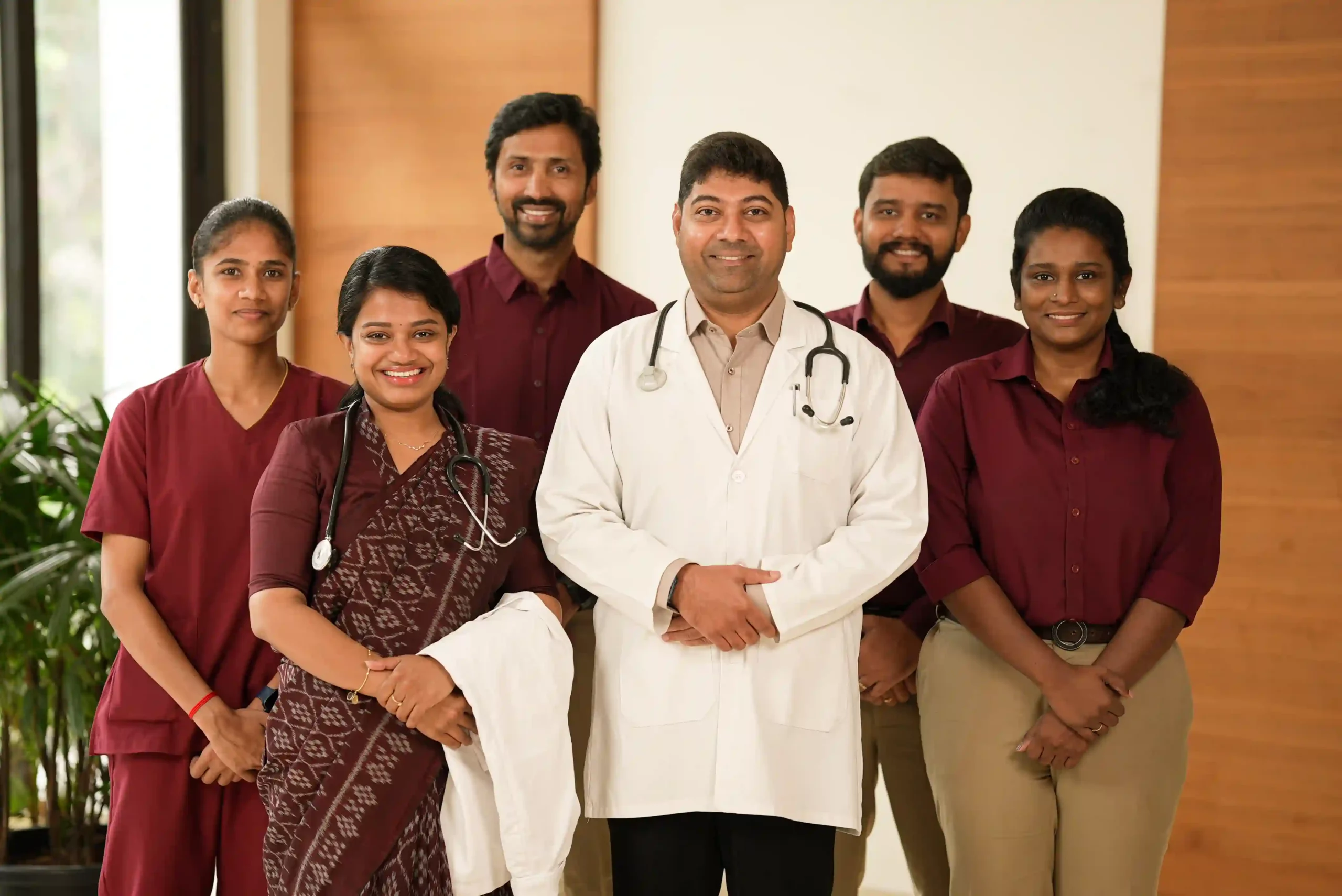
Meet Our Experts in Schizophrenia Care
As one of the leading schizophrenia rehabilitation centers, Abhasa is proud to be guided by specialists who believe in personalised care and emotional dignity. Every expert you meet here is part of what makes Abhasa a trusted schizophrenia treatment centre in India.
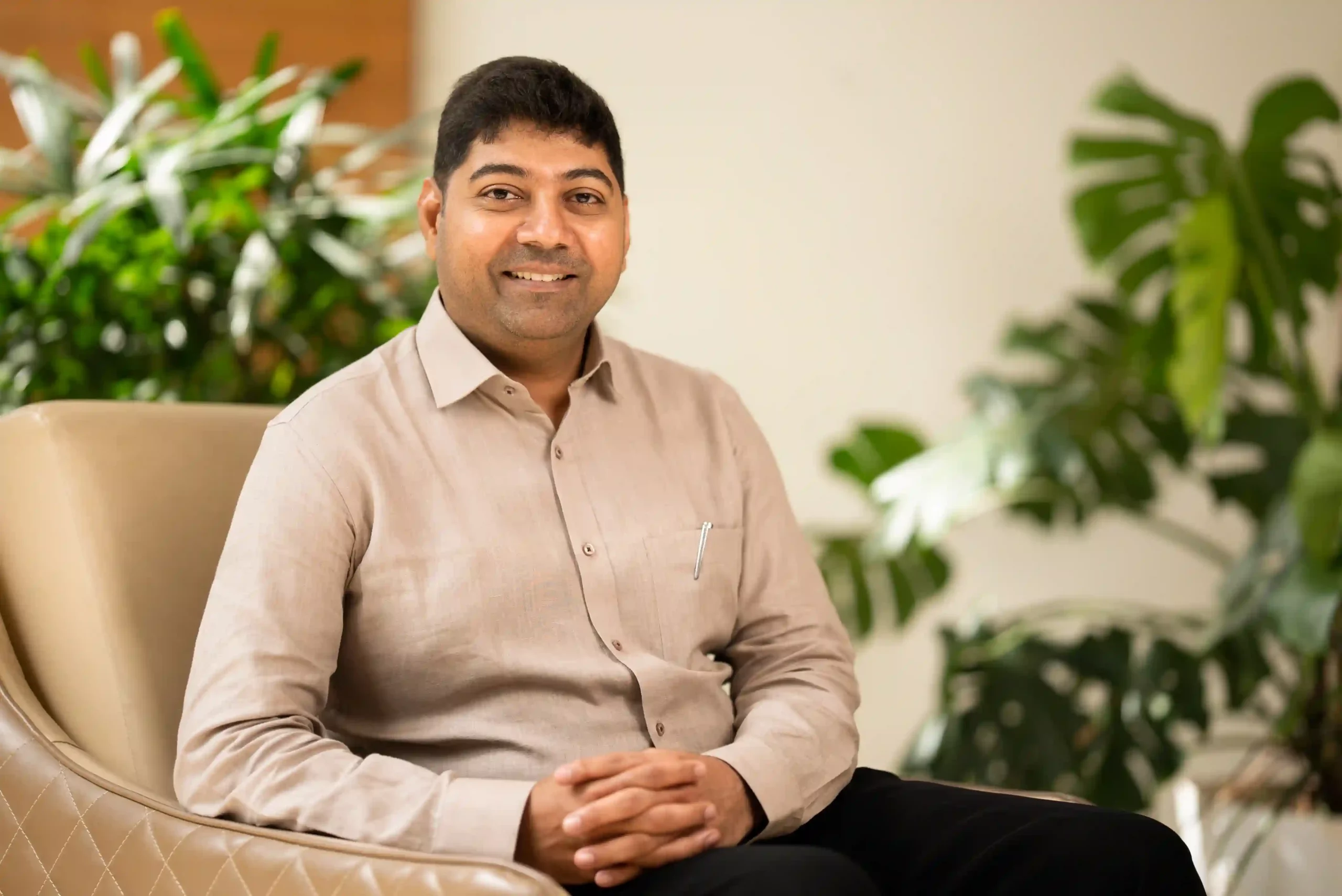
Dr. Naveen Kumar
Medical Director
15+ years of expertise in psychiatry and addiction recovery.

Dr. Vivek Sharma
Consultant Psychiatrist & Neurofeedback Practitioner
With over 15+ years of experience in psychiatry and neurofeedback, he blends medical expertise and compassion to guide clients toward lasting recovery.

Dr. Shree Aarthi
Consultant Psychiatrist
15+ years providing expert psychiatric care for mental health and substance use disorders.

Dr. Ramalingam P Kandaswamy
Consultant Physician
15+ years With over 5 years of experience in HIV and infectious diseases, he brings global expertise and compassionate care to every patient he supports.

Dr. Divya
Psychiatrist
10+ years combining clinical psychiatry expertise with healthcare management for holistic treatment.

Dr. Malarvilzhi
Residential Medical Officer
12 years delivering comprehensive medical care in psychiatric and rehabilitation settings.

Dr. Karuppachamy
Senior Psychiatric Social Worker
22+ years of experience empowering clients through therapeutic guidance, psychosocial support, and lived-experience wisdom.

Ms. Meera
Senior Clinical Psychologist
9+ years specializing in psychological assessment and evidence-based therapeutic interventions.

Mrs. Priyadarshini
Head Clinical Psychologist
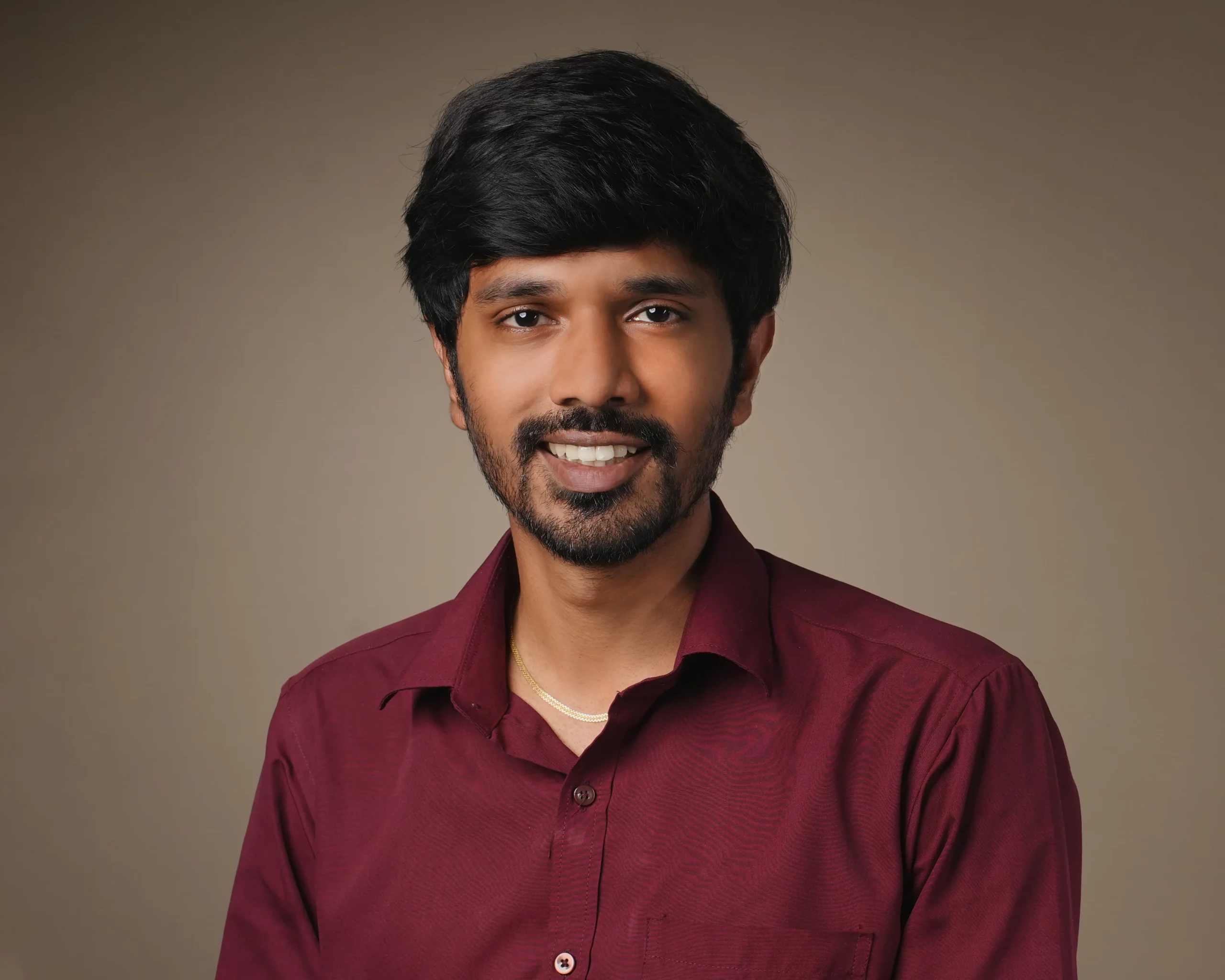
Mr. Mukesh Kanna
Clinical Psychologist
2+ years providing psychological interventions for behavioral health and emotional wellness.

Mr. Antipas Jayabal
Clinical Psychologist
2+ years supporting clients through clinical assessment and therapeutic care.

Ms Keerthana S
Psychologist
Empathetic psychologist with 4 years’ experience in handling mental health disorders, using evidence-based psychotherapies for personalized client care.
Inside Our Rehabilitation Program
If you think all residential treatment centers for schizophrenia follow the same routine, diagnose, medicate, repeat, you’re not alone.
But what we do at Abhasa is different. We don’t just focus on stopping symptoms. We focus on rebuilding life, one layer at a time.[1]
As a trusted rehabilitation center for schizophrenia, at Abhasa, healing is not a formula. It’s a framework. It’s a journey that includes science, structure, and soul, and it adapts to each person who walks through our doors.
Comprehensive Assessment (The Foundation)
We don’t begin with medication support straightaway. We begin with diagnosing and mapping.
In our rehabilitation centre for schizophrenia, the first step is always understanding what’s happening underneath the surface.
- QEEG (Quantitative Electroencephalography): A complementary brain assessment tool that provides visual information about brain wave patterns. IMPORTANT DISCLOSURE: QEEG is classified as investigational for psychiatric diagnosis by the American Academy of Neurology. [4] It is used at Abhasa as a complementary assessment tool alongside standard psychiatric evaluation, not as a standalone diagnostic tool.
- Psychometric testing: These are structured assessments that help us understand someone’s personality, emotional tendencies, and stress response. In simple words, we learn how they think, feel, and cope.
- Clinical evaluation: This is where psychiatrists and psychologists work together to create a working plan, not just based on symptoms, but on lived experience.
That’s why most families choose Abhasa over other residential treatment centers for schizophrenia, we start by understanding, not assuming.
Designing an Adaptive Treatment Plan
Every rehabilitation centre for schizophrenia will give you a plan. But at Abhasa, the plan grows with the person.[2] We don’t lock someone into a routine and hope it fits. We observe, adapt, and adjust.
Our team of psychiatrists, psychologists, counsellors and medical professionals, meet regularly to update care based on how the client is responding emotionally, mentally, and socially.
Layered Recovery Approach
What distinguishes our program is that we don’t just focus on “managing behavior.”
We focus on supporting brain health and rebuilding the person through these integrated components:
- Neuroplasticity-informed practices: Activities designed to support healthy brain patterns through journaling, movement, and nature-based therapy.
- ABC Model (Behavioral Analysis): An established behavioral psychology framework that helps clinicians understand behavior patterns by examining: Antecedents (triggers), Behaviors (responses), and Consequences (outcomes).
- Personalized psychotherapy: Ongoing one-on-one sessions with clinical psychologists and counselors using evidence-based modalities.
- Behavioral management: Teaching life skills and structure through consistent daily routines.
- Neurofeedback training (Adjunctive Therapy): Sessions designed to help with self-regulation using real-time brainwave feedback.
IMPORTANT: Neurofeedback is an emerging adjunctive therapy with growing but still limited research evidence for schizophrenia. [5] It is:
- NOT FDA-approved as primary treatment for schizophrenia
- Used alongside (not replacing) medication and evidence-based psychotherapy
- Supported by preliminary research showing potential benefits for specific symptoms
- Considered investigational/experimental by many medical organizations
At Abhasa, neurofeedback is offered as a complementary intervention within a comprehensive treatment program that includes medication management and evidence-based psychosocial interventions.
This multi-layered approach reflects current best practices in schizophrenia rehabilitation that integrate various therapeutic modalities.
At Abhasa, our framework provides structure while remaining flexible. We meet the person where they are. And we walk with them through every phase, every shift, every setback, and every step forward.
So if you’re searching for a rehabilitation center for schizophrenia that takes a comprehensive, evidence-informed approach to supporting your loved one’s journey toward improved functioning… This is where that journey can begin.
A Typical Healing Day at Abhasa

Daily rhythm plays a powerful role in recovery. As one of the leading schizophrenia rehabilitation centers in India, each day at Abhasa is designed to bring stability, emotional safety, and gentle progress.[1] We follow a therapeutic rhythm that blends evidence-based practices, ancient healing rituals with peace, movement, and reflection moments.
From gentle mornings that begin with self-care and detox routines, to evenings that close with journaling and emotional reflection, each part of the day is planned with intention.
Clients engage in a variety of activities throughout the day. This includes one-on-one therapy, group bonding, guided nature walks, mindfulness, and creative expression. Between each therapeutic block, there are well-timed breaks for nourishment and rest. All of this is part of our broader approach to life skills training, helping clients build daily habits that carry over into life after rehab.
The sample schedule shown above reflects our overall structure. However, each person’s day is personalised based on their clinical assessments, emotional readiness, and goals. Some may need more rest, others more activity. Our team adjusts the flow so that every client feels supported at every stage.
Most clients come from chaos, broken routines, unpredictable emotions, and high alertness. What they need is not just therapy, but rhythm.[1] That’s why life skills training and structured living are built into every part of the day at Abhasa.
At many schizophrenia rehabilitation centres in India, routine is an afterthought. At Abhasa, it’s part of the treatment program.
This isn’t just a day plan. It’s the architecture of long-term healing.
“Free, no-obligation consultation within 24 hours”
Our Facilities, Amenities, and Activities
At Abhasa, luxury isn’t for display, it’s for healing. Every corner of our space is designed to reduce stress, regulate emotions, and restore a sense of ease. We are a luxury rehab for schizophrenia that brings structure, peace, and rhythm back into daily life.
While most schizophrenia supportive programs focus on treatment rooms, we focus on healing environments. Our amenities aren’t just extras, they’re active parts of our therapeutic model.
Clients at Abhasa have access to a carefully designed set of amenities that support the nervous system and emotional regulation:
- A fully equipped gym for energy regulation and strength building
- A basketball court to improve coordination, teamwork, and release emotional tension
- Board games and indoor games to strengthen focus, frustration tolerance, and social bonding
- Outdoor games and trekking to reconnect with the body and nature in a non-pressured way
- Library corners that provide quiet stimulation and mental clarity
- A chai corner for warm, relaxed conversations and gentle social interaction
- Spa and saloon spaces that support sensory regulation and comfort
- Weekend activities like pottery, bird watching, trekking, movie nights, and food truck evenings may also be conducted based on resources, giving clients safe and joyful ways to rediscover leisure
- 24/7 security and surveillance, ensuring constant physical safety and emotional reassurance
- Crisis support is available around the clock
These amenities make our luxury rehab for schizophrenia not just comfortable but clinically impactful. They’re an essential part of how we help clients feel safe in the world again.
Many families ask what clients “do all day.” At Abhasa, everything they do is part of the healing process. Our schizophrenia supportive programs include a full range of therapeutic activities:[1]
- Yoga to calm the nervous system and improve self-awareness
- Zumba to boost energy, coordination, and emotional release
- Art therapy, aroma therapy, and music therapy to support non-verbal emotional healing
- Sound healing for sensory reset and deep nervous system regulation
- Pet-assisted therapy to build connection, empathy, and unconditional emotional safety
These are not one-off activities. They’re structured, repeated, and clinically supervised components of our care. This is what defines a true luxury rehab for schizophrenia: care that feels good, but also does deep internal work.
When someone is living with schizophrenia, overstimulation and unpredictability are often daily realities. That’s why our schizophrenia supportive programs are structured to give just the right mix of rhythm, rest, and regulation.
Every activity is part of the healing design. Whether it’s a therapy session, a nature walk, or an evening with a book, each moment helps rebuild emotional strength, social skills, and inner stability.
Because we know that only when luxury serves a purpose and every space is part of care does a luxury rehab for schizophrenia become a healing sanctuary.
Every space at Abhasa is created to restore calm and support healing at every level.
Personalised Care Plans That Support Growth
Many people walk into a treatment program already guarded, already tired. That’s why, unlike many schizophrenia residential treatment centres, we never hand over a fixed plan and walk away. We let the plan breathe. And we build it with them.
As one of the few schizophrenia residential treatment centers in India that works with long-term recovery as a goal, we build living, evolving personalised care plans that respond to the client’s emotional, psychological, behavioural, and biological needs.[2]
Every person entering schizophrenia treatment rehabilitation at Abhasa begins with deep assessments: not just a consultation, but layered diagnostics that include psychometrics, QEEG brain mapping, history from the family and client, and team observations over the first few days. These assessments help us understand more than symptoms. We learn about the client’s personality, their stress responses, their attention patterns, and how they react in a shared space. And most importantly, we observe how they begin to feel safe.
That’s because at Abhasa, we don’t just treat symptoms. We treat the whole person.
Mental health conditions like schizophrenia are rarely caused by one thing. They often stem from a combination of:[6]
- Biological factors like genetics, brain chemistry, and nutrition
- Psychological factors like trauma, thought patterns, and coping behaviours
- Social factors like relationships, life roles, and environment
This is why we follow the Bio–Psycho–Social Model of care. Most centres focus on just one layer.
We treat all three together.
At the centre of this model is our Personalised Development Program, a holistic healing plan tailored for each individual. It brings together four core pillars:
- Modern Medical Science – Psychiatry, diagnostics, and evidence-based psychotherapy with cutting-edge tools
- Ancient Holistic Wisdom – Yoga, mindfulness, homa therapy, breathwork, and meditation
- Life & Social Skills – Group activities, nature walks, sound healing, art, and movement-based expression
- Family Therapy – Structured support to improve communication, rebuild trust, and align recovery goals
This integrated approach ensures that schizophrenia treatment rehabilitation addresses biological, emotional, and social needs, just like healing is meant to.
From this foundation, we build the first version of a personalised development plan. But unlike most schizophrenia residential treatment centres, our care plan is continually refined, not on fixed timelines, but in response to how the client is evolving. Every team member, from the psychiatrist to the caregiver, shares ongoing observations. These are documented, discussed in multidisciplinary reviews, and carefully translated into therapeutic adjustments. Families are also updated at key milestones, ensuring that everyone is part of the healing arc, not just watching from the sidelines.

As clients move closer to discharge, the care plan doesn’t end. It evolves into a structured transition roadmap. We involve the family early in this process, not just as observers, but as active participants. Our clinical team works closely with caregivers to co-create a post-rehab continuity plan.
A core part of this phase is education. We help both clients and families understand schizophrenia as a condition, what it means, how it shows up, and how it changes over time.[3] We explain the purpose of each therapeutic step and offer simple, digestible guidance around ongoing care, medication management, and how different types of treatments work together as part of schizophrenia treatment rehabilitation. This clarity helps replace fear with readiness.
The plan itself includes medication schedules with tapering or adjustment options, flexible yet stabilising daily routines, emotional risk indicators tailored to the client, and a clear step-back-in protocol if symptoms re-emerge. We also provide training on communication techniques, boundary-setting, and relapse prevention so that families feel confident and not overwhelmed.
This approach prepares both the client and the family to manage life after rehab, not with guesswork, but with understanding. Because when people know what they’re dealing with, they’re more likely to stay resilient.
This is what distinguishes Abhasa from most schizophrenia residential treatment centres. We don’t simply treat a condition. We help rebuild a system of support that can sustain healing outside our walls. That’s how schizophrenia treatment rehabilitation holds meaning beyond the residential stay.

Family Involvement in Schizophrenia Rehab
When a loved one struggles with schizophrenia, the weight often falls silently on the family. The worry. The helplessness. The burnout comes from trying to do the right thing without knowing what that really is. At Abhasa, we see that. And more importantly, we support it.
That’s why family involvement in rehab is never optional. It’s part of the healing plan.[7]
At Abhasa, we honour family involvement in rehab as a central element of every treatment journey. Because real schizophrenia recovery support involves the system that surrounds the client, not just the client themselves.

Families receive daily routine reports, short, simple updates that answer the unspoken questions: Are they eating? Are they sleeping? How are they emotionally today?
This structure makes schizophrenia recovery support feel steady and grounded. You’re not left wondering, you’re informed.
- Daily routine reports are shared, giving you a snapshot of your loved one’s day, what they did, how they responded, what progress looked like.
- Weekly check-ins with the case manager (15-minute calls) allow space for specific questions and emotional processing.
- Monthly review calls with the clinical team (60-minute sessions) help align on goals, shifts, and ongoing strategy.
These are not just reports. It’s a partnership. You’re brought inside the process. That’s the kind of schizophrenia recovery support every client and family deserve. This rhythm makes family involvement in rehab feel safe and structured, not sporadic or overwhelming.
Because we believe that family involvement in rehab means caring for the caregiver, not just updating them.

Through psychoeducation sessions, we teach families the why behind the what.[3] You’ll learn:
- What schizophrenia does to the brain
- How to respond in moments of crisis
- What actually helps vs unintentionally harms
- How to regulate your own nervous system during tough times
This is how schizophrenia recovery support becomes empowering, not overwhelming.
You’ll also receive clear, usable guides for communication, boundaries, and post-rehab planning.

We don’t avoid the difficult family conversations, we guide them. Family therapy sessions at Abhasa help repair trust, open new channels of emotional expression, and create safety on both sides.[8]
This is one of the most meaningful forms of family involvement in rehab. Not just attending, but healing alongside.
Because no recovery is complete unless the relationships are also recovering. That’s the heart of long-term schizophrenia recovery support.
Our Environment: Safe, Private and Healing
Not all healing happens in therapy rooms. Sometimes, it begins with silence. With a walk beneath trees. With a space that doesn’t demand anything, except that you rest.

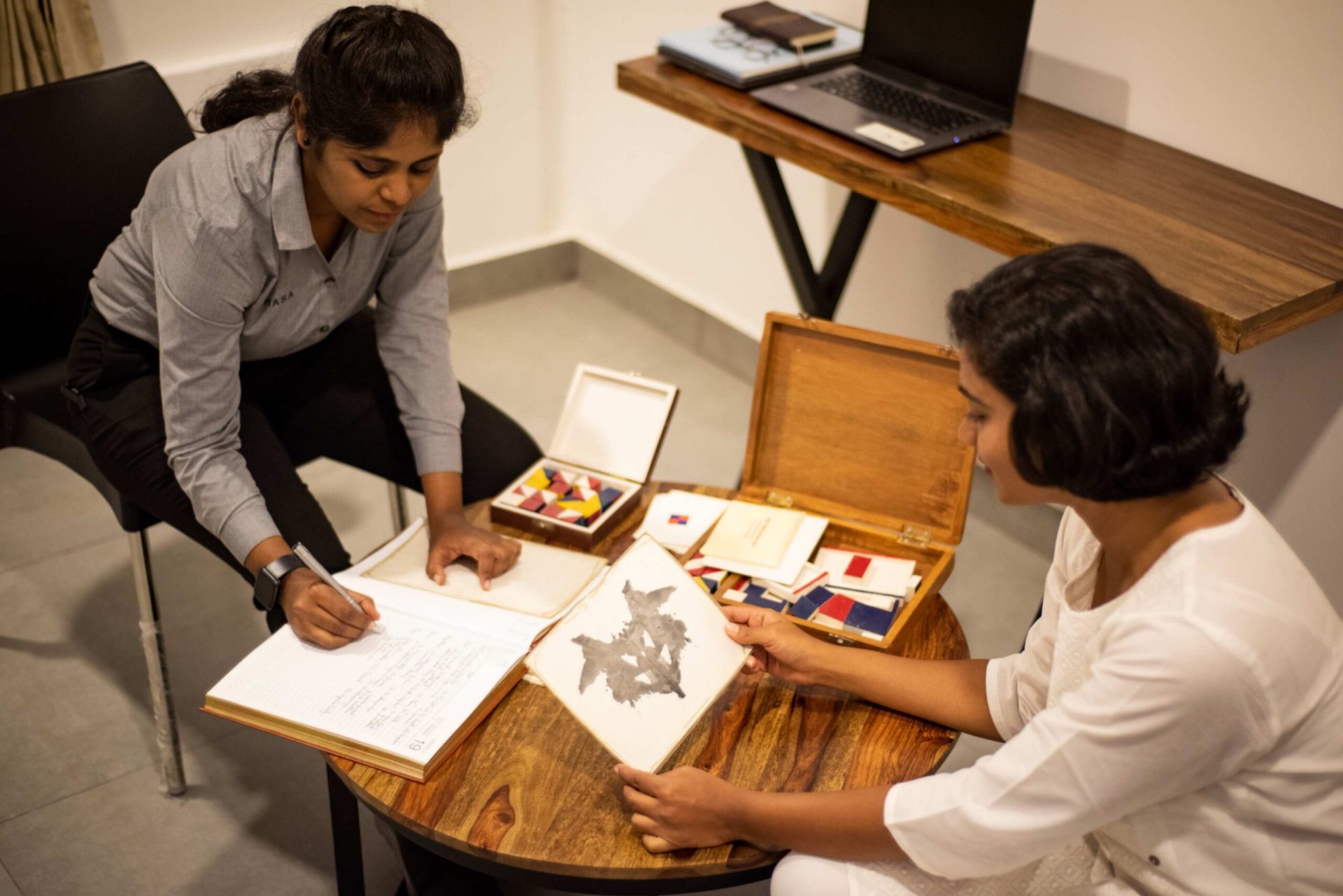
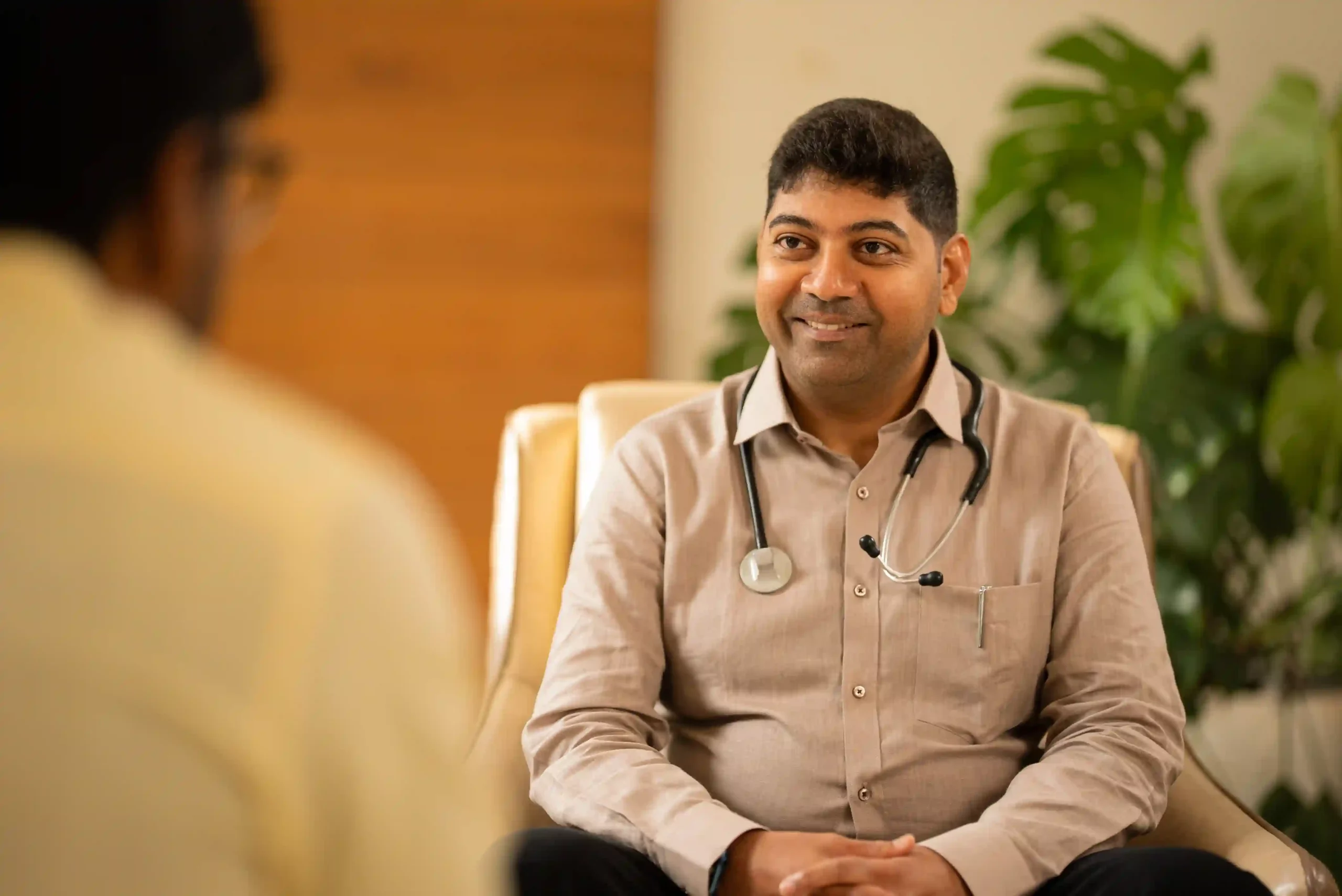
Abhasa was built as a private schizophrenia rehab centre because we understand that recovery can’t happen in loud, crowded, or clinical spaces.[2] For many clients, overstimulation and unpredictability are daily battles. That’s why we’ve created a residential sanctuary that feels quiet, natural, and grounding.
Unlike typical rehabilitation centres for schizophrenia in India, our spaces are designed to soothe the nervous system. You’ll find walking paths beneath trees, garden corners meant for reflection, and architecture that opens to light and air rather than closing in.
Everything from the colour of the walls to the placement of therapy rooms has been considered for sensory ease. At our private schizophrenia rehab centre, even the most basic details are designed with dignity and comfort in mind.
This isn’t just a place to stay, it’s a place to slow down. To find safety again, both inside and out.
Many rehabilitation centres for schizophrenia in India offer treatment. But what sets Abhasa apart is the sense of safety and calm you feel when you arrive. The kind that tells your nervous system that it’s okay now. You’re safe here.
That’s what makes this private schizophrenia rehab center more than a facility. It’s a sanctuary.
Stories of Strength: Life After Rehab
Every journey at Abhasa is deeply personal, but some moments of progress are meaningful to share. These stories show what becomes possible when care is consistent, compassionate, and rooted in evidence-based support. [1]
They highlight how rehabilitation can contribute to emotional breakthroughs, improved family relationships, and enhanced daily functioning.
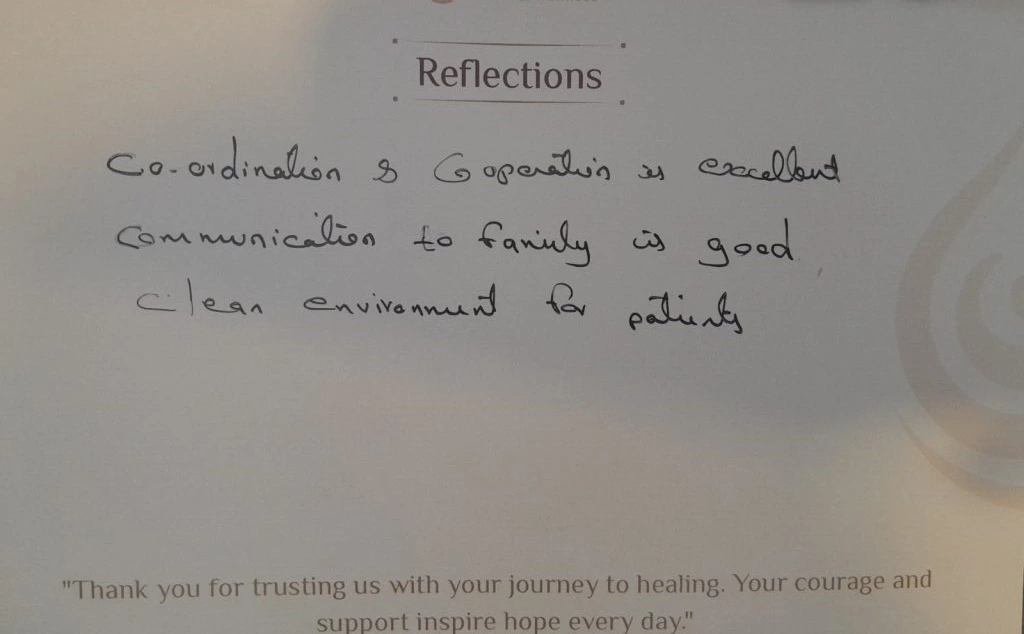
Co-ordination & cooperation is excellent. Communication to family is good. Clean environment for patients.
Former Client
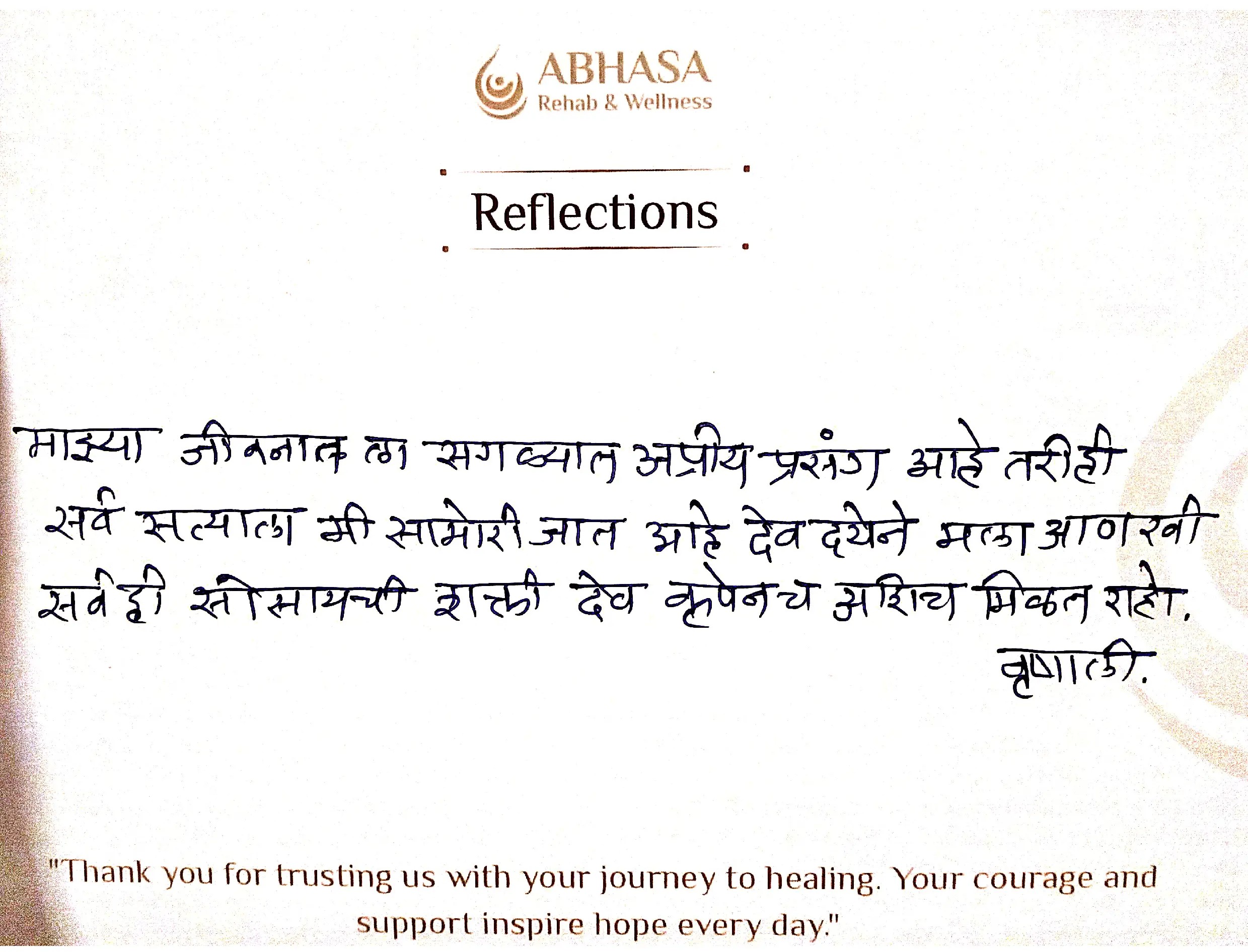
I found strength to face life’s hardest truths here. I believe it was God’s grace that brought me to Abhasa.
Former Client
“Free, no-obligation consultation within 24 hours”
FAQs About Schizophrenia Rehabilitation
What is a schizophrenia rehabilitation center?
A schizophrenia rehabilitation center is a specialized facility where individuals receive integrated therapeutic and medical support to manage symptoms, rebuild daily functioning skills, and work toward improved quality of life. [1]At Abhasa, we provide personalized rehabilitation that addresses cognitive, emotional, social, and daily living needs.
What happens in a residential program?
Clients follow a structured schedule that includes psychiatric care, individual therapy, group support, cognitive rehabilitation, social skills training, and life skill development. [1] A residential program focuses on long-term functional improvement. Unlike hospital settings, rehabilitation centers provide a more stable, therapeutic, and recovery-oriented environment.
How long does rehabilitation take?
The duration depends on individual needs and progress. Most programs last 30 days to 6 months or longer. [2] At Abhasa, we customize every timeline based on symptom severity, functional level, treatment response, and discharge readiness.
What are evidence-based treatments for schizophrenia?
The two key approaches are pharmacological treatment (antipsychotic medications) and psychosocial interventions (therapy and rehabilitation). [9] Medical management helps control symptoms, while psychosocial rehabilitation supports functional recovery. At comprehensive centers, both are integrated with family support.
Can schizophrenia be managed without medication?
No. Schizophrenia typically requires ongoing antipsychotic medication as prescribed by a psychiatrist. [9,10] While psychosocial rehabilitation is essential, it is most effective when combined with appropriate medication management. Never discontinue psychiatric medications without direct supervision, as this significantly increases relapse risk.
How do you help someone who refuses treatment?
At Abhasa, we guide families with compassionate intervention strategies. [3,7] Early conversations, family education, and motivational approaches can gently encourage engagement. In crisis situations involving safety risks, emergency psychiatric evaluation may be necessary.
What is the role of family in rehabilitation?
Family involvement is essential and improves outcomes for both the person with schizophrenia and their caregivers. [7] Research shows that family psychoeducation, communication training, and ongoing support significantly reduce relapse rates. At Abhasa, family participation is integrated throughout treatment.
Is rehabilitation the same as a hospital stay?
No. While hospitals provide acute crisis care, rehabilitation centers focus on longer-term functional recovery and skill-building. [1] Rehabilitation offers structured therapeutic environments designed for gradual progress. The setting is more homelike, with emphasis on daily routines and social engagement.
How much does rehabilitation cost?
Cost varies depending on symptom severity, room type, services required, length of stay, and individual needs. The most accurate way to understand the investment is by speaking with our team after sharing your specific concerns.
You can reach us at to explore what your care journey might look like.
Which doctor should I consult?
A psychiatrist specializing in serious mental illness is best suited to diagnose and treat schizophrenia. [9,10] At Abhasa, our team includes board-certified psychiatrists, clinical psychologists, and rehabilitation specialists trained specifically in schizophrenia treatment.
What happens after discharge?
Recovery is ongoing. We prepare a detailed aftercare roadmap that includes outpatient psychiatry referrals, family check-ins, medication management plans, and relapse-prevention strategies. [3] We ensure clients transition with continued guidance and crisis protocols in place.
Can someone with schizophrenia live independently?
With appropriate treatment, many people achieve varying levels of independence. [1] Outcomes depend on symptom severity, treatment adherence, cognitive functioning, support systems, and individual resilience. Rehabilitation focuses on building skills for maximum achievable independence while recognizing that ongoing support is often beneficial.
Blog and Expert Resources
Explore our schizophrenia recovery blog for expert-backed articles, lifestyle guidance, and personal insights. Whether you’re a caregiver or navigating recovery yourself, these resources offer practical tools and emotional clarity. From therapy tips to daily routines, our content is grounded in real-world experience and trusted mental health rehab insights to help you move forward with confidence.


Sugar Cravings After Quitting Alcohol – Why They Happen and What They Mean
Shame vs Guilt in Addiction Recovery: Understanding the Difference
Why Relapse Is a Process, Not a Failure: A Clinical Perspective
Begin the Recovery Journey with Abhasa
You just need to reach out. We'll walk the rest of the way with you.
You don’t have to figure this out alone. If you’ve been searching for comprehensive schizophrenia rehabilitation, know that help is here—safe, private, and built for evidence-based healing. [1,9]
As an established schizophrenia treatment center in India, we know that the path toward improved functioning begins with compassionate, professional support and evidence-based care. Whether you’re a caregiver or someone seeking support, reaching out is the first step. And we’ll walk with you from here.
Proudly Serving Across Cities
- Rehab in Karjat
- Rehab in Pune
- Rehab in Navi Mumbai
- Rehab in Madurai
- Rehab in Trichy
- Rehab in Bangalore
- Rehab in Chennai
- Rehab in Thane
- Rehab in Nasik
- Rehab in Kochi
- Rehab in Mangalore
- Rehab in Mysore
- Rehab in Hyderabad
- Rehab in Vijayawada
- Rehab in Visakhapatnam
- Rehab in Delhi
Medical Disclaimer
This information is for educational purposes only and does not constitute medical advice. Alcohol use disorder is a serious medical condition requiring professional diagnosis and treatment by qualified healthcare providers.
Always consult licensed medical professionals and addiction specialists before making treatment decisions. Individual results vary significantly based on numerous factors including severity of dependence, co-occurring conditions, personal commitment, and environmental support.
Alcohol withdrawal can be life-threatening. Attempting to detox at home without medical supervision may result in severe complications including seizures, delirium tremens, and death. Medical detoxification should only be conducted under the supervision of qualified healthcare professionals in an appropriate medical setting.
If you are experiencing a medical emergency, call emergency services immediately (dial 112 in India or your local emergency number).
The content provided describes general treatment approaches and facility amenities. It is not a substitute for individualized medical assessment or professional treatment planning. Treatment outcomes cannot be guaranteed, and recovery from alcohol dependence is an ongoing process that may include periods of relapse.
CITATIONS & RESOURCES
15 High-Authority Citations
[1] Vita A, Barlati S – “Evidence-based psychosocial interventions in schizophrenia: a critical review” – PMC/National Institutes of Health, 2024 URL: https://pmc.ncbi.nlm.nih.gov/articles/PMC10990032/ Source Type: Peer-reviewed / Government (NIH) – Systematic review Covers: Rehabilitation effectiveness, psychosocial interventions, cognitive remediation, social skills training, structured routines
[2] Cella M, et al. – “Evidence-Based Integrated Intervention in Patients with Schizophrenia” – PMC/National Institutes of Health, 2020 URL: https://www.ncbi.nlm.nih.gov/pmc/articles/PMC7277196/ Source Type: Peer-reviewed / Government (NIH) – Clinical trial Covers: Integrated treatment protocols, individualized planning, therapeutic environment
[3] Gearing R – “Family psychoeducation for people living with schizophrenia” – BJPsych Advances, 2018 URL: https://www.cambridge.org/core/journals/bjpsych-advances/article/family-psychoeducation-for-people-living-with-schizophrenia-and-their-families/1F624040803C69204CB936C7826185E3 Source Type: Peer-reviewed – Expert review Covers: Family psychoeducation effectiveness, family involvement benefits, education content
[4] Nuwer M, et al. – “Assessment of digital EEG, QEEG, and EEG brain mapping” – PubMed (AAN/ACNS), 1997 URL: https://pubmed.ncbi.nlm.nih.gov/9222209/ Source Type: Professional Guidelines (American Academy of Neurology) Covers: QEEG investigational status for psychiatric diagnosis, clinical significance limitations
[5] Oprea DC, et al. – “Systematic Review of Neurofeedback in Schizophrenia” – Schizophrenia Bulletin Open, 2020 URL: https://academic.oup.com/schizbullopen/article/1/1/sgaa005/5771249 Source Type: Peer-reviewed – Systematic review Covers: Neurofeedback research status, limitations, emerging evidence, need for larger trials
[6] Kim S, et al. – “Novel Bio-Psychosocial-Behavioral Treatment Model in Schizophrenia” – PMC, 2017 URL: https://pmc.ncbi.nlm.nih.gov/articles/PMC5412320/ Source Type: Peer-reviewed / Government (NIH) Covers: Biopsychosocial model application, integrated treatment approaches, multifactorial etiology
[7] Zhou R, et al. – “Systematic review and meta-analysis of family-based interventions” – ScienceDirect, 2025 URL: https://www.sciencedirect.com/science/article/pii/S0920996425000064 Source Type: Peer-reviewed – Recent systematic review and meta-analysis Covers: Family intervention benefits for patients and caregivers, reduced relapse rates, improved functioning
[8] Claxton M, et al. – “Family Interventions Improve Outcomes in Early Psychosis” – Frontiers in Psychology, 2017 URL: https://www.frontiersin.org/journals/psychology/articles/10.3389/fpsyg.2017.00371/full Source Type: Peer-reviewed – Systematic review and meta-analysis Covers: Family therapy effectiveness, relationship repair, early intervention benefits
[9] Dixon LB, et al. – “Evidence-based treatment of schizophrenia” – PubMed, 2001 URL: https://pubmed.ncbi.nlm.nih.gov/14711129/ Source Type: Peer-reviewed – Comprehensive treatment review Covers: Pharmacological and psychosocial treatment combination, medication necessity, evidence-based practices
[10] Mayo Clinic – “Schizophrenia – Diagnosis and treatment” – Mayo Clinic, 2024 URL: https://www.mayoclinic.org/diseases-conditions/schizophrenia/diagnosis-treatment/drc-20354449 Source Type: Professional Medical Organization Covers: Schizophrenia as treatable condition, medication management, comprehensive care approaches
[11] Borrell-Carrió F, et al. – “Biopsychosocial Model 25 Years Later” – PMC/Annals of Family Medicine, 2004 URL: https://pmc.ncbi.nlm.nih.gov/articles/PMC1466742/ Source Type: Peer-reviewed / Government (NIH) – Landmark review Covers: Clinical application principles, model validity, integrated care framework
[12] Lehman A, et al. – “Treating Schizophrenia: Psychoeducation and Shared Decision-Making” – Frontiers in Psychiatry, 2020 URL: https://www.frontiersin.org/journals/psychiatry/articles/10.3389/fpsyt.2020.00761/full Source Type: Peer-reviewed Covers: Psychoeducation approaches, shared decision-making, patient engagement
[13] Jovanović N, et al. – “Non-pharmacological interventions for schizophrenia” – Nature Schizophrenia, 2022 URL: https://www.nature.com/articles/s41537-022-00226-y Source Type: Peer-reviewed – Analysis of international treatment guidelines Covers: Internationally recognized non-pharmacological interventions across 12 countries
[14] Eassom E, et al. – “Implementing family involvement in treatment of patients with psychosis” – PMC/BMJ Open, 2014 URL: https://www.ncbi.nlm.nih.gov/pmc/articles/PMC4187461/ Source Type: Peer-reviewed / Government (NIH) – Systematic review Covers: Family involvement implementation, barriers and facilitators, best practices
[15] Mueser KT, et al. – “Rehabilitation Interventions to Promote Recovery from Schizophrenia” – PMC/Frontiers, 2017 URL: https://pmc.ncbi.nlm.nih.gov/articles/PMC5467004/ Source Type: Peer-reviewed / Government (NIH) – Systematic review Covers: Rehabilitation effectiveness for cognitive remediation, psychoeducation, social skills, supported employment