
Luxury Dual Diagnosis Rehab Centre in India

Addiction and mental disorders don’t have to take over. Abhasa’s integrated programs restore balance and hope.
Dual diagnosis care brings clarity where confusion lives
2:1 Staff-to-client ratio
3 Healing Spaces
Personalised Treatments
360° Healing
2:1 Staff-to-client ratio
3 Healing Spaces
Personalised Treatments
360° Healing
Gallery
Comprehensive Dual Diagnosis Treatment Centres in India

When mental health challenges and addiction show up together, everything changes. The person you care about may drift into silence, lash out unexpectedly, or use substances to numb what they cannot name. You watch them slip into unfamiliar patterns and wonder where the person you knew has gone.
As a family, you carry the weight. You may feel confused, overwhelmed, and unsure how to help. You might ask yourself, “Is this just an addiction or something more?”
This is often how families discover the need for dual diagnosis care.
At Abhasa, we support people facing both mental health struggles and substance-related challenges. Our dual diagnosis treatment centres offer care that goes deeper. We focus on the whole person, not just one part of their pain. These cases are known as co-occurring disorders, requiring unique healing.
If you have already tried therapy or medication without lasting change, you are not alone. For people with co-occurring disorders, healing does not happen in fragments. They need a plan that connects the dots. That is where our work begins.
We designed our dual diagnosis treatment centres to feel safe, peaceful, and human. This is not a hospital. This is a residential space where each day brings gentle structure and compassionate support. We combine clinical expertise with warmth, so healing feels steady and personal.
Families remain involved from the beginning. You receive regular updates. You join sessions. You learn how to rebuild the connection. Because real co-occurring disorders treatment must include the family, too.
When dual conditions begin to spiral, waiting only increases risk. We respond quickly. There are no long waits, no cold responses. Just support from the first call.
If someone you love feels trapped between addiction and emotional pain, the right help can bring them back.
Dual diagnosis care brings clarity where confusion lives
Understanding Dual Diagnosis and Co-Occurring Disorders
When someone struggles with both emotional distress and substance use, recovery becomes more layered. They may seem fine in one moment and overwhelmed in the next. You might notice patterns of isolation, sudden anger, or reliance on alcohol or drugs just to get through the day. It’s not always clear where the problem started or which came first.
This is where dual diagnosis comes in.
Dual diagnosis usually refers to the presence of a mental health challenge and a substance-related struggle happening at the same time. It could be anxiety and alcohol dependence. It could be trauma and drug use. It could be mood shifts combined with a reliance on sleeping pills. Every case looks a little different, but the connection between both conditions is always there.
At Abhasa, we see co-occurring disorders as a sign that the person needs a different kind of help. Traditional programs often focus on just one issue. They may treat the addiction without addressing the emotional pain underneath. Or they might provide therapy for the mind without supporting the physical cravings that drive the behaviour.
That split focus can lead to repeated cycles of relapse, confusion, and emotional fatigue. We take a different route.
Our approach to dual diagnosis is structured, compassionate, and complete. We look at the person as a whole, not a list of symptoms. Our residential programs offer steady support, combining emotional healing with guided recovery from substances. That’s what makes this different from regular rehab.
Some combinations we often see include depression with alcohol use, anxiety with stimulant dependence, and unresolved trauma paired with sedatives. Each pairing creates a loop. One issue fuels the other, and the person feels trapped in that cycle. That’s what makes co-occurring disorders complex, but not impossible to support.
The term concurrent disorders also refers to the same condition. In India, awareness of this issue is still growing. Many families mistake these signs for “bad habits” or assume it’s only one issue. But recent data shows that up to 60% of people with substance challenges also face untreated mental health conditions. These numbers are real. And they call for deeper care.
We don’t believe in one-size-fits-all solutions. At Abhasa, we meet each person where they are. We tailor support based on their strengths, triggers, and healing pace.
If your loved one feels stuck in a loop of emotional pain and substance use, we can help bring clarity and relief.

Real recovery means treating both struggles together.
Why Choose Residential Dual Diagnosis Treatment

Living with both mental health struggles and substance use can feel like trying to solve two puzzles at once. One piece doesn’t fit without the other, making progress harder to hold. The person you love might improve briefly, only to fall back into old patterns when the stress builds or the cravings return.
This is where residential dual diagnosis treatment becomes essential.
At Abhasa, we don’t believe in addressing just one part of the problem. We focus on the whole picture. Our integrated treatment approach brings together emotional healing, addiction support, and family involvement into one steady path forward.
Unlike home care or outpatient settings, residential dual diagnosis treatment provides safety, structure, and round-the-clock support. Clients don’t have to juggle appointments, navigate triggers, or manage alone. They live in a calming space to support every aspect of their recovery.
Our team works together under one roof. Psychiatrists, therapists, addiction specialists, and wellness experts coordinate care in real time. This is the heart of integrated treatment. We don’t divide care into separate departments. We bring it together so healing feels consistent, not fragmented.
Each day in residential dual diagnosis treatment follows a therapeutic rhythm. Clients begin their mornings with intention, engage in individual and group therapies, participate in wellness routines like yoga or movement sessions, and close the day with reflection and rest. Meals are nutritious, sleep is prioritised, and the environment is calm and predictable.
When someone is going through both emotional pain and substance use, having a daily rhythm can bring a kind of comfort they may not have felt in a long time. A steady routine gives them something to hold on to, helping life feel less overwhelming and more in reach. Every part of the day is shaped with care, so there’s structure without pressure.
They’re also not doing it alone. They are surrounded by people who understand similar struggles. The reassurance from understanding minds positively affects the recovery journey. In residential dual diagnosis treatment, the community makes healing feel less lonely.
Families stay involved from the start. You receive updates, participate in sessions, and learn how to support recovery at home. We include you in the healing because integrated treatment is incomplete without the people who matter most.
The right setting makes integrated care possible.
Abhasa's Integrated Dual Diagnosis Approach
Healing from both emotional pain and substance dependence takes more than just therapy sessions or a detox plan. Connecting the mind, body, and relationships in one steady direction takes care. At Abhasa, we design every part of our care to do that.
Unlike general rehabs that treat addiction and mental health separately, our dual diagnosis therapy centres work with a unified method. We don’t divide support into isolated parts. Instead, our integrated treatment programs align every healing element so clients feel seen, supported, and safe.
Treating the Whole Person, Not Just the Diagnosis
We follow a bio-psycho-social model. This means we support the medical and psychological sides of recovery as well as the emotional, social, and lifestyle aspects. Each person receives a personalised roadmap that connects their symptoms to their story.
Some of our clients arrive after multiple rehab attempts. Others come straight from psychiatric care. What they often have in common is exhaustion and confusion. Our dual diagnosis therapy centres slow the chaos and create a space for grounded healing.
How Clinical Integration Works at Abhasa
Our integrated treatment programs bring together psychiatrists, clinical psychologists, trauma-informed therapists, and substance recovery experts into one coordinated team. This ensures that medication, therapy, and emotional processing work hand in hand.
Our team doesn’tdoesn’t work in separate silos. Everyone stays connected, psychiatrists, therapists, and recovery specialists all talk, plan, and adjust care together as things unfold. This kind of close coordination helps clients feel more stable, more quickly, and sets the stage for real progress on both sides of the struggle.
Holistic Therapies with Structure and Meaning
Beyond clinical care, we introduce healing practices that soothe the nervous system and reconnect the body. Clients participate in yoga, expressive movement, guided mindfulness, and somatic grounding. Each of these practices supports the internal work happening in therapy.
At our dual diagnosis therapy centres, these are not occasional extras. They are scheduled, intentional parts of our integrated treatment programs. Every breath, every stretch, every quiet moment carries clinical value.
Family Systems and Cultural Sensitivity
We believe healing is more stable when families are involved. Our approach includes regular family sessions, emotional education, and discharge planning that prepares loved ones to offer support without pressure or burnout.
Because we work with Indian families across diverse cultural backgrounds, we also understand the sensitivities that often surround addiction and mental health. We offer family guidance that is respectful, clear, and free from shame.
At Abhasa, you will not find a one-size-fits-all model. You will find care that adapts, listens, and evolves with the person receiving it.
Explore the next step toward integrated healing.
Meet Our Expert Dual Diagnosis Treatment Team
At Abhasa, healing begins with the right people. Our team of dual diagnosis specialists brings deep experience in treating both emotional struggles and substance use together. Members collaborate with psychiatrists and therapists, family counsellors, and wellness experts to offer complete, compassionate care. Our addiction and mental health experts design personalised plans that support stability, safety, and growth. With 24/7 supervision, culturally sensitive guidance, and evidence-based therapies, our team works together daily to support real recovery. When you choose Abhasa, you choose people who care as much about your progress as you do.

Dr. Naveen Kumar
Medical Director
15+ years of expertise in psychiatry and addiction recovery.

Dr. Vivek Sharma
Consultant Psychiatrist & Neurofeedback Practitioner
With over 15+ years of experience in psychiatry and neurofeedback, he blends medical expertise and compassion to guide clients toward lasting recovery.

Dr. Shree Aarthi
Consultant Psychiatrist
15+ years providing expert psychiatric care for mental health and substance use disorders.

Dr. Ramalingam P Kandaswamy
Consultant Physician
15+ years With over 5 years of experience in HIV and infectious diseases, he brings global expertise and compassionate care to every patient he supports.

Dr. Divya
Psychiatrist
10+ years combining clinical psychiatry expertise with healthcare management for holistic treatment.

Dr. Malarvilzhi
Residential Medical Officer
12 years delivering comprehensive medical care in psychiatric and rehabilitation settings.

Dr. Karuppachamy
Senior Psychiatric Social Worker
22+ years of experience empowering clients through therapeutic guidance, psychosocial support, and lived-experience wisdom.
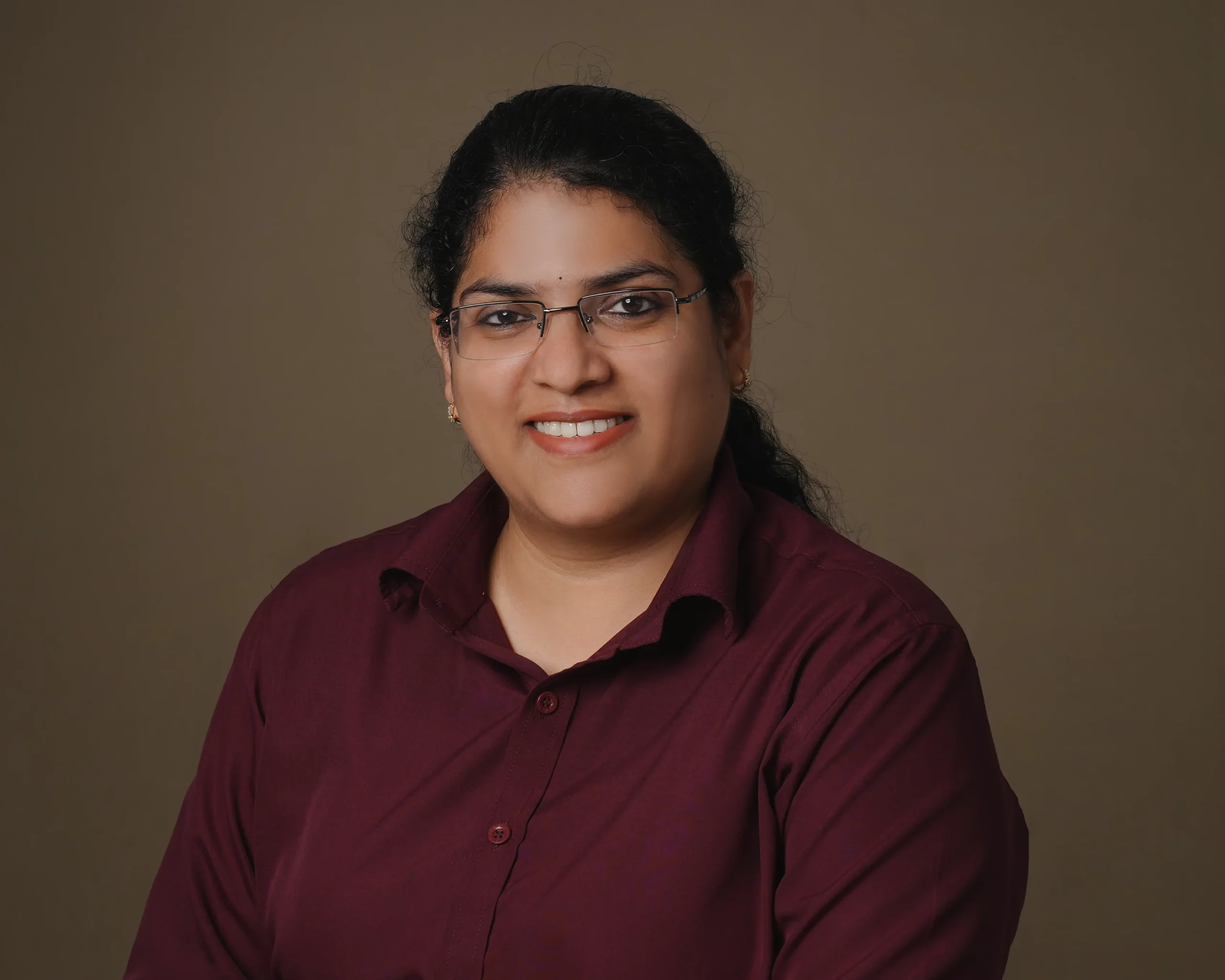
Ms. Meera
Senior Clinical Psychologist
9+ years specializing in psychological assessment and evidence-based therapeutic interventions.

Mrs. Priyadarshini
Head Clinical Psychologist

Mr. Mukesh Kanna
Clinical Psychologist
2+ years providing psychological interventions for behavioral health and emotional wellness.

Mr. Antipas Jayabal
Clinical Psychologist
2+ years supporting clients through clinical assessment and therapeutic care.

Ms Keerthana S
Psychologist
Empathetic psychologist with 4 years’ experience in handling mental health disorders, using evidence-based psychotherapies for personalized client care.
Life at Abhasa's Dual Diagnosis Healing Centre
Not every place that offers support for dual diagnosis understands what recovery feels like. Many dual diagnosis facilities follow a standard pattern, stabilise the symptoms, prescribe a routine, and hope things settle. But at Abhasa, we do things differently.
We don’t rush to fix. We begin by rebuilding. Recovery here is not a list of steps to tick off. It’s a gradual, guided journey where each day brings structure, reflection, and small, steady change. At Abhasa, we’ve created an environment where clients can finally exhale. Our luxury treatment centres feel less like institutions and more like peaceful retreats. The goal is simple: help each person feel steady, supported, and at ease as they heal.

Slowing Down to Listen First
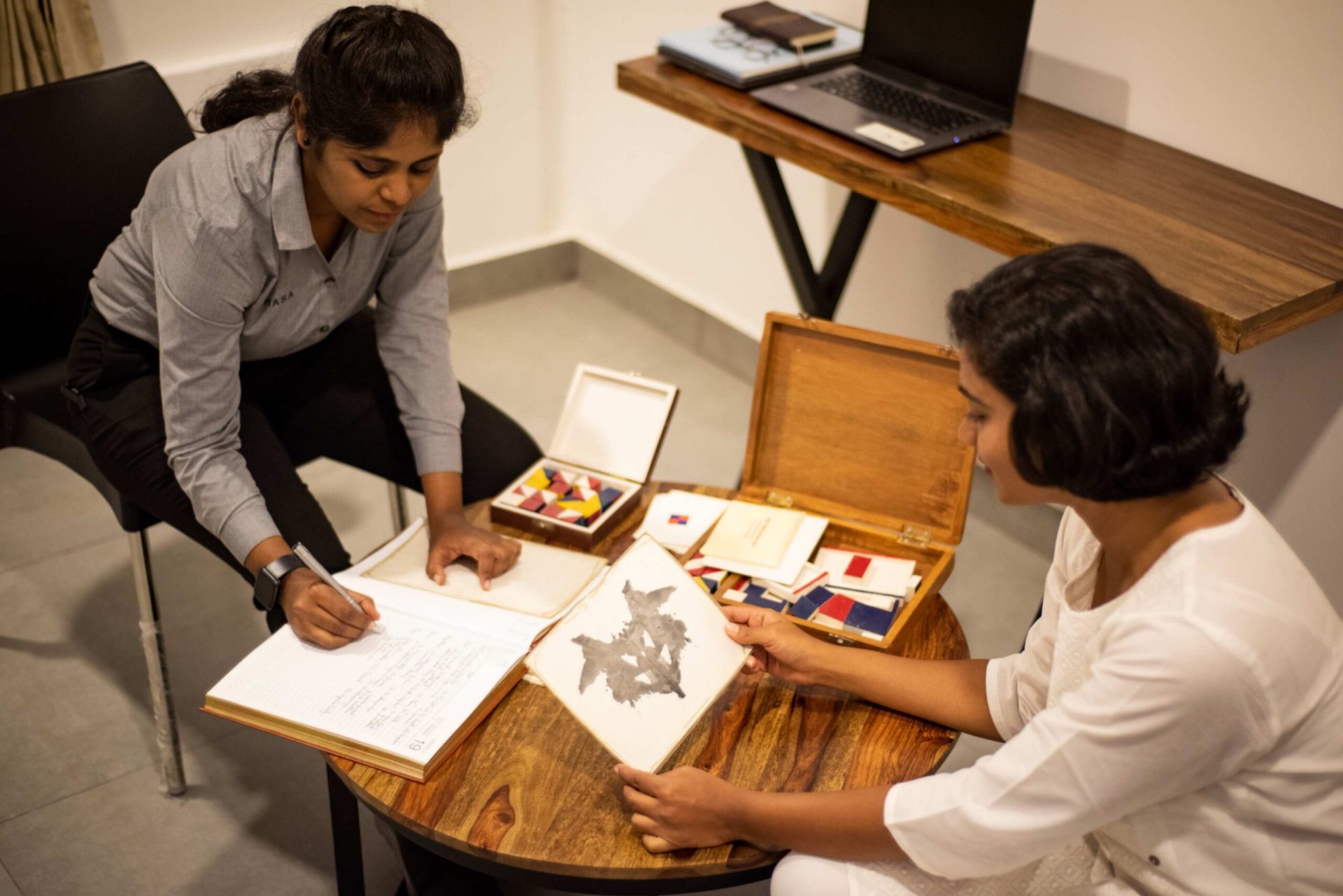
We don’t start with a plan on paper. We begin by simply getting to know the person. We watch how they move through their day, where they feel stuck, and what they’ve been holding in. By understanding how they’ve been trying to manage things independently, we get a clearer picture of what kind of care will feel right and make a difference. We look closely at the link between emotional pain and substance use, not to label it, but to understand it.
From there, our team works together to build a care plan that fits. Psychiatrists, therapists, family counsellors, and recovery specialists meet regularly to adjust support based on real needs, not assumptions. We don’t treat the problem in isolation. We walk with the person behind it.
A Daily Rhythm That Promotes Growth
At Abhasa, routine becomes a foundation for healing. Each day begins and ends purposefully, offering clients the predictability they need to feel calm and in control. Within our dual diagnosis facilities, clients follow a therapeutic rhythm that combines activity, rest, expression, and support.
Inside our luxury treatment centres, clients benefit from:
- A fully equipped gym to improve physical strength and regulate energy.
- A basketball court that encourages movement, focus, and teamwork.
- Indoor games and board games to build social bonds and emotional patience.
- Nature walks, trekking, and outdoor play to reconnect with the body and the fresh air.
- Quiet reading spaces for mental clarity and emotional stillness.
- A tea lounge that encourages informal conversations and shared moments.
- Spa and salon sessions allow clients to unwind and feel cared for in simple, sensory ways.
- We bring lightness, pottery classes, nature walks, relaxed movie evenings, or even a quiet night with food trucks and fresh air on weekends. These moments offer joy, not just distraction.
- Medical and emotional support remains close at hand at all times.
- 24/7 presence from our team offers a quick response whenever it’s needed.
Growing Through Connection
Healing doesn’t happen in isolation. Clients spend time in small groups, guided therapy circles, and expressive spaces where they can share, listen, and slowly open up. Being heard by others who truly understand brings a sense of relief that no individual session can replace.. These spaces allow them to share, listen, and feel seen. Many begin to trust again simply by being among others who understand what they are going through.
We include:
- Daily group therapy focused on dual diagnosis themes.
- Peer-led circles where shared experience fosters trust.
- Family sessions to support healthy boundaries and communication.
- Holistic therapies such as yoga, art, music, and sound healing for emotional grounding.
At Abhasa, we create a space where people can rebuild their health, confidence, and sense of belonging. If you are looking for luxury treatment centres that provide structure, care, and connection, you are in the right place.
See how our program suits your loved one.
Specialised Therapies for Dual Diagnosis
People entering dual diagnosis care often carry more than symptoms. Many have lived with internal chaos for years. Others have bounced between treatments that only looked at one side of the problem. At Abhasa, we offer dual diagnosis therapy that speaks to the whole person and not just the diagnosis.
We believe that therapy should fit the individual, not vice versa. That’s why we use a flexible, layered model that allows each person’s journey to shape the pace and path of care. Our therapists don’t just apply techniques. They build trust, track progress with care, and guide each client toward clarity, balance, and strength.
Many panic disorder therapy programs focus only on surface-level coping tools. We go deeper. We aim to retrain fear responses, build self-regulation, and restore everyday confidence.
Our therapeutic framework begins with assessment. Every person receives a detailed intake that looks at thought patterns, coping behaviours, past trauma, family dynamics, and their relationship with substance use. We also include input from psychiatrists, family members, and the client.
From there, we develop a therapy plan that evolves. We adjust based on progress, stress levels, and emotional readiness. This ensures that dual diagnosis therapy feels supportive, not forced.
Our programs combine science-backed methods with real-world sensitivity. The most commonly used modalities include:
- Cognitive Behavioural Therapy: This method helps clients identify patterns in thinking and behaviour that feed both emotional pain and substance use. It teaches skills to challenge those thoughts and respond in healthier ways.
- Dialectical Behaviour Therapy: DBT helps with emotional regulation, distress tolerance, and building stable relationships. It is especially useful for clients who struggle with mood swings and impulsivity.
- Motivational Interviewing: This gentle, client-led technique builds internal motivation to change, especially in people who feel uncertain or stuck.
- EMDR Therapy: For those carrying trauma, EMDR helps process memories and reduce the emotional charge linked to past events.
- Family Systems Therapy: Because recovery rarely happens in isolation, we work with family members to heal communication patterns, rebuild trust, and align goals.
- Group Therapy: These sessions allow peer learning, emotional connection, and a sense of shared progress.
We adopt cognitive behavioural therapy along with other evidence-based modalities, not in isolation, but as part of a bigger picture. Our team integrates these approaches into the daily schedule and adapts them for each person’s capacity and growth.
Every few weeks, we review the client’s journey through therapist, caregiver, and client feedback to adjust therapies to stay aligned with goals. These sessions are not just about symptom relief. They are about helping the client build emotional muscle, reconnect with their values, and start making choices from a place of strength.
We believe dual diagnosis therapy is not a single method or fixed timeline. It is a flexible, evolving support system that walks beside the client and holds space for real change.
Every recovery path is unique. Let’s build one that fits.
Medical Management & Safety
Medical Oversight That Builds Stability and Trust
When someone lives with both emotional distress and substance use, their health often gets overlooked. Sleep becomes irregular, meals are skipped, and essential medical care may be delayed. At Abhasa, we place medical supervision at the heart of our approach. This ensures each person receives consistent, gentle, attentive care throughout recovery.
In dual diagnosis treatment, safety begins with steady support. Our dual diagnosis medical care framework includes 24/7 medical presence, thoughtful medication planning, and regular health monitoring. These elements create the stability needed for deeper emotional and behavioural healing.
Our in-house team includes doctors, psychiatrists, trained nurses, and emergency responders who are always available. This allows us to respond immediately when someone needs help. Clients do not have to wait or explain discomfort repeatedly. The team remains alert, present, and proactive daily and night.
We conduct ongoing health check-ins that cover appetite, energy levels, mood, and sleep.
These small, regular moments allow us to notice changes early and adjust care before things escalate. This is what makes our medical supervision consistent and reliable.

We approach medication as a personalised process. There is no one-size-fits-all plan. Our dual diagnosis medical care system works by coordinating psychiatrists, therapists, and case managers who review and adjust prescriptions based on how each client responds.
Clients who require detox or withdrawal support receive a gradual and carefully monitored plan. We aim to reduce discomfort while protecting emotional stability. Each step is reviewed daily, so care remains responsive and safe.

While we prepare for emergencies, we focus more on prevention. Regular physical assessments, medical reviews, and safety checks allow us to prevent risks before they arise. Our medical supervision team stays connected with other departments, ensuring therapy and health needs remain in sync.
When a client feels overwhelmed or unwell, crisis support is available immediately. Our team knows how to step in calmly and confidently when someone is struggling. Clients feel seen, not just treated, and that sense of safety often makes all the difference.
Families often share how reassuring it feels to know their loved one is truly being looked after emotionally and medically. It gives a quiet relief that lets them finally take a breath.
If you are searching for dual diagnosis medical care that blends safety, respect, and full-time attention, our team at Abhasa is here to support you.

Learn how medical care strengthens recovery.
Family Integration in Dual Diagnosis Recovery

When someone lives with both emotional struggles and substance use, their family often carries a quiet weight. The worry builds slowly. The questions have no clear answers. The roles shift, and the home feels less like a place of safety and more like a space of tension. At Abhasa, we see that, and we support it. That is why family support programs are not optional here. They are part of the healing from day one.
Real recovery needs more than therapy sessions and medication. It requires a connection. Our family therapy dual diagnosis model invites families to step into the healing process, not just observe from a distance.

Families often want to know how their loved one is doing. At Abhasa, we make sure you’re never left in the dark. You’ll hear from us regularly, not just when there’s a concern, but as part of the ongoing journey.
Each week, your case manager shares updates reflecting how your loved one feels, responds to therapy, and adjusts emotionally. Once a month, you join a call with the clinical team to discuss progress, any changes in care, and next steps. You’ll also receive short notes on routines, meals, and emotional rhythms, so you feel part of daily life even from afar.
This steady flow of updates is more than information. It’s how we build trust, offer peace of mind, and ensure you stay close to the process, not outside.

Many families feel unsure about how to help or fear they might do something wrong. Our family support programs begin with education that empowers. We guide you through:
- How dual diagnosis affects the brain and behaviour.
- What helps in the moments of emotional overwhelm.
- When to step in and when to give space.
- How to regulate your stress responses as a caregiver.
We also provide tools for communicating healthy boundaries and preparing for the transition home after treatment. These tools don’t just support the client. They help the family feel stronger, too.

In our family therapy dual diagnosis sessions, we don’t avoid hard conversations. We create a space for them. With the support of trained therapists, families explore trust, repair emotional distance, and start learning how to connect again, with more patience and less fear.
This is not about blame. It is about healing side by side because lasting recovery happens when the whole system finds balance, not just the individual.
We continue to support families even after discharge through post-treatment care plans. Our family support programs include follow-up calls, check-ins, and access to resources that guide the family through the subsequent recovery phase.
You don’t have to walk this road alone. We’re here to support you, too.
Let’s begin building safety, clarity, and connection together.
Family Integration in Dual Diagnosis Recovery
When One Person Heals, the Family Heals Too
When someone lives with both emotional struggles and substance use, their family often carries a quiet weight. The worry builds slowly. The questions have no clear answers. The roles shift, and the home feels less like a place of safety and more like a space of tension. At Abhasa, we see that, and we support it. That is why family support programs are not optional here. They are part of the healing from day one.
Real recovery needs more than therapy sessions and medication. It requires a connection. Our family therapy dual diagnosis model invites families to step into the healing process, not just observe from a distance.
Families often want to know how their loved one is doing. At Abhasa, we make sure you’re never left in the dark. You’ll hear from us regularly, not just when there’s a concern, but as part of the ongoing journey.
Each week, your case manager shares updates reflecting how your loved one feels, responds to therapy, and adjusts emotionally. Once a month, you join a call with the clinical team to discuss progress, any changes in care, and next steps. You’ll also receive short notes on routines, meals, and emotional rhythms, so you feel part of daily life even from afar.
This steady flow of updates is more than information. It’s how we build trust, offer peace of mind, and ensure you stay close to the process, not outside.

Many families feel unsure about how to help or fear they might do something wrong. Our family support programs begin with education that empowers. We guide you through:
- How dual diagnosis affects the brain and behaviour.
- What helps in the moments of emotional overwhelm.
- When to step in and when to give space.
- How to regulate your stress responses as a caregiver.
We also provide tools for communicating healthy boundaries and preparing for the transition home after treatment. These tools don’t just support the client. They help the family feel stronger, too.

In our family therapy dual diagnosis sessions, we don’t avoid hard conversations. We create a space for them. With the support of trained therapists, families explore trust, repair emotional distance, and start learning how to connect again, with more patience and less fear.
This is not about blame. It is about healing side by side because lasting recovery happens when the whole system finds balance, not just the individual.
We continue to support families even after discharge through post-treatment care plans. Our family support programs include follow-up calls, check-ins, and access to resources that guide the family through the subsequent recovery phase.
You don’t have to walk this road alone. We’re here to support you, too.

Let’s begin building safety, clarity, and connection together.
Success Stories: Dual Recovery Journeys
Every story of healing at Abhasa carries its quiet strength. We’ve witnessed clients rebuild their lives after years of emotional pain and substance dependence. From first steps in therapy to full reintegration into work, family, and community, each moment reflects real dual diagnosis recovery success.
Families often share how the journey brought not just change, but clarity. Through honest conversations, trust started to return. With consistent support, clients began managing emotions, setting boundaries, and creating lives worth returning to.
Our dual diagnosis treatment outcomes speak through these lives, individuals who show up for their careers, nurture relationships, and even support others in recovery.
Progress here is not measured only by stability but by the quality of life. And it continues well beyond discharge, with ongoing support and purpose-driven living.
You don’t have to hope from the outside. Reach out and see what healing can look like, one step at a time.
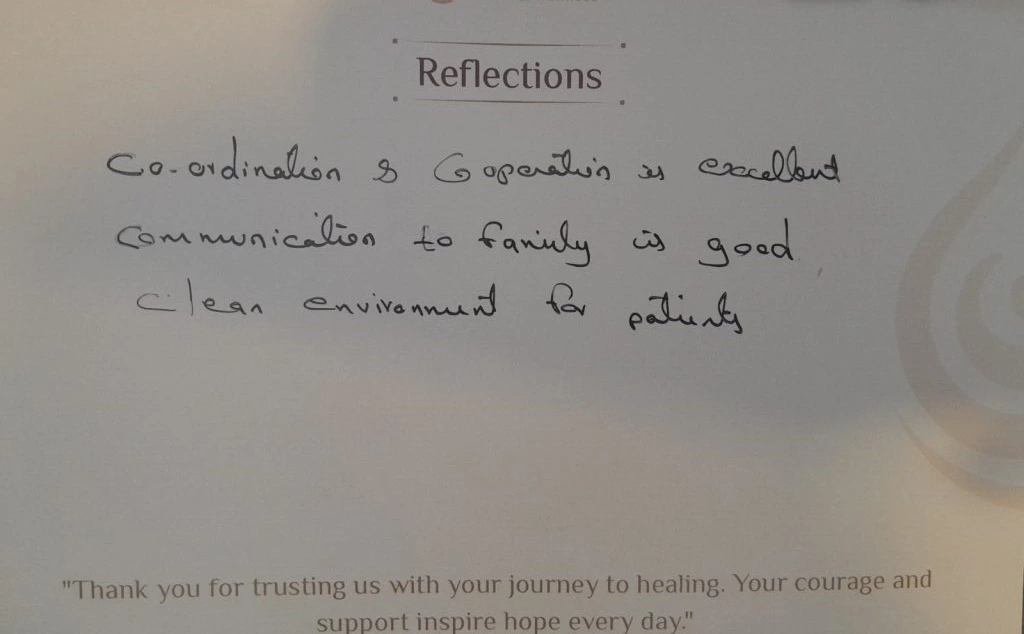
Co-ordination & cooperation is excellent. Communication to family is good. Clean environment for patients.
Former Client
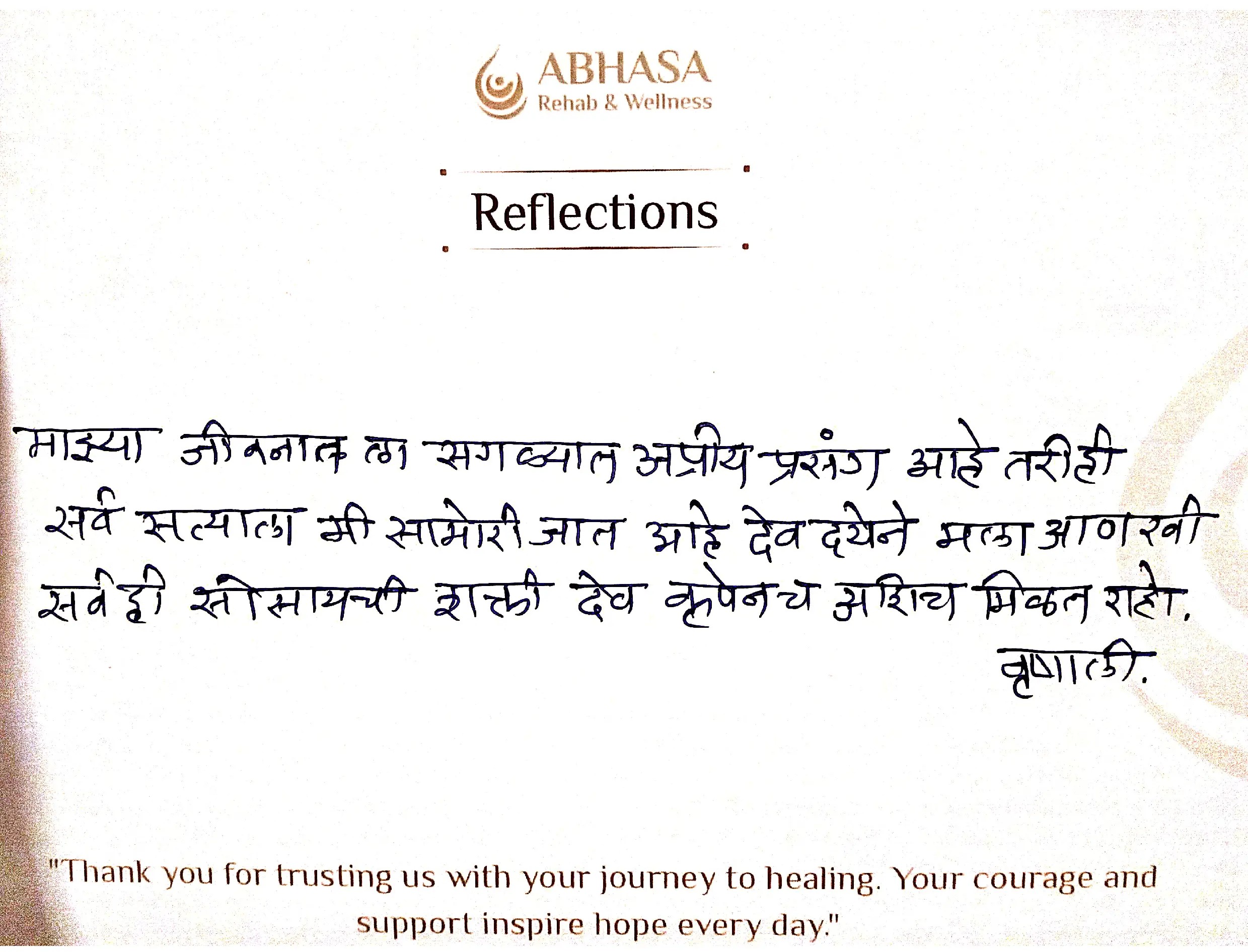
I found strength to face life’s hardest truths here. I believe it was God’s grace that brought me to Abhasa.
Former Client
Our Dual Diagnosis Treatment Centres
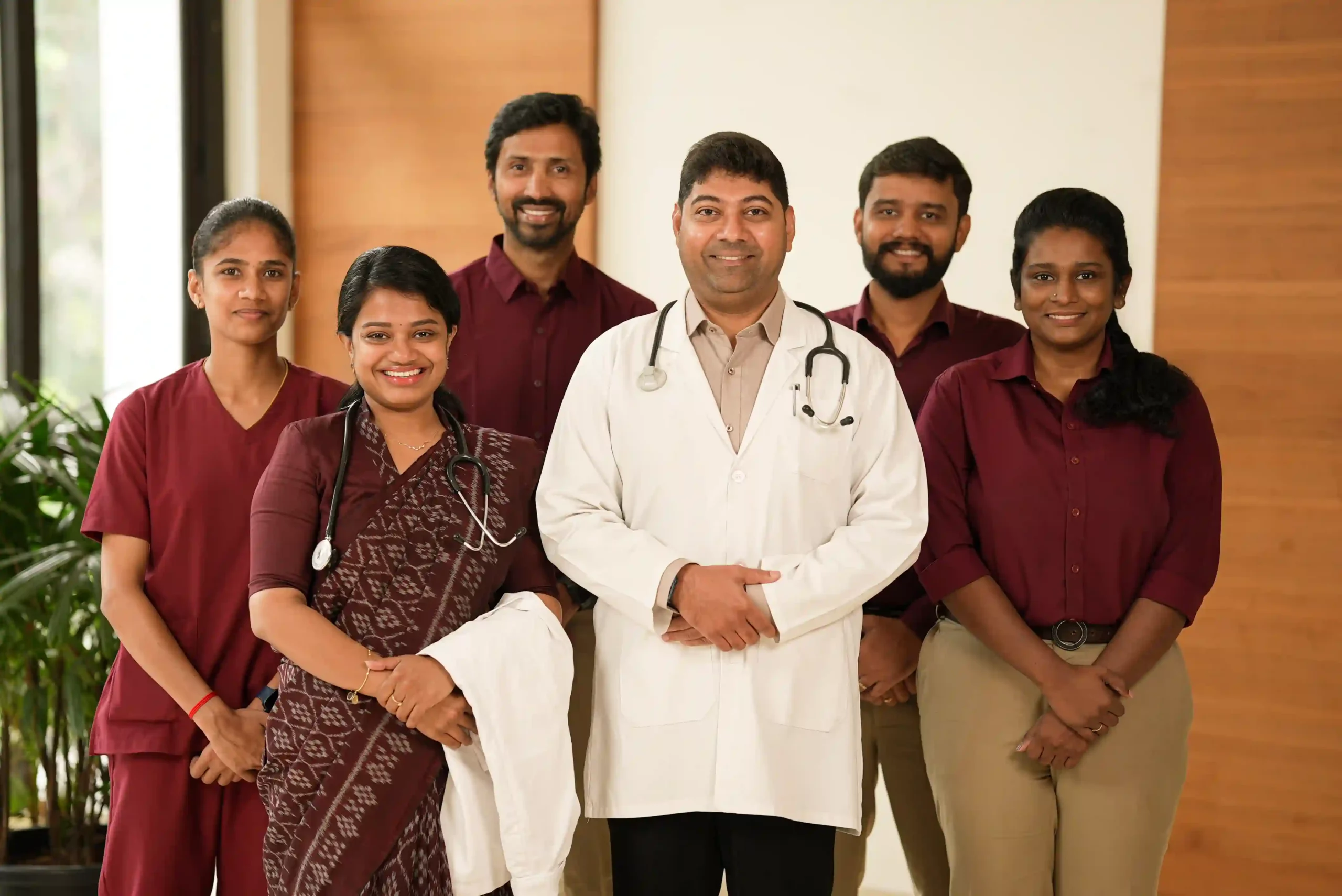

Spaces That Calm the Mind and Support the Body
Recovery does not begin only in therapy rooms. Sometimes, it starts with a walk through quiet gardens, the stillness of morning air, or the relief of knowing you are in a safe place. At Abhasa, we designed our dual diagnosis treatment centre locations to support emotional and physical healing through peaceful, private, and culturally sensitive environments.
We chose each of our dual diagnosis treatment centres locations with care, ensuring they offer comfort and connection to nature.
Coimbatore: Nature that Supports Every Step
Our Coimbatore centres rest in the calm surroundings of Tamil Nadu. Trees, hills, and fresh air create an environment where healing feels less like a task and more like a return to self. Clients wake up to birdsong, walk shaded paths, and rest in therapy rooms filled with natural light.
Nature plays an active role here. It helps quiet the mind, ease physical tension, and make recovery feel more possible.
Mumbai: Privacy and Accessibility in One Space
For those who need a centre closer to the city, our Mumbai location provides that access without giving up on warmth or discretion. Located within easy reach of central areas, the Mumbai centre allows families to stay involved while offering clients the space they need to heal.
Rooms are light-filled and quiet. Interiors use soothing colours, and therapy spaces protect each client’s need for emotional safety. This location brings together the ease of city access and the calm of a private setting.
Thoughtful Comfort in Every Detail
We do not see comfort as a luxury. We treat it as essential. Across all dual diagnosis treatment centres locations, clients stay in private rooms, eat fresh and balanced meals, and participate in wellness sessions designed to support both body and mind.
We pay close attention to the physical environment. We pay close attention to the little things, soft lighting, quiet corners, comfortable furnishings, and soothing surroundings. These choices help create an environment where clients can settle in and feel at ease, without tension or sensory stimuli.
We treat each person’s story with the respect it deserves. From the first call to the last day of care, we quietly protect their space, decisions, and journey with care and discretion.
If you seek a space that blends comfort, calm, and expert care, you will find it in our dual diagnosis treatment centres.
Explore the setting where your loved one can begin again.
Frequently Asked Questions About Dual Diagnosis Treatment
What is dual diagnosis treatment?
Dual diagnosis treatment refers to care designed for individuals who experience both a mental health concern and a substance use issue. This approach treats both conditions simultaneously, since one can often worsen the other. At Abhasa, dual diagnosis treatment combines emotional support, psychiatric care, and wellness therapies to ensure healing on all levels.
What are the benefits of dual diagnosis treatment?
When both challenges are addressed together, outcomes improve significantly. The main benefits include reduced relapse risk, improved emotional regulation, and better long-term stability. Our dual diagnosis treatment team works closely with each client to align therapies with their lived experiences, not just their symptoms.
What is the best treatment for dual diagnosis?
An integrated plan is the best dual diagnosis treatment, including psychotherapy, medication management, and supportive care. Cognitive behavioural therapy, trauma-informed methods, and family counselling are often included. At Abhasa, we adjust each plan to suit the client’s psychological needs and lifestyle, making recovery sustainable.
How to treat co-occurring disorders?
Treating co-occurring disorders requires a coordinated, multidisciplinary team. This means psychiatrists, therapists, family counsellors, and addiction specialists work together. Instead of separating the issues, we connect the dots to understand how one condition affects the other and create an adaptive recovery roadmap.
What is the integrated treatment for dual diagnosis?
Integrated treatment means both conditions are treated in one coordinated system. Instead of jumping between addiction support and mental health care, clients receive unified care that supports emotional well-being and behavioural recovery. This is at the heart of Abhasa’s dual diagnosis treatment approach.
What is the most common dual diagnosis?
One of the most common forms of dual diagnosis includes depression paired with alcohol misuse. Anxiety disorders, bipolar conditions, and trauma-based challenges also frequently occur alongside substance use. Recognising these patterns early helps ensure the most appropriate support plan is built.
Can people with dual disorders recover?
Yes. With the proper care and consistent support, people with dual disorders can heal, regain balance, and rebuild fulfilling lives. Recovery looks different for everyone, but progress is possible. We have seen many clients grow emotionally stronger and more connected with themselves and their families through the right environment and care.
What mental illness is most associated with addiction?
Mental illnesses like anxiety, bipolar disorder, depression and PTSD are often closely linked with addiction. These conditions can increase the risk of self-medicating with substances. That’s why early diagnosis and dual diagnosis treatment play a key role in long-term healing.
What is the best treatment for co-occurring disorders?
The most effective care for co-occurring disorders is one that provides emotional therapy, medication management, family support, and relapse-prevention planning under one roof. This ensures that no part of the recovery process is left unsupported. At Abhasa, each part of this care is deeply personalised.
What is the dual diagnosis approach?
The approach treats both mental health and substance use together. Instead of treating one and hoping the other improves, both are given equal attention. The dual diagnosis treatment approach at Abhasa builds a foundation of safety and emotional clarity, supported by structured therapy, family involvement, and skill-building.
How long does dual diagnosis treatment take?
The duration depends on how someone responds and the complexity of both conditions. Typically, residential programs last between 45 and 180 days, followed by structured aftercare. At Abhasa, we tailor each stay based on progress, not timelines.
What is the concurrent model of treatment?
This model treats both conditions simultaneously, but often through separate teams. While helpful, it may not be as connected as integrated care. At Abhasa, we go beyond the concurrent model by creating a single plan shared across one unified team.
Which type of therapy is best for dual diagnosis?
Cognitive behavioural therapy is a widely used foundation, often supported by dialectical behaviour therapy, EMDR for trauma, and family systems work. We match the therapy type to each client’s personality and emotional needs, ensuring dual diagnosis treatment works in real life, not just on paper.
Can I visit my loved one during dual diagnosis treatment?
Yes. We believe in family presence. Visits are scheduled based on therapeutic readiness, and we guide each family on making the most of this time. You are part of the recovery process, not just watching from outside.
What happens after dual diagnosis treatment?
Recovery continues with aftercare. We offer relapse-prevention coaching, regular family check-ins, community support referrals, and structured lifestyle guidance. Our dual diagnosis treatment team creates a long-term map so clients and families feel confident returning to daily life.
Begin Your Integrated Recovery Journey
Start the Path to Lasting Dual Recovery
If you’ve been searching for the best dual diagnosis treatment centres, you’re not alone. Many families come to us feeling overwhelmed, unsure where to turn, and hoping for personal and practical answers. At Abhasa, we understand that recovery from both mental health challenges and substance use needs more than treatment. It requires connection, trust, and genuine partnership.
You don’t have to carry the weight alone anymore. Help is here and grounded in dignity, privacy, and cultural care. Once you reach out, our team will explain the following steps, help with paperwork, and walk you through your first few days with us. It’s that straightforward.
The most important thing is this: you’re not doing this alone anymore.
The hardest part is asking for help. From there, we walk with you.
Proudly Serving Across Cities
- Rehab in Karjat
- Rehab in Pune
- Rehab in Navi Mumbai
- Rehab in Madurai
- Rehab in Trichy
- Rehab in Bangalore
- Rehab in Chennai
- Rehab in Thane
- Rehab in Nasik
- Rehab in Kochi
- Rehab in Mangalore
- Rehab in Mysore
- Rehab in Nasik
- Rehab in Kochi
- Rehab in Mangalore
- Rehab in Mysore
Medical Disclaimer
This information is for educational purposes only and does not constitute medical advice. Alcohol use disorder is a serious medical condition requiring professional diagnosis and treatment by qualified healthcare providers.
Always consult licensed medical professionals and addiction specialists before making treatment decisions. Individual results vary significantly based on numerous factors including severity of dependence, co-occurring conditions, personal commitment, and environmental support.
Alcohol withdrawal can be life-threatening. Attempting to detox at home without medical supervision may result in severe complications including seizures, delirium tremens, and death. Medical detoxification should only be conducted under the supervision of qualified healthcare professionals in an appropriate medical setting.
If you are experiencing a medical emergency, call emergency services immediately (dial 112 in India or your local emergency number).
The content provided describes general treatment approaches and facility amenities. It is not a substitute for individualized medical assessment or professional treatment planning. Treatment outcomes cannot be guaranteed, and recovery from alcohol dependence is an ongoing process that may include periods of relapse.
Research Citations (Top 15 Most Authoritative Sources):
Core Citations (All Sources Used):
[1] National Institute on Drug Abuse (NIDA) – “Principles of Drug Addiction Treatment: Research-Based Guide” – U.S. Department of Health and Human Services, 2024
URL: https://nida.nih.gov/publications/principles-drug-addiction-treatment-research-based-guide-third-edition
Source Type: Government (.gov) – Federal health authority
[2] Ghosh, A., et al. – “Dual diagnosis and their care pathways for help-seeking: A multicenter study from India” – Indian Journal of Psychiatry, 2024
URL: https://pmc.ncbi.nlm.nih.gov/articles/PMC11382752/
Source Type: Peer-reviewed study (PMC) – India-specific research
[3] SAMHSA (Substance Abuse and Mental Health Services Administration) – “Co-Occurring Disorders and Other Health Conditions” – U.S. Department of Health and Human Services, 2024
URL: https://www.samhsa.gov/substance-use/treatment/co-occurring-disorders
Source Type: Government (.gov) – Federal authority
[4] Drake, R.E., et al. – “Integrated Dual Disorder Treatment (IDDT)” – Center for Evidence-Based Practices, Case Western Reserve University, 2021
URL: https://case.edu/socialwork/centerforebp/practices/substance-abuse-mental-illness/integrated-dual-disorder-treatment
Source Type: Academic institution (.edu)
[5] Cleveland Clinic – “Dual Diagnosis (Co-Occurring Disorders): Causes & Treatment” – Cleveland Clinic Health Library, 2022
URL: https://my.clevelandclinic.org/health/diseases/24426-dual-diagnosis
Source Type: Medical institution
[6] Kelly, T.M. & Daley, D.C. – “Integrated Treatment of Substance Use and Psychiatric Disorders” – Psychiatric Clinics of North America, 2013
URL: https://pmc.ncbi.nlm.nih.gov/articles/PMC3753025/
Source Type: Peer-reviewed journal (PMC)
[7] Chetty, A., Guse, T., & Malema, M. – “Integrated vs non-integrated treatment outcomes in dual diagnosis disorders: A systematic review” – Health SA Gesondheid, 2023
URL: https://pmc.ncbi.nlm.nih.gov/articles/PMC10157410/
Source Type: Peer-reviewed systematic review (PMC)
[8] Mueser, K.T. & Drake, R.E. – “Implementing Dual Diagnosis Services for Clients With Severe Mental Illness” – Psychiatric Services, 2001
URL: https://psychiatryonline.org/doi/10.1176/appi.ps.52.4.469
Source Type: Peer-reviewed journal
[9] Watkins, K.E., et al. – “Impact of Program Services on Treatment Outcomes of Patients with Comorbid Mental and Substance Use Disorders” – Psychiatric Services, 2007
URL: https://pmc.ncbi.nlm.nih.gov/articles/PMC1904429/
Source Type: Peer-reviewed study (PMC)
[10] Brunette, M.F., et al. – “A comparison of long-term and short-term residential treatment programs for dual diagnosis patients” – Journal of Substance Abuse Treatment, 2001
URL: https://pubmed.ncbi.nlm.nih.gov/11274501/
Source Type: Peer-reviewed study (PubMed)
[11] Hofmann, S.G., et al. – “The Efficacy of Cognitive Behavioral Therapy: A Review of Meta-analyses” – Cognitive Therapy and Research, 2012
URL: https://pmc.ncbi.nlm.nih.gov/articles/PMC3584580/
Source Type: Peer-reviewed meta-analysis (PMC)
[12] Gupta, S., et al. – “Psychosocial interventions in patients with dual diagnosis” – Indian Journal of Social Psychiatry, 2018
URL: https://pmc.ncbi.nlm.nih.gov/articles/PMC5844161/
Source Type: Peer-reviewed journal (PMC) – India-specific
[13] SAMHSA – “Integrated Treatment for Co-Occurring Disorders Evidence-Based Practices” – SAMHSA Publication, 2020
URL: https://www.samhsa.gov/resource/ebp/integrated-treatment-co-occurring-disorders
Source Type: Government (.gov) – Evidence-based practice guidelines
[14] Sweileh, W.M. – “Research landscape analysis on dual diagnosis of substance use and mental health disorders” – Annals of General Psychiatry, 2024
URL: https://annals-general-psychiatry.biomedcentral.com/articles/10.1186/s12991-024-00517-x
Source Type: Peer-reviewed journal
[15] Kroll, D.S., et al. – “Behavioral Therapies for Co-occurring Substance Use and Mood Disorders” – Dialogues in Clinical Neuroscience, 2013
URL: https://pmc.ncbi.nlm.nih.gov/articles/PMC3693566/
Source Type: Peer-reviewed journal (PMC)
[16] Horsfall, J., et al. – “A review of research-supported group treatments for drug use disorders” – Substance Abuse Treatment, Prevention, and Policy, 2021
URL: https://substanceabusepolicy.biomedcentral.com/articles/10.1186/s13011-021-00371-0
Source Type: Peer-reviewed systematic review
[17] Deas, D. & Brown, E.S. – “Adolescent substance abuse and psychiatric comorbidities” – Journal of Clinical Psychiatry, 2006
URL: https://pubmed.ncbi.nlm.nih.gov/16961420/
Source Type: Peer-reviewed journal (PubMed)
[18] Drake, R.E., et al. – “Integrated treatment for dually diagnosed homeless adults” – Journal of Nervous and Mental Disease, 1997
URL: https://pubmed.ncbi.nlm.nih.gov/9171806/
Source Type: Peer-reviewed study (PubMed)
[19] Dusenbury, L. & Koren, S. – “Dual diagnosis clients’ treatment satisfaction: a systematic review” – BMC Psychiatry, 2011
URL: https://bmcpsychiatry.biomedcentral.com/articles/10.1186/1471-244X-11-64
Source Type: Peer-reviewed systematic review
[20] NIDA (National Institute on Drug Abuse) – “How Common is Relapse?” – NIDA Research, 2024
URL: https://nida.nih.gov/publications/principles-drug-addiction-treatment-research-based-guide-third-edition/frequently-asked-questions/how-effective-drug-addiction-treatment
Source Type: Government (.gov) – Federal research
[21] Brandon, T.H., et al. – “Addiction Relapse Prevention” – StatPearls, 2023
URL: https://www.ncbi.nlm.nih.gov/books/NBK551500/
Source Type: Medical textbook (NCBI)
[22] Hazelden Betty Ford Foundation – “Understanding Relapse and The Risks” – Addiction Research, 2024
URL: https://www.hazeldenbettyford.org/articles/relapse-risks-stats-and-warning-signs
Source Type: Professional organization
[23] American Addiction Centers – “Alcohol Relapse and Recovery Statistics” – Evidence-Based Treatment, 2025
URL: https://americanaddictioncenters.org/alcohol/relapse-statistics
Source Type: Professional treatment organization
[24] Ghosh, A., et al. – “Exploring help-seeking pathways and disparities in substance use disorder care in India: A multicenter cross-sectional study” – Indian Journal of Psychiatry, 2024
URL: https://pubmed.ncbi.nlm.nih.gov/39257507/
Source Type: Peer-reviewed study (PubMed) – India-specific
[25] McGovern, M.P., et al. – “Dual diagnosis capability in mental health and addiction treatment services” – American Journal of Orthopsychiatry, 2013
URL: https://pmc.ncbi.nlm.nih.gov/articles/PMC3594447/
Source Type: Peer-reviewed study (PMC)
[26] Sacks, S., et al. – “Continuity of Care in Dual Diagnosis Treatment” – Addictive Disorders & Their Treatment, 2015
URL: https://pubmed.ncbi.nlm.nih.gov/26457874/
Source Type: Peer-reviewed review (PubMed)
[27] Caron Foundation – “Behind the Numbers: What Relapse Rates Really Tell Us” – Treatment Research, 2024
URL: https://www.caron.org/blog/what-relapse-rates-really-tell-us
Source Type: Professional treatment organization
[28] Action Rehab – “How Many People Relapse After Rehab?” – Treatment Statistics, 2022
URL: https://action-rehab.com/rehab-faqs/how-many-people-relapse-after-rehab/
Source Type: Professional organization (UK)