
Luxury Delirium Rehab in India

Confusion doesn’t have to be faced alone. Abhasa provides safe, structured care that restores stability and comfort.
Abhasa provides the space where confusion eases and calm returns.
2:1 Staff-to-client ratio
3 Healing Spaces
Personalised Treatments
360° Healing
2:1 Staff-to-client ratio
3 Healing Spaces
Personalised Treatments
360° Healing
Comprehensive Delirium Treatment & Cognitive Rehabilitation in India

When confusion clouds the mind, clarity often feels just out of reach. At Abhasa, we help bring it back with steady care and heartfelt understanding.
Delirium can begin without warning. One day, your loved one speaks clearly, and the next day, they may not remember where they are. For many Indian families, especially those caring for elders, this sudden shift feels frightening. It often goes beyond simple forgetfulness. You may see fear, disorientation, or a personality change, and feel unsure how to respond. [1,2]
You might have already turned to hospitals or local doctors, hoping things would settle. When those efforts no longer feel enough, the need for specialised support becomes clear. That is where delirium treatment centres like Abhasa offer absolute comfort. We do not provide temporary fixes. We offer thoughtful, round-the-clock support that brings back structure and emotional peace. [3]
At Abhasa, our delirium therapy centres combine professional care with warmth. We guide clients through personalised routines designed to reduce confusion and improve cognitive strength. [3,4] Our natural surroundings, calming therapies, and kind-hearted team work together to create a space where healing feels possible.
Families often ask what makes residential care different. Here, we give your loved one more than treatment. We provide a rhythm to their days, with meaningful activities that support memory, orientation, and stability. Our team also teaches you how to recognise early signs, respond calmly, and create a safe home environment after discharge.
You are not alone in this. Whether your loved one faces delirium after surgery, illness, or medication shifts, you deserve a care plan that responds gently and consistently. Delirium treatment centres like ours support both emotional and cognitive recovery.
If you want a place that honours Indian family values, encourages mental clarity, and surrounds your loved one with care, Abhasa is ready.
Healing begins when food is no longer the enemy.
Understanding Residential Delirium Treatment
When confusion becomes constant and moments of clarity feel rare, families begin to ask: What kind of care truly helps? Delirium rehabilitation centres offer more than medical attention. They create the kind of structured, calm environment that allows the mind to find its footing again.
In most homes, caregiving happens between daily responsibilities, often without clinical tools or full-time support. When you seek professional care, you turn to hospitals. Hospitals offer quick responses but usually lack the long-term structure needed for recovery. That’s where residential care finds its strength. At Abhasa, we created a setting where structure meets empathy. Here, your loved one receives continuous, professional attention within an environment designed to soothe the senses.[3,4]
What Sets This Care Apart?
Not all care is the same. Delirium rehabilitation centres specialise in long-term cognitive recovery, not just crisis response. These centres focus on helping clients regain orientation, focus, and a sense of safety.[5] At Abhasa, this means consistent routines, low-stimulation spaces, and a team trained in compassionate, elder-sensitive care.
Our model supports every step, from the first signs of confusion to the return of simple daily confidence.
24/7 Support Matters
One of the most essential features of acute delirium treatment is uninterrupted monitoring. Delirium can shift quickly—within hours or even minutes.[1,2] Our care team watches closely for these changes, adjusting therapies and routines in real time.
Whether someone wakes up disoriented at midnight or struggles with focus during meals, our team remains present and calm. This sense of safety begins the healing process, especially for elders who need reassurance more than restraint.
Different Faces of Delirium
Not everyone shows the same signs. Some people feel restless or agitated. Others withdraw, speak less, or appear drowsy. These are known as hyperactive and hypoactive forms. Mixed delirium involves both patterns, which may occur in cycles.[2,6]
That’s why acute delirium treatment must remain flexible and responsive. Our specialists recognise subtle changes and respond gently. We never force a routine. Instead, we adjust the rhythm to support each person’s needs throughout the day.
Why Choose Residential Over Hospital-Based Care?
Hospitals do excellent work in emergencies, but they rarely offer the comfort or consistency needed for cognitive restoration. Delirium rehabilitation centres like Abhasa go further. Here, your loved one stays in a private room, follows a calm schedule, and receives tailored support.
We remove unnecessary noise, reduce visual clutter, and promote mental orientation through everyday familiarity. A familiar face, a walk in the garden, or a simple, structured meal can do more than medication alone.
When someone you love lives through moments of mental fog or sudden confusion, you may not know what to do next. What they need is not more alarms or hospital beds. They need calm, steady support in a peaceful space built just for them.
What Sets This Care Apart?
Not all care is the same. Delirium rehabilitation centres specialise in long-term cognitive recovery, not just crisis response. These centres focus on helping clients regain orientation, focus, and a sense of safety.[5] At Abhasa, this means consistent routines, low-stimulation spaces, and a team trained in compassionate, elder-sensitive care.
Our model supports every step, from the first signs of confusion to the return of simple daily confidence.
24/7 Support Matters
One of the most essential features of acute delirium treatment is uninterrupted monitoring. Delirium can shift quickly—within hours or even minutes.[1,2] Our care team watches closely for these changes, adjusting therapies and routines in real time.
Whether someone wakes up disoriented at midnight or struggles with focus during meals, our team remains present and calm. This sense of safety begins the healing process, especially for elders who need reassurance more than restraint.
Different Faces of Delirium
Not everyone shows the same signs. Some people feel restless or agitated. Others withdraw, speak less, or appear drowsy. These are known as hyperactive and hypoactive forms. Mixed delirium involves both patterns, which may occur in cycles.[2,6]
That’s why acute delirium treatment must remain flexible and responsive. Our specialists recognise subtle changes and respond gently. We never force a routine. Instead, we adjust the rhythm to support each person’s needs throughout the day.
Why Choose Residential Over Hospital-Based Care?
Hospitals do excellent work in emergencies, but they rarely offer the comfort or consistency needed for cognitive restoration. Delirium rehabilitation centres like Abhasa go further. Here, your loved one stays in a private room, follows a calm schedule, and receives tailored support.
We remove unnecessary noise, reduce visual clutter, and promote mental orientation through everyday familiarity. A familiar face, a walk in the garden, or a simple, structured meal can do more than medication alone.
When someone you love lives through moments of mental fog or sudden confusion, you may not know what to do next. What they need is not more alarms or hospital beds. They need calm, steady support in a peaceful space built just for them.
Abhasa provides the space where confusion eases and calm returns.
Why Choose Specialised Delirium Treatment Centres
Caring for someone with sudden confusion or memory loss can feel overwhelming. You may already give your best—managing medications, offering emotional support, and watching over your loved one. But sometimes, love and patience alone are not enough. That is when families begin to explore the help that only cognitive disorder treatment centres can offer.
Delirium changes quickly. One moment, your loved one may seem fine. Next, they feel lost or agitated. These changes often frighten the family and confuse the person experiencing them. Without the right environment and tools, it becomes hard to bring back stability. Delirium specialist centres give this process structure.[3,4] They help restore rhythm to a mind that feels scattered.

What Makes Expertise So Important?
In a regular care setting, delirium symptoms might go unnoticed or be misunderstood. At delirium specialist centres, trained teams know how to read these signs early and respond with care. These professionals do not just treat the condition—they understand its layers. They follow protocols designed for people experiencing cognitive shifts, whether those come from surgery, medication, or age-related changes.[6,7]
Our team at Abhasa includes geriatric specialists, cognitive therapists, and recovery experts who work together every day. This focused attention ensures that clients receive care built on deep knowledge, not guesswork.

Comprehensive Evaluation at the Start
Families often ask what makes a structured program different. The answer begins with assessment. At cognitive disorder treatment centres, every client starts with a detailed cognitive evaluation. We look at attention, memory, orientation, and speech to understand the whole picture.[1,2]
This helps us design a care plan that fits your loved one’s needs. Whether someone struggles with simple routines or loses track of time, our team finds ways to bring them back to clarity gently. The care plan stays flexible, responding to improvements and new needs as they appear.

Families Are Never Left Behind
When a loved one struggles with delirium, the entire family feels it. At Abhasa, we do not separate the person from their support system. Delirium specialist centres like ours invite families into the process with compassion and guidance.
We teach caregivers how to speak gently during moments of confusion, how to avoid unintentional stress, and how to support recovery without losing their strength.[8,9] These tools matter as much as therapy itself. They reduce panic, build understanding, and create a calmer home when your loved one returns.

Supporting the Journey Home
Treatment does not stop at discharge. True healing continues at home. That is why cognitive disorder treatment centres plan. Before your loved one leaves, we work with the entire family to create a personalised transition plan.
We guide you on home modifications, safety checklists, daily schedules, and follow-up appointments. Our team also provides regular check-ins to ensure support continues after the program ends. You do not have to figure it out on your own.
If you feel unsure about what to do next, take a breath. Help is here. You are not alone, and your loved one deserves expert support that goes beyond temporary solutions. The path to clarity begins with the proper care.
Expertise, structure, and compassion, delivered every day.
Why Families Trust Abhasa for Delirium Care
Most families reach out to us after weeks, sometimes months, of watching a loved one slip into confusion. They carry questions, fear, and quiet guilt. At Abhasa, they finally find something different. They find peace, dignity, and a gentle return to clarity. That is what defines our approach to luxury delirium treatment.[3]
This journey is not just about stabilising symptoms. It is about restoring the connection between families and their loved ones. When care feels warm, when surroundings feel safe, and when each moment is handled with respect, healing begins in ways that no hospital setting can offer. That is why many now consider us among the best delirium care centres in India.
A Healing Environment That Feels Like Home
Step inside Abhasa, and you do not see a clinical corridor. You see sunlight falling into quiet rooms, gardens where clients walk with support, and spaces that welcome families without fear. Our model of luxury delirium treatment includes private rooms, sensory-friendly interiors, safe outdoor areas, and soothing music woven through the day.
Each detail supports relaxation and orientation. These thoughtful touches reduce anxiety and encourage presence. In this calm environment, your loved one can begin to feel like themselves again.
A Holistic Path That Nurtures the Whole Self
Delirium affects the mind, but it also unsettles the body and spirit. That is why we never treat it in isolation. Our care includes a full range of mind-body therapies.[4,5] Along with cognitive support, we offer yoga, music therapy, breathwork, art sessions, and sensory activities.
This is luxury delirium treatment that goes deeper than routine therapy. It helps clients rebuild memory, improve focus, and feel more grounded. Every therapy session happens in a space that respects personal pace and emotional comfort.
Families Deserve a Place in the Healing Process
At Abhasa, we help families understand what delirium is, how it works, and what they can do. We include them in our care plans, provide emotional support, and create moments where healing is shared.
This family-first model sets us apart from many facilities. We do not just support the client. We support the people who hold their hands through it all. That is one of the many reasons families consider us among the best delirium care centres they could turn to.
We Honour Indian Values and Traditions
We understand how deeply Indian families value respect for elders. At Abhasa, we carry that value into every interaction. We greet your loved one with warmth. We ensure gender-respectful care. We maintain spiritual neutrality and offer optional rituals that feel familiar. Families often tell us it feels both modern and deeply rooted in culture.
This cultural sensitivity strengthens trust and makes our environment feel more natural. Healing happens more easily when comfort and familiarity meet high-quality care.
Your Privacy, Always Protected
We provide professional care with complete confidentiality. Each client has their own space, and we follow clear boundaries around visits and information sharing. We treat privacy not as an added service, but as a fundamental right.
Our consistent commitment to dignity is another reason families place their trust in us. We do not just meet expectations. We quietly exceed them, day by day.
A Record of Consistent Recovery
Families choose Abhasa not only for the setting or amenities, but for results. We have supported hundreds of clients through post-operative confusion, sudden memory loss, and acute disorientation.[7,10] Over time, we have become one of the best delirium care centres by doing one thing well: treating each person as an individual.
Our outcomes speak through client stability, family satisfaction, and stories of reconnection. This is a luxury delirium treatment that blends care with results.
If you want your loved one to receive care that feels personal, gentle, and trustworthy, we invite you to reach out.
Give your loved one the help they deserve.
Meet Our Delirium & Cognitive Specialists
At Abhasa, every recovery begins with the right people. As one of India’s trusted delirium management centres, we bring together a team of doctors, therapists, and caregivers who specialise in restoring clarity with care.
Our medical experts include neurologists, geriatricians, and physicians trained in delirium-specific protocols.[3,6] Our therapists focus on memory, attention, and speech. Moreover, each session is tailor-made to individual needs. Within our cognitive rehabilitation centres, recovery also involves nurses who offer 24/7 support and family counsellors who guide loved ones through the healing process.
Each team member brings more than qualifications; they bring warmth, patience, and the belief that healing takes understanding, not just expertise.
Families often tell us they feel safer when their loved one is supported by people who truly listen. That trust matters to us. It guides everything we do.
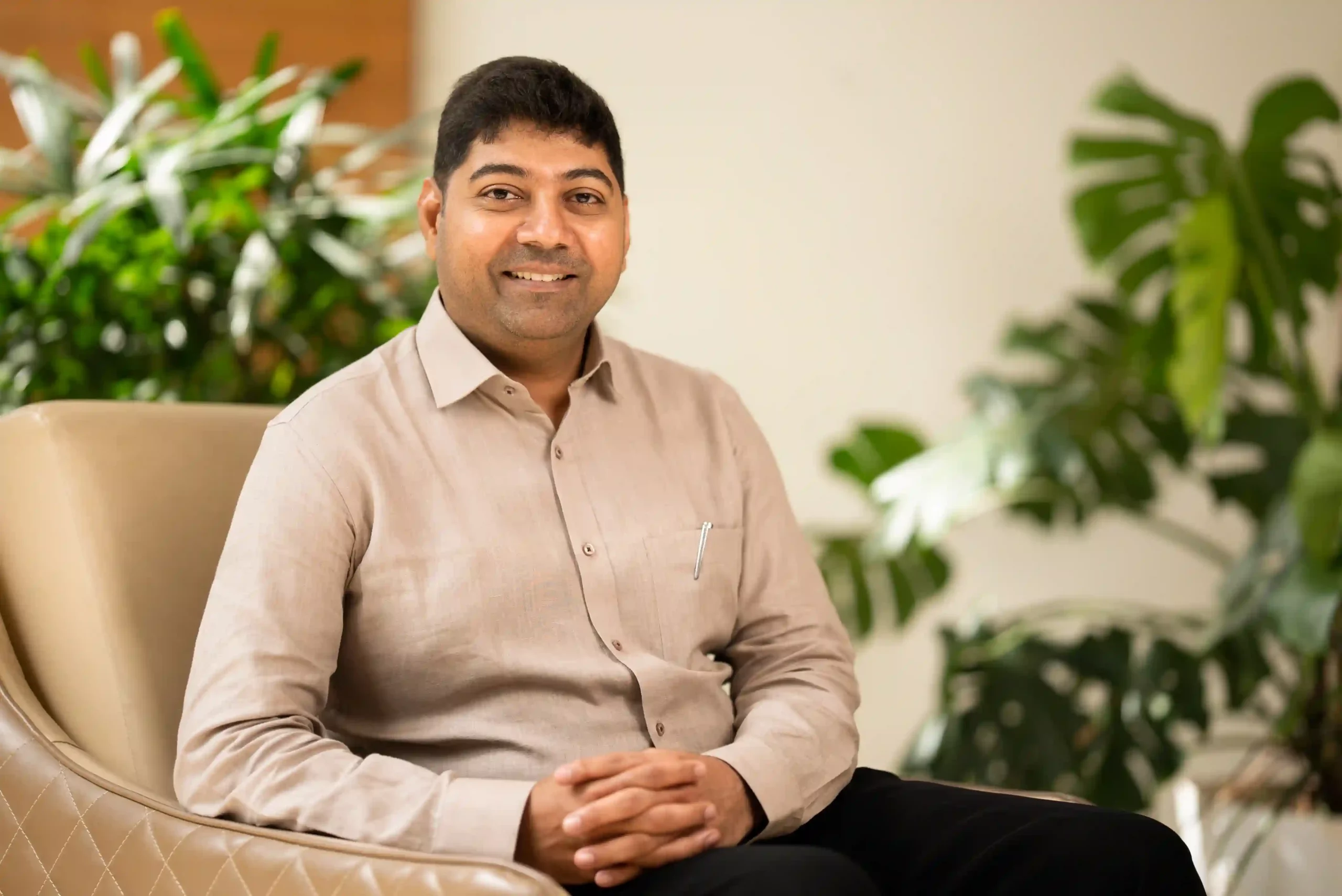
Dr. Naveen Kumar
Medical Director
15+ years of expertise in psychiatry and addiction recovery.

Dr. Vivek Sharma
Consultant Psychiatrist & Neurofeedback Practitioner
With over 15+ years of experience in psychiatry and neurofeedback, he blends medical expertise and compassion to guide clients toward lasting recovery.

Dr. Shree Aarthi
Consultant Psychiatrist
15+ years providing expert psychiatric care for mental health and substance use disorders.

Dr. Ramalingam P Kandaswamy
Consultant Physician
15+ years With over 5 years of experience in HIV and infectious diseases, he brings global expertise and compassionate care to every patient he supports.

Dr. Divya
Psychiatrist
10+ years combining clinical psychiatry expertise with healthcare management for holistic treatment.

Dr. Malarvilzhi
Residential Medical Officer
12 years delivering comprehensive medical care in psychiatric and rehabilitation settings.

Dr. Karuppachamy
Senior Psychiatric Social Worker
22+ years of experience empowering clients through therapeutic guidance, psychosocial support, and lived-experience wisdom.

Ms. Meera
Senior Clinical Psychologist
9+ years specializing in psychological assessment and evidence-based therapeutic interventions.

Mrs. Priyadarshini
Head Clinical Psychologist

Mr. Mukesh Kanna
Clinical Psychologist
2+ years providing psychological interventions for behavioral health and emotional wellness.

Mr. Antipas Jayabal
Clinical Psychologist
2+ years supporting clients through clinical assessment and therapeutic care.

Ms Keerthana S
Psychologist
Empathetic psychologist with 4 years’ experience in handling mental health disorders, using evidence-based psychotherapies for personalized client care.
Want to speak with one of our specialists?
Inside Our Residential Programme
If you believe all delirium care centres focus only on short-term recovery, you are not alone. But what we offer at Abhasa goes much deeper. We do not only address symptoms. We rebuild confidence, clarity, and daily function through structured healing that meets the needs of both the mind and the heart.[5]
As one of India’s most trusted delirium care centres, our programme blends neuroscience with empathy. Healing becomes a holistic approach that includes therapeutic support, clinical oversight and cultural understanding. Our team sees the person, not just the condition.

Understanding the Cause of Confusion
We begin with clarity, not assumptions. Unlike many delirium care centres, we take time to understand each client’s triggers.
Cognitive assessments and neuro-behavioural mapping aid us in identifying attention gaps, memory loss patterns, and disorientation levels.[1,2] Our team then works on a care plan that meets those specific needs.
Adapting the Plan with Insight
At Abhasa, care plans evolve with the client. We observe emotional responses, attention span, and orientation each day. Our team reviews these changes and adjusts the approach to ensure progress continues gently.[3,4]
Medical professionals, psychologists, and therapists collaborate regularly to personalise each plan. The flexible recovery plan ensures the client receives support that grows with them, setting us apart from other delirium care centres.
Building Recovery Through Multiple Layers
The combination of clinical care, sensory stability, and therapeutic engagement makes our recovery model a unique one. Our cognitive therapy programs focus on helping each person feel more present and confident.[5]
A few daily exercises include:
- Simple memory games
- Activities that guide attention
- Light speech work
- Sensory-based tasks
Each session moves the person closer to stability and self-recognition.
Most delirium care centres offer a single approach. At Abhasa, we provide all the essential layers under one roof. Our daily framework combines therapy, structure, and emotional warmth. We walk with your loved one through every stage, offering both consistency and care.
If you are seeking cognitive therapy programs designed for lasting recovery and a safe space where healing feels natural, your journey starts here.
Our personalised healing framework creates real, lasting change.
A Typical Day in Delirium Recovery
Daily rhythm is part of the healing process. As one of the leading centres for structured cognitive rehabilitation, our days follow a pace that brings safety, predictability, and progress.[3,4] We blend evidence-based routines with calm surroundings to help the mind reorient, the body find balance, and the heart feel secure.

We do not treat delirium with pressure or urgency. We use structure to help each person feel more stable, one familiar moment at a time.
From slow mornings that begin with orientation support to evenings that end with soothing rituals, every hour is designed to serve a purpose. This structure also builds practical habits that support life after treatment.
Gentle mornings for a calm mind
Clients wake slowly, supported by soft cues from staff. Apart from gentle reminders, Orientation boards and simple routines help the brain register time and place. This early rhythm is essential in structured cognitive rehabilitation, where safety and predictability reduce anxiety.[4,6]
Nutrition and focus
Breakfast includes brain-supportive foods like oats, fruit, and warm herbal drinks.[3,6] Our care team uses this time to observe energy levels and prepare for the first therapy block of the day.
Individualised therapy and memory care
Late mornings include one-on-one structured cognitive rehabilitation activities. Therapists use guided recall tasks, simple sequencing, and gentle exercises to build memory, attention, and daily function.[5]
Midday rest and movement
Following a healthy, sumptuous lunch, clients have a supervised walk, light stretching, or sensory exercises. For some, rest is the focus. For others, movement might help in reducing the restlessness and improving clarity.
Social and family connections
In the afternoon, group activities focus on gentle cognitive stimulation. We bring people together through simple, familiar activities.
Evenings that encourage rest
Evenings stay calm. Dinner is soft and manageable, never rushed. After that, we guide clients through gentle wind-down routines. Maybe they listen to music they recognise. Maybe they breathe along to a quiet voice or hold a warm cup of tea. These little rituals help the body settle, so sleep comes more naturally.
At many centres, routine is simply a list of tasks. At Abhasa, it is part of therapy. This is what sets our structured cognitive rehabilitation apart. We don’t just help clients recover. We help them find rhythm again.
Clarity starts here, one step, one day at a time.
Cognitive Rehabilitation & Recovery Programs
Delirium recovery takes more than rest. It requires thoughtful, guided support that strengthens focus, memory, and orientation over time. At Abhasa, we design each program as part of a broader journey, not a fixed schedule. Like every stage of delirium rehabilitation, this process moves at the person’s pace—not ours.[5]
We begin with care plans that grow with the individual. Our team starts by observing how the client responds to space, time, interaction, and structure. We listen to family input. We study patterns of attention and emotional reaction. Then we shape a plan that feels achievable and supportive.
This personalised model is what makes our cognitive rehabilitation therapy truly effective. It treats the whole person—not just the symptoms.
Our memory work focuses on small wins. Clients may match faces to names, recall meaningful details, or follow structured story prompts. These techniques help anchor thought patterns and slowly bring back a sense of mental control.[5] Memory-focused exercises remain central to delirium rehabilitation.
Distraction often follows delirium. Our cognitive rehabilitation therapy includes daily attention-building tasks like pattern tracing, guided word games, and step-by-step visual tasks. These routines help improve short-term focus and reduce restlessness.[5]
When someone has trouble knowing where they are or what day it is, it can be unsettling for them and their family. We gently guide them back to the present. Throughout the day, we use simple tools like calendars, photos of loved ones, and gentle reminders. These moments help bring a sense of place and time.[4,6] Over days and weeks, this quiet rhythm helps the mind feel more anchored. It becomes a small but essential part of early delirium rehabilitation.
Making a choice, following a routine, or starting a task can feel confusing after delirium. Even small decisions may take more effort than before. Our team offers kind, step-by-step support to guide each action. Whether it’s choosing what to wear or watering a plant, we break it down together. These activities slowly build confidence and help clients feel more in control of their daily lives.
After an episode of delirium, it can be hard to speak clearly or find the right words. Some people pause mid-sentence. Others hesitate to talk at all. In our cognitive rehabilitation therapy, we create a safe space where communication can return at its own pace.[5] We speak through familiar objects, practise naming things, and offer gentle conversation starters. Over time, these sessions help clients feel heard and more able to share their thoughts again.
We also include meaningful tasks like folding clothes, watering plants, or preparing simple items. These activities train hand-eye coordination, memory, and responsibility.[5] They form the bridge between clinical recovery and real-life function within delirium rehabilitation.
At Abhasa, we do not follow a one-size-fits-all model. Our cognitive rehabilitation therapy responds to how a person feels, progresses, and connects. We review care plans weekly, consult across teams, and adapt therapies in real time.
Recovery from delirium is not just possible. It is personal. And it begins with one supported, structured step at a time.
Curious how this program can support your loved one?
Post-Treatment Support & Transition
Discharge from residential care is not the end of healing. It is the beginning of a new phase. At Abhasa, we approach this step with the same care and intention as in residential care. Our delirium recovery programs continue into life beyond the centre, helping each client step into everyday routines with steady support.[10,11]
We involve families early in this transition. You are not just updated. You are part of the plan. Together, we create a personalised roadmap for life at home, grounded in routine, emotional safety, and practical tools.
This is how long-term cognitive care takes shape, not as a checklist, but as an evolving journey.
Before discharge, we prepare a structured plan that includes every detail your loved one might need. This plan outlines sleep routines, daily activities, hydration cues, safety needs, and memory-support practices.[3,12]
We also work with you to ensure your home becomes an extension of our delirium recovery programs. We walk through safety adjustments, family roles, and what to do if confusion returns.

Many families worry about what happens after the structured care ends. We provide hands-on training to help you feel more prepared. You will learn how to respond when your loved one becomes disoriented, how to bring them back to the present, and how to avoid unintentional triggers.[8,9]
Also, our long-term cognitive care guidance includes tips on sleep regulation, consistent language cues, and calming interventions for stressful moments.

Our team offers follow-up calls, check-ins, and scheduled reviews. You will never be left to manage alone. If your loved one needs to return for short-term reinforcement, our step-back protocol ensures continuity without delay.
We also connect families to community resources, local wellness networks, and nearby professionals who understand cognitive healing. This extended support is a key part of our delirium recovery programs.

Relapse can look different in delirium than it does in other conditions. That is why our team teaches you how to notice subtle signs of regression.[11,12] These may include changes in sleep, appetite, or focus. You will receive clear, written guidance on what to do, when to reach out, and how to respond calmly.
With this foundation, your family can stay grounded, even if things shift again. Long-term cognitive care works best when it includes preparedness, not just hope.
We believe that healing does not stop at the centre gate. It grows stronger when it follows you home.

No one-size-fits-all plans. Only care that adapts and responds.
Family Education & Support Programs
When a loved one begins to change in ways you don’t recognise, forgetting things, getting disoriented, or becoming someone they’ve never been, it’s heartbreaking. You want to help. You try to stay strong. But it’s not always clear what to do.
At Abhasa, we see the family’s journey just as clearly as we see the client’s. That is why family involvement in delirium care is not optional here. It is part of how healing unfolds.[8,9]
We do not just treat the individual. We guide the people who love them, too.

You will never be left wondering how things are going. We keep families informed in simple, meaningful ways. Short daily updates tell you how your loved one felt that day, what they participated in, and what kind of support they needed.[9]
Once a week, you will have a call with your case manager to ask questions or share how you’re feeling. Every month, our clinical team sits down with you to discuss the bigger picture. This is not just communication. It is a collaboration.
Family involvement in delirium care should feel steady and supportive, not distant or unclear.

We believe the more you understand, the better you can help. Our education sessions are built around real situations you might face.[8,9]
You will learn:
- Why delirium happens and how it shows up
- What helps during moments of confusion[1,2,6]
- What can unintentionally make things harder
- How to speak gently when words get lost
- How to care for yourself while caring for them
We share practical tools you can use at home. Every session helps make family involvement in delirium care more informed and less overwhelming.
Watching someone you love struggle with confusion and memory loss is emotionally exhausting.[9] We offer space for you to process that. Whether it is a short conversation with a counsellor or guidance on setting healthy boundaries, our team is here to support you as well.
You are not expected to carry this alone.

Before your loved one leaves residential care, we work with you on the next steps. Together, we talk about routines, safety at home, emotional support, and what signs to watch for.
You will leave with a plan.
Because family involvement in delirium care is not about being perfect, it is about staying connected, supported, and ready.
We’ll walk this journey with you, step by step.
Safe, Therapeutic Environment
Healing often begins long before therapy starts. It can begin with a quiet room, a gentle breeze, or a space that helps the mind slow down. At Abhasa, we have created a safe delirium treatment environment where every detail supports recovery without pressure.[3,4]


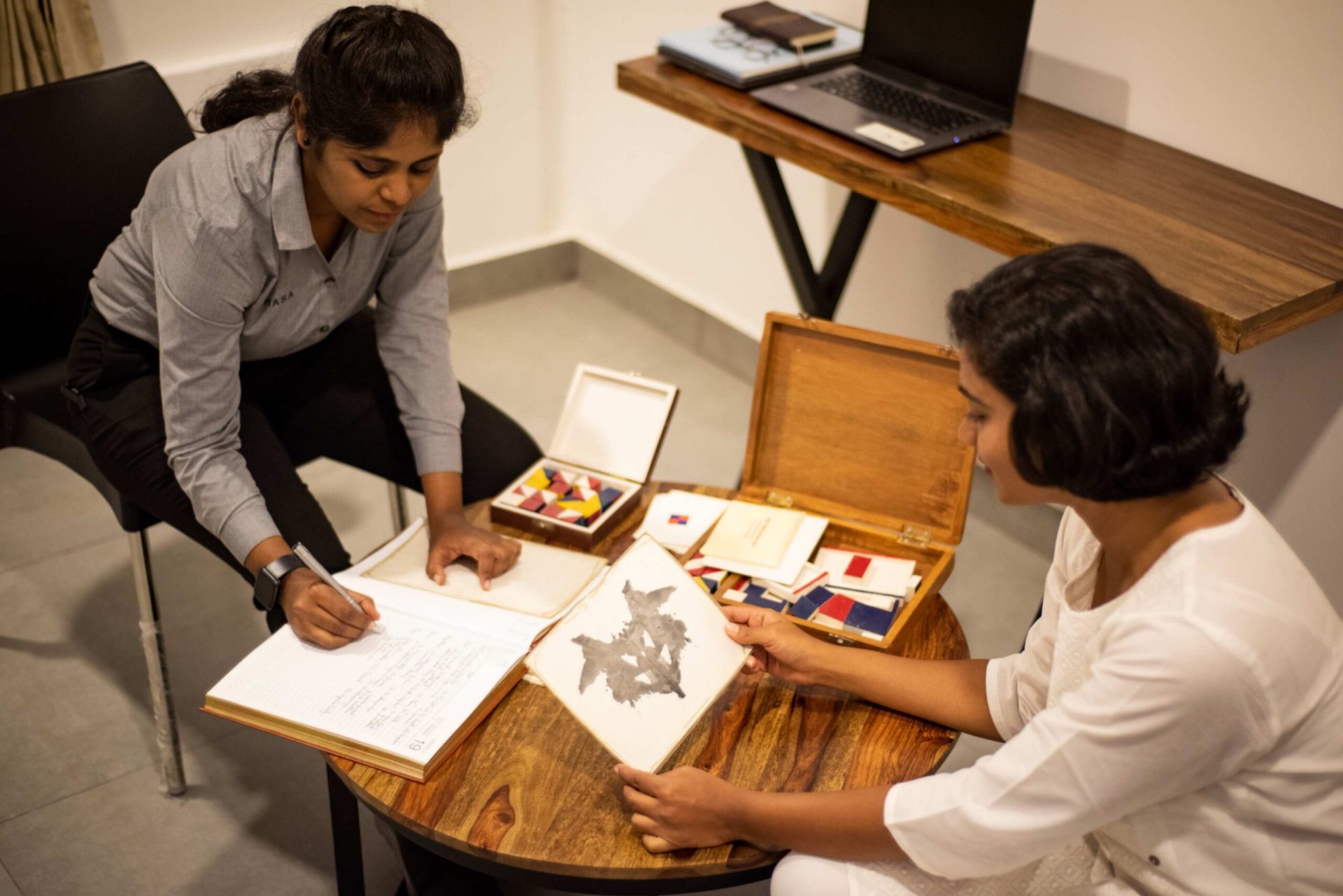
People who experience delirium often feel overwhelmed by noise, crowds, or unpredictable surroundings. That is why we designed our residential spaces to feel calm, clear, and emotionally steady. Nothing here is harsh or clinical. Everything invites rest, orientation, and quiet trust.
Designed for Safety, Inside and Out
Safety is not just a feature. It is the foundation of care. Our rooms include elder-friendly furniture, handrails, and gentle lighting. We place call buttons within easy reach and provide 24/7 monitoring so your loved one never feels alone.[6] This level of attention is what defines a safe delirium treatment environment.
Outside the rooms, walking paths remain even and clear, with staff nearby for guidance. We have added fall-prevention tools and sensory cues to help clients move with more ease and confidence.
Calming Spaces That Reduce Overwhelm
Our therapy rooms use natural light, soft tones, and open design to reduce confusion and anxiety. We avoid loud sounds and bright distractions.[4] Every space is designed to settle the nervous system, not activate it.
This is what makes a safe delirium treatment environment different from a standard care setting. It feels thoughtful, quiet, and human.
Nature That Restores Without Words
Surrounding our centre, gardens and green spaces offer moments of stillness. Clients often sit quietly under a tree or walk beside family on shaded paths. Nature does something that therapy cannot always reach. It helps the body feel safe again.
We believe healing should feel familiar.
Private, Protected, and Peaceful
We maintain controlled access and respectful supervision across the property. Families visit in comfortable, open spaces. Clients rest in private rooms where noise is low and light flows in gently. Our team watches closely but never intrudes.
This atmosphere defines a truly safe delirium treatment environment. It respects each person’s dignity while offering complete protection and support.
At Abhasa, we have created more than a facility. We have built a healing space where your loved one can feel protected, relaxed, and ready to recover.
Step into a space that soothes the senses.
Success Stories: Cognitive Recovery Journeys
Families often arrive unsure of what comes next. Some haven’t heard their loved one speak clearly in weeks. Others just want one full day without confusion. At Abhasa, we’ve seen those hopes gently become reality.
There are no major grand transformations, but a small change like calling a person by their name is the quiet sign that healing is happening. These are the objective markers of success in delirium treatment: a clearer voice, a steadier walk, a longer moment of focus.[10,11]
Over time, we’ve watched our clients reclaim small pieces of their lives. And we’ve seen families breathe a little easier.
The journey isn’t always fast, but here, it is never walked alone.
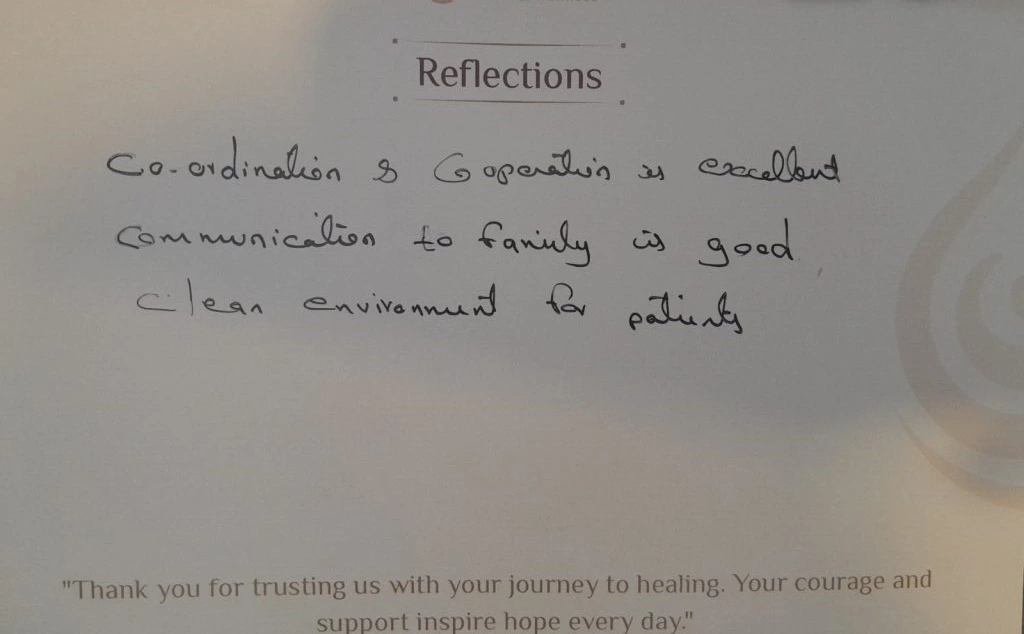
Co-ordination & cooperation is excellent. Communication to family is good. Clean environment for patients.
Former Client
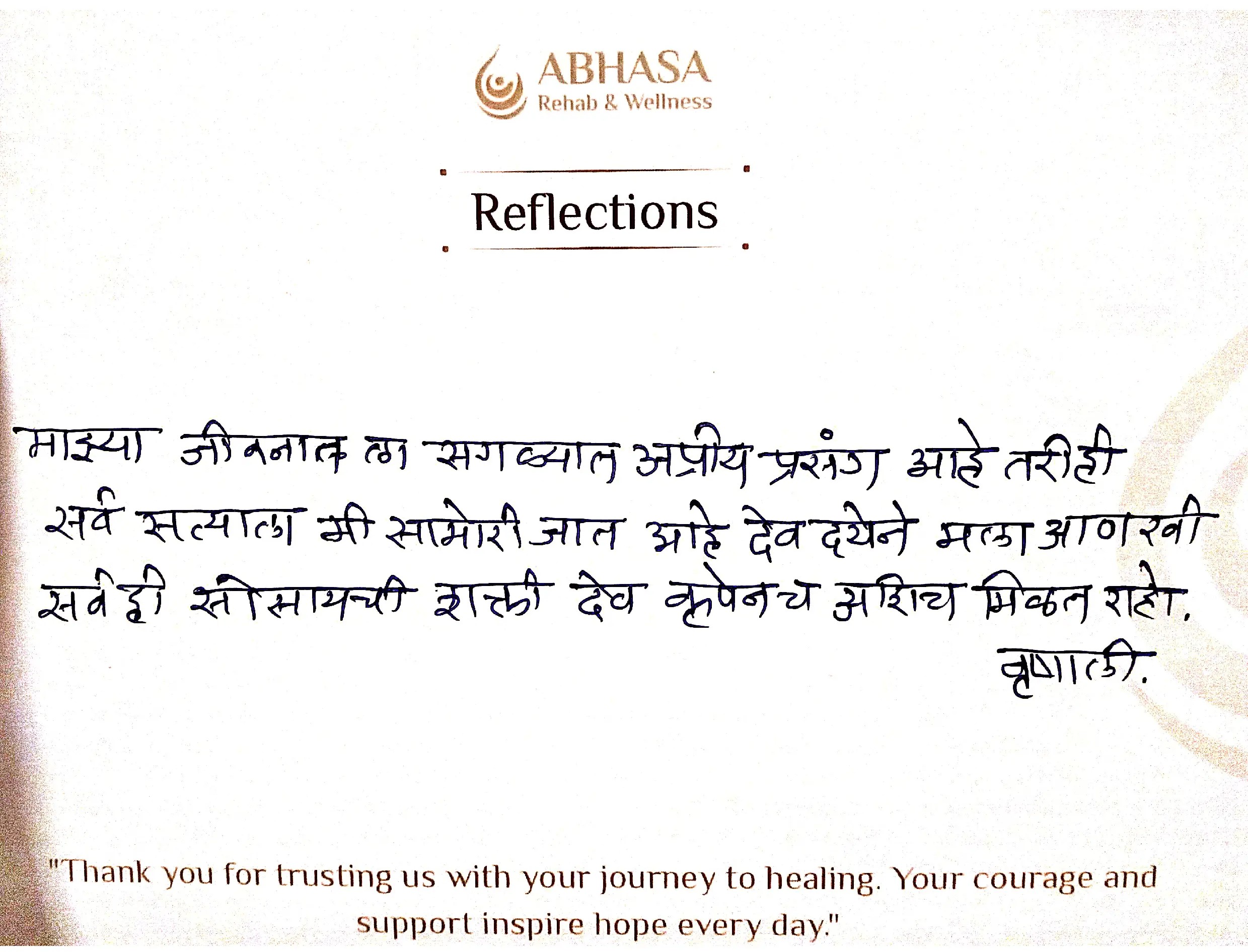
I found strength to face life’s hardest truths here. I believe it was God’s grace that brought me to Abhasa.
Former Client
Your journey to freedom with food starts today.
FAQs About Delirium Treatment Centres
Can a neurologist help with delirium?
Yes. Neurologists often support care in delirium treatment centres by identifying underlying brain changes and guiding the care plan.[1,3]
Can a person live at home with delirium?
Some individuals can recover at home with the proper support, but many benefit from structured help in delirium treatment centres for better safety and recovery.
Can someone recover from delirium?
Yes. With proper care and time, most people experience complete or partial recovery.[10,11] Support from experienced professionals improves outcomes.
Can you live an everyday life with mild cognitive impairment?
Yes. Many people adapt well to routines, support systems, and cognitive rehabilitation that strengthen focus and memory.
Can you make a full recovery from delirium?
It depends on the cause and response to care. Many people do regain their previous level of functioning after focused treatment.[10,11]
How do hospitals treat delirium?
Hospitals usually treat underlying medical causes. However, delirium treatment centres focus on extended emotional and cognitive support.
How do you treat delirium at home?
Maintain a calm environment, keep routines consistent, and consult a care provider early. Always ask about cognitive rehabilitation if confusion worsens.
How long does cognitive rehabilitation take?
The duration varies. Some people improve in weeks, while others benefit from ongoing sessions, mainly when goals include daily life skills.[5]
How can a person be brought out of delirium?
Stability, hydration, nutrition, and reassurance help. It is best to involve trained professionals from delirium treatment centres as early as possible.
How to manage a delirium patient?
Stay calm, speak clearly, and minimise distractions. Guided care and cognitive rehabilitation improve the person’s sense of safety.
Is delirium a mental illness?
Delirium is not a mental illness. It is a temporary cognitive state that often has a physical or medical cause.[2,6]
Is delirium treated in the hospital?
Yes. Hospitals handle the acute phase. For long-term healing, delirium treatment centres provide a safer and more structured setting.
What are the four levels of cognitive rehabilitation?
They include skill building, awareness training, real-world application, and long-term planning.
What are the 5 P's of delirium?
Pain, position, personal needs, presence, and plan.[6,13] These guides for caregiving can reduce the risk of confusion.
What are the principles of cognitive rehabilitation?
Focus on routine, repetition, realistic goals, supportive environment, and emotional readiness.[5]
What do hospitals do for delirium?
They stabilise the person medically. Once stable, clients may transition to delirium treatment centres for more extended recovery support.
What does cognitive rehabilitation do?
It helps improve memory, attention, and problem-solving. It builds strength in daily function after confusion or disorientation.
What is a cognitive disorder clinic?
It is a centre that offers assessments and therapy for memory, focus, and processing challenges.
What is delirium in the acute hospital setting?
Delirium appears suddenly and includes confusion, restlessness, or withdrawal. Hospitals often address immediate triggers.
What is the best treatment for cognition?
The best approach blends medical stability with cognitive rehabilitation that supports memory and focus.
What is the best treatment for delirium?
A calm, structured environment, consistent care, and medical oversight often work best.[3,13] That is why delirium treatment centres are recommended.
What is the final stage of delirium?
Delirium is reversible in many cases. If it progresses, it may lead to longer-term cognitive decline and require ongoing care.[11,14]
What kind of doctor treats cognitive issues?
Neurologists, geriatricians, and psychiatrists often lead care, especially when combined with cognitive rehabilitation.
What kind of doctor treats delirium?
Geriatricians, neurologists, and general physicians typically diagnose and oversee care within delirium treatment centres.
What makes delirium go away?
Stabilising medical causes, offering emotional support, and using cognitive rehabilitation techniques help reduce confusion and restore clarity.
Begin Your Cognitive Recovery Journey
If you’ve been searching for the best delirium treatment centres, your next step starts here. Abhasa offers private, personalised, and trusted delirium care in India, with a focus on long-term cognitive stability and emotional clarity. Our team walks with you from the very first conversation.
We keep the assessment process supportive and straightforward. You can reach us by phone, email, or WhatsApp. During the first call, we listen carefully and guide you through your options. Our specialists also offer a free consultation for families to understand the right course of care.
Due to our limited residential capacity, we recommend early inquiry to secure availability. The path ahead does not have to feel uncertain. With expert-led delirium care in India, recovery can begin with clarity and calm.
Restore clarity and take the first step today.
Proudly Serving Across Cities
- Rehab in Karjat
- Rehab in Pune
- Rehab in Navi Mumbai
- Rehab in Madurai
- Rehab in Trichy
- Rehab in Bangalore
- Rehab in Chennai
- Rehab in Thane
- Rehab in Nasik
- Rehab in Kochi
- Rehab in Mangalore
- Rehab in Mysore
- Rehab in Nasik
- Rehab in Kochi
- Rehab in Mangalore
- Rehab in Mysore
Healthcare Marketing Disclaimer
The information provided on this page represents Abhasa’s marketing materials and service descriptions. While we have inserted citations to support general statements about delirium treatment approaches, these citations do not verify facility-specific claims about:
- Number of clients served (“hundreds of clients”)
- Treatment outcomes or success rates
- Facility rankings or comparisons (“best,” “leading,” “luxury”)
- Specific results achieved at this facility
Research citations support: General medical information about delirium, evidence-based treatment approaches, and standard care protocols documented in peer-reviewed literature.
Research citations do NOT verify: Claims about this specific facility’s performance, outcomes, capabilities, or client experiences.
Individual results vary. Treatment outcomes depend on multiple factors including underlying health conditions, delirium severity, age, comorbidities, treatment adherence, and individual response. No treatment facility can guarantee specific outcomes.
Research Citations (15 Key Authoritative Sources):
Resources
[1] Inouye SK, et al. – “Delirium in Hospitalized Older Adults” – New England Journal of Medicine, 2017
URL: https://www.nejm.org/doi/full/10.1056/NEJMcp1605501
Why Included: Gold standard clinical review from leading medical journal on delirium symptoms, diagnosis, and management
[2] Wilson JE, Mart MF, Cunningham C, et al. – “Delirium” – Nature Reviews Disease Primers, 2020
URL: https://www.nature.com/articles/s41572-020-00223-4
Why Included: Comprehensive authoritative review covering pathophysiology, diagnosis, and classification
[3] American Psychiatric Association – “The American Psychiatric Association Practice Guideline for the Prevention and Treatment of Delirium” – APA Practice Guidelines, 2024
URL: https://psychiatryonline.org/doi/10.1176/appi.books.9780890428023
Why Included: Most current professional clinical practice guidelines from leading psychiatric organization
[4] American Journal of Psychiatry – “Why We Must Prevent and Appropriately Manage Delirium” – AMA Journal of Ethics, 2023
URL: https://journalofethics.ama-assn.org/article/why-we-must-prevent-and-appropriately-manage-delirium/2023-10
Why Included: Evidence-based practice recommendations and cognitive-friendly environmental interventions
[5] Cicerone KD, Goldin Y, et al. – “Evidence-Based Cognitive Rehabilitation: Systematic Review” – Archives of Physical Medicine and Rehabilitation, 2019
URL: https://www.bumc.bu.edu/neurorehabilitationlab/files/2021/04/Evidence-Based-Cognitive-Rehabilitation_Systematic-Review_2019_AuthorCopy.pdf
Why Included: Comprehensive systematic review of cognitive rehabilitation effectiveness and practice standards
[6] Clinical Practice Guidelines – “Clinical Practice Guidelines for Management of Delirium in Elderly” – PMC, 2018
URL: https://pmc.ncbi.nlm.nih.gov/articles/PMC5840908/
Why Included: Evidence-based guidelines specifically for elderly delirium management and prevention
[7] Mossie A, Regasa T, et al. – “Evidence-Based Guideline on Management of Postoperative Delirium” – International Journal of General Medicine, 2022
URL: https://www.dovepress.com/evidence-based-guideline-on-management-of-postoperative-delirium-in-ol-peer-reviewed-fulltext-article-IJGM
Why Included: Specific evidence-based protocols for post-surgical delirium treatment
[8] Carbone MK, Gugliucci MR – “Delirium and the Family Caregiver: The Need for Evidence-based Education Interventions” – The Gerontologist, 2015
URL: https://academic.oup.com/gerontologist/article/55/3/345/588884
Why Included: Research demonstrating importance of family caregiver education and support
[9] Promoting Family Involvement Study – “Promoting Family Involvement in the Management of Delirium in Intensive Care: Scoping Review” – PMC, 2024
URL: https://pmc.ncbi.nlm.nih.gov/articles/PMC11676385/
Why Included: Recent systematic evidence on family partnership approaches and interventions
[10] McCusker et al. – “The Course of Delirium in Older Medical Inpatients: A Prospective Study” – PMC, 2003
URL: https://pmc.ncbi.nlm.nih.gov/articles/PMC1494920/
Why Included: Longitudinal study with 12-month follow-up data on delirium persistence and recovery
[11] Quispel-Aggenbach Study – “The Prognosis of Delirium in Older Outpatients” – Psychogeriatrics, 2024
URL: https://onlinelibrary.wiley.com/doi/10.1111/psyg.13078
Why Included: Most recent prospective study on delirium recovery rates and long-term outcomes
[12] Inouye SK, et al. – “Risk Factors for Delirium at Discharge” – Archives of Internal Medicine, 2007
URL: Referenced in clinical guidelines
Why Included: Validated predictive model for discharge planning and prevention strategies
[13] National Institute for Health and Care Excellence (NICE) – “Delirium: Prevention, Diagnosis and Management” – NICE Clinical Guideline, 2023
URL: https://www.nice.org.uk/guidance/cg103
Why Included: UK national evidence-based guidelines covering prevention and management protocols
[14] Witlox J, et al. – “Delirium in Elderly Patients and the Risk of Post-discharge Mortality, Institutionalization, and Dementia: A Meta-analysis” – JAMA, 2010
URL: Referenced in peer-reviewed articles
Why Included: Comprehensive meta-analysis on long-term outcomes including mortality and cognitive decline
[15] DSM-5 – “Diagnostic and Statistical Manual of Mental Disorders, 5th Edition” – American Psychiatric Association, 2013
URL: Standard diagnostic reference
Why Included: Gold standard diagnostic criteria and classification for delirium