
Confidential help, without stepping into a clinic.
Online Consultation for Addiction Treatment in India
If someone you love is struggling with alcohol or drugs and isn’t ready to step into a rehab centre, that worry is heavy. Sound familiar? An online consultation can be a gentler first step.
More than 43 lakh calls. That is how many times people across India have phoned Tele-MANAS, the government’s toll-free mental health helpline, since it began in October 2022 [5]. Asking for help from your own phone, without walking into a clinic, is no longer unusual.
If someone you love is struggling with alcohol or drugs and isn’t ready to step into a rehab centre, that worry is heavy. Sound familiar? An online consultation can be a gentler first step.
An online consultation for rehab is a private talk with a trained professional, held by video or phone instead of in a clinic. You describe what is happening. The professional listens, asks questions, and helps you understand your options and what to do next.

MBBS, DPM (Senior Consultant Psychiatrist & Medical Director), Abhasa Rehab and Wellness Clinical Lead with 20 years of experience in addiction psychiatry
- Last Medically Reviewed: 2026-10-01
- Published: 2026-10-01
- Last Updated: 2026-10-01
- 17 min read
Dr. Naveen Kumar V
MBBS, DPM (Senior Consultant Psychiatrist & Medical Director), Abhasa Rehab and Wellness
Clinical Lead with 20 years of experience in addiction psychiatry
- Last Medically Reviewed: 2026-10-01
- Published: 2026-10-01
- Last Updated: 2026-10-01
- 17 min read

More than 43 lakh calls. That is how many times people across India have phoned Tele-MANAS, the government’s toll-free mental health helpline, since it began in October 2022 [5]. Asking for help from your own phone, without walking into a clinic, is no longer unusual.
An online consultation for rehab is a private talk with a trained professional, held by video or phone instead of in a clinic. You describe what is happening. The professional listens, asks questions, and helps you understand your options and what to do next.
How Do You Book an Online Consultation?
Call +91-73736-44444 or WhatsApp +91-86220-66666, or use the Contact Us page. Tell our team what’s going on, in your own words.
You can take it online or by phone, and a family member can call first for a loved one.
After that first talk, there are a few ways forward. You can begin one of the nine services. You can bring a partner or family member into a joint session.
Families in different countries can ask about a joint online session too. Or, if rehab is the right step, we plan it together.
Planned admission follows five steps:
- Initial consultation
- Orientation (online or in person)
- Attending that orientation
- Admission planning
- Warm welcome on arrival
Ready to start? Call +91-73736-44444 or reach out here. Want to know more first? Read the admission guide.
Response within 24 hours
Hi! Welcome to Abhasa's consultation booking page.
Pick a time slot that works best for you and fill in your details. We
look forward to connecting with you.
📅 Select Date
🔒 You'll be taken to Razorpay's secure payment page to complete your booking.
What Is an Online Consultation for Rehab and Addiction Treatment?

An online consultation for rehab and addiction treatment is a confidential conversation with a trained professional, held by video or phone. It helps you understand what is going on, what your options are, and what to do next. It is a first step. It doesn’t replace detox, emergency care, or a full treatment programme.
- The front door
- Consultation
- Is it legal in India?
The front door
Think of it as the front door. You don’t need to know exactly what you need before you knock.
In the same conversation, our team can help you work out whether counselling is enough, whether a doctor’s view would help, or whether rehab is the right step.
Consultation vs counselling
A consultation is different from ongoing counselling. In a consultation, the focus is on understanding and direction.
In counselling, you work on something over time, session by session. Many people start with the first and move to the second. That’s a normal way to begin.
Is this kind of care legal and recognised in India?
Yes, and it’s well established. In 2020, the Ministry of Health and Family Welfare released the Telemedicine Practice Guidelines. They gave registered doctors a clear, legal way to consult patients from a distance.[1]
Psychiatry has its own guide too. NIMHANS, the Indian Psychiatric Society, and the Telemedicine Society of India published the Telepsychiatry Operational Guidelines in 2020.[2]
A 2023 review of 20 trials found that individual psychiatric treatment by telemedicine gave outcomes comparable to in-person care for adults with PTSD, mood disorders, and anxiety disorders.[3]
Here’s how an online consultation compares with the other ways of getting help:
Online consultation
Where it happens
Your own room, by video or phone
Best for
First questions, understanding options, ongoing counselling
What it cannot do
Supervise detox or handle emergencies
In-person visit
Where it happens
A clinic or centre
Best for
Physical check-ups and tests
What it cannot do
Save you the travel
Residential admission
Where it happens
At the centre, where you stay
Best for
Severe addiction, withdrawal risk, safety concerns
What it cannot do
Suit someone who only wants to talk first
Online Consultation for Alcohol Addiction and Drug Addiction: Signs It May Be Time
It may be time to talk to someone when alcohol or drugs start taking more space in daily life. Signs include using more than planned, hiding it, or failing to cut down. Sometimes family members see this before the person does. These signs don’t confirm addiction. A consultation is a safe place to find out.
Some things people and families notice:
- Drinking or using more, or for longer, than planned.
- Trying to cut down and not managing.
- Hiding use, or not being honest about how much.
- Missing work, classes, or family time.
- Mood swings, poor sleep, or money trouble that seem linked to use.
- People close by saying they’re worried.
Sound familiar? You don’t have to wait until things feel serious enough. Asking early is easier than asking late. One or two of these doesn’t mean there’s a problem. Several of them, together, are worth a conversation. Our page on whether you need rehab goes through the signs in more detail. You can also read about alcohol addiction and drug addiction.
If you’re nodding at more than one of these, you’re not being dramatic.
Our Nine Online Consultation Services at a Glance
Here’s the full list in one place. The next section explains each one simply.
Who it is for
Anyone unsure where to start
What you talk about
What is happening, your options, next steps
Who it is for
People worried about their use, or in early recovery
What you talk about
Cutting down or stopping, triggers, staying steady
Who it is for
Partners under strain
What you talk about
Communication, trust, shared decisions
Who it is for
Families affected by addiction or mental illness
What you talk about
Understanding, boundaries, supporting recovery
Who it is for
Young people and their parents
What you talk about
School stress, emotions, behaviour, friendships
Who it is for
People coping with trauma or a very hard time
What you talk about
Safety, coping skills, steady support
Who it is for
People with mood, anxiety, sleep or medicine questions
What you talk about
A doctor's view on symptoms and treatment
Who it is for
People who want healthier daily routines
What you talk about
Sleep, stress, food, habits
Who it is for
People whose needs call for tailored care
What you talk about
Ask our team how we can help
Who it is for
Anyone unsure where to start
What you talk about
What is happening, your options, next steps
Who it is for
People worried about their use, or in early recovery
What you talk about
Cutting down or stopping, triggers, staying steady
Who it is for
Partners under strain
What you talk about
Communication, trust, shared decisions
Who it is for
Families affected by addiction or mental illness
What you talk about
Understanding, boundaries, supporting recovery
Who it is for
Young people and their parents
What you talk about
School stress, emotions, behaviour, friendships
Who it is for
People coping with trauma or a very hard time
What you talk about
Safety, coping skills, steady support
Who it is for
People with mood, anxiety, sleep or medicine questions
What you talk about
A doctor's view on symptoms and treatment
Who it is for
People who want healthier daily routines
What you talk about
Sleep, stress, food, habits
Who it is for
People whose needs call for tailored care
What you talk about
Ask our team how we can help
The Nine Services Explained Simply
- Insight & Guidance session
- Addiction & Substance use counselling
- Relationship counselling
- Family counselling
- Child & Adolescent counselling
- Trauma & Crisis counselling
- Psychiatric counselling (online psychiatrist consultation)
- Lifestyle & wellness counselling
- Specialized counselling (for special groups)
1. Insight & Guidance session
This is the gentlest place to start. You talk through what’s happening, in your own words. Our team helps you see your options and what could come next. You don’t have to decide anything on the day.
It suits someone who’s unsure whether they need counselling, treatment, or just some clarity. Often, saying it out loud to someone calm is already a relief.
You may leave with a clear next step, such as another service, a family session, or simply time to think. How the session works is explained when you book.
2. Addiction & Substance use counselling
This is for people who want to cut down or stop alcohol or drugs, and for people who have stopped and want to stay steady. It also suits someone who has slipped and is afraid to say so.
There’s no judgement here. You talk with a trained counsellor about triggers, cravings, and what helps on hard days.
Regular check-ins, alongside relapse-prevention planning, can catch a hard moment early. A review in Psychiatric Services looked at eight studies comparing telehealth with in-person addiction treatment.
Seven found telehealth as effective, though not more effective, for staying in treatment, the bond with the therapist, and substance use [4].
7 of 8 studies: telehealth was as effective as in-person addiction treatment for staying in treatment, the bond with the therapist, and substance use [4].
3. Relationship counselling
Alcohol, drugs, secrecy, and stress can strain the closest relationships. Relationship counselling gives two people a calm space to talk with a trained counsellor.
You work on how you speak to each other, how to rebuild trust, and how to make decisions together. It suits couples where one partner uses alcohol or drugs, and couples where the strain comes from somewhere else. Online, it’s often easier to fit around two busy schedules.
To see how strain builds, read about how toxic relationships affect you.
4. Family counselling
When one person struggles, the whole family feels it. Parents, spouses, and siblings carry worry, guilt, and tiredness. Family counselling helps everyone understand what’s happening, set kind but firm boundaries, and support recovery together.
At Abhasa Rehab and Wellness, families are treated as essential partners in recovery. A parent, a spouse, and a grown-up child can each have a voice. You can also call to ask for advice about a loved one who isn’t ready to talk. Our family support page has more.
5. Child & Adolescent counselling
Children and teenagers carry their own pressures: exams, friendships, screens, changes at home. This service gives a young person a safe place to talk with a trained counsellor. It also gives parents a place to ask questions.
Topics can include school stress, big feelings, behaviour, and friendships. Age ranges and how sessions work for younger clients differ, so please ask our team before booking. For background, see teen wellness trends.
6. Trauma & Crisis counselling
Trauma can stay with a person for years, and so can the shock of a crisis. This service offers steady, trauma-aware support, which can draw on methods such as CBT, DBT, and EMDR.
The focus is on safety first, then on coping skills you can use in daily life.
You can read how these work in trauma-informed treatment. Here, “crisis” means a very hard, painful time. It doesn’t mean an emergency.
If someone is in immediate danger, call 112 or the Abhasa 24/7 Crisis Line on +91-73736-44444 straight away.
7. Psychiatric counselling (online psychiatrist consultation)
An online psychiatrist consultation is for concerns that need a doctor’s view: low mood that won’t lift, constant worry, poor sleep, or questions about medicines. Psychiatric counselling lets you talk these through with our psychiatric team.
You can ask about sleep, mood, worry, or the side effects of medicines you already take. It follows India’s telemedicine rules [1][2].
Whether a medicine can be prescribed online depends on those rules and on your doctor’s judgement. If you also live with addiction, read about dual diagnosis, or get help choosing the right psychiatrist.
8. Lifestyle & wellness counselling
Daily habits shape how we feel, and how steady recovery stays. This service looks at sleep, stress, food, and routine, and helps you build small changes that last. It suits people in early recovery, and anyone whose sleep, stress, or eating has slipped.
Abhasa’s wider programmes work on the same areas, including nutrition, sleep habits, and stress and anger management. You can read more on stress management, sleep and addiction recovery, and the role of nutrition in healing.
9. Specialized counselling (for special groups)
Some people need care shaped around their situation. This service is for special groups whose needs a general approach doesn’t meet.
Every group is different, so please call our team and tell us about your situation. We’ll tell you honestly whether and how we can help.
- Insight & Guidance session
- Addiction & Substance use counselling
- Relationship counselling
- Family counselling
- Child & Adolescent counselling
- Trauma & Crisis counselling
- Psychiatric counselling (online psychiatrist consultation)
- Lifestyle & wellness counselling
- Specialized counselling (for special groups)
1. Insight & Guidance session
This is the gentlest place to start. You talk through what’s happening, in your own words. Our team helps you see your options and what could come next. You don’t have to decide anything on the day.
It suits someone who’s unsure whether they need counselling, treatment, or just some clarity. Often, saying it out loud to someone calm is already a relief.
You may leave with a clear next step, such as another service, a family session, or simply time to think. How the session works is explained when you book.
2. Addiction & Substance use counselling
This is for people who want to cut down or stop alcohol or drugs, and for people who have stopped and want to stay steady.
It also suits someone who has slipped and is afraid to say so. There’s no judgement here. You talk with a trained counsellor about triggers, cravings, and what helps on hard days.
Regular check-ins, alongside relapse-prevention planning, can catch a hard moment early. A review in Psychiatric Services looked at eight studies comparing telehealth with in-person addiction treatment.
Seven found telehealth as effective, though not more effective, for staying in treatment, the bond with the therapist, and substance use [4].
7 of 8 studies: telehealth was as effective as in-person addiction treatment for staying in treatment, the bond with the therapist, and substance use (Psychiatric Services, 2022).
3. Relationship counselling
Alcohol, drugs, secrecy, and stress can strain the closest relationships. Relationship counselling gives two people a calm space to talk with a trained counsellor.
You work on how you speak to each other, how to rebuild trust, and how to make decisions together. It suits couples where one partner uses alcohol or drugs, and couples where the strain comes from somewhere else. Online, it’s often easier to fit around two busy schedules.
To see how strain builds, read about how toxic relationships affect you.
4. Family counselling
When one person struggles, the whole family feels it. Parents, spouses, and siblings carry worry, guilt, and tiredness. Family counselling helps everyone understand what’s happening, set kind but firm boundaries, and support recovery together.
At Abhasa Rehab and Wellness, families are treated as essential partners in recovery. A parent, a spouse, and a grown-up child can each have a voice. You can also call to ask for advice about a loved one who isn’t ready to talk. Our family support page has more.
5. Child & Adolescent counselling
Children and teenagers carry their own pressures: exams, friendships, screens, changes at home. This service gives a young person a safe place to talk with a trained counsellor. It also gives parents a place to ask questions.
Topics can include school stress, big feelings, behaviour, and friendships. Age ranges and how sessions work for younger clients differ, so please ask our team before booking. For background, see teen wellness trends.
6. Trauma & Crisis counselling
Trauma can stay with a person for years, and so can the shock of a crisis. This service offers steady, trauma-aware support, which can draw on methods such as CBT, DBT, and EMDR. The focus is on safety first, then on coping skills you can use in daily life.
You can read how these work in trauma-informed treatment. Here, “crisis” means a very hard, painful time. It doesn’t mean an emergency. If someone is in immediate danger, call 112 or the Abhasa 24/7 Crisis Line on +91-73736-44444 straight away.
7. Psychiatric counselling (online psychiatrist consultation)
An online psychiatrist consultation is for concerns that need a doctor’s view: low mood that won’t lift, constant worry, poor sleep, or questions about medicines. Psychiatric counselling lets you talk these through with our psychiatric team.
You can ask about sleep, mood, worry, or the side effects of medicines you already take. It follows India’s telemedicine rules.[1][2]
Whether a medicine can be prescribed online depends on those rules and on your doctor’s judgement. If you also live with addiction, read about dual diagnosis, or get help choosing the right psychiatrist.
8. Lifestyle & wellness counselling
Daily habits shape how we feel, and how steady recovery stays. This service looks at sleep, stress, food, and routine, and helps you build small changes that last. It suits people in early recovery, and anyone whose sleep, stress, or eating has slipped.
Abhasa’s wider programmes work on the same areas, including nutrition, sleep habits, and stress and anger management. You can read more on stress management, sleep and addiction recovery, and the role of nutrition in healing.
9. Specialized counselling (for special groups)
Some people need care shaped around their situation. This service is for special groups whose needs a general approach doesn’t meet.
Every group is different, so please call our team and tell us about your situation. We’ll tell you honestly whether and how we can help.
Not sure which one fits? You don’t have to choose alone. Call +91-73736-44444 and our team will help you pick.
What Happens in an Online Consultation?
In an online consultation, you first reach out by phone, WhatsApp, or the contact page. A member of our team then talks with you in confidence, listens, and asks about your situation. Together you look at your options and agree on a next step. There’s no pressure to decide anything on the day.
Here are the steps:
Step 1
You reach out. Call +91-73736-44444 or WhatsApp +91-86220-66666, or use Contact Us. If you'd rather talk by phone than video, just say so.
Step 2
A confidential talk. Our team listens first. They ask about what's happening, what worries you, and what you've tried. This is an initial assessment of what kind of support you may need.
Step 3
Clarity on your options. You hear which of the nine services could help, or whether rehab is the right step. If it isn't, we say so.
Step 4
You choose the next step. You might continue with one of the online services. You might book an orientation, online or in person. Or you might take time to think. All three are fine.

A little preparation helps. Find a quiet, private place. Use a phone or laptop with a steady internet connection. If you’re calling about a loved one, jot down what you’ve noticed and what worries you most. Any recent medical reports or prescriptions can help too if you have them.
How long a session lasts, and how often you meet, depends on the service and your plan. Abhasa’s team explains this when you book, so you know what to expect before you start.
Feeling nervous? That’s normal. Many people do. You can say as little or as much as you like at first. Nobody will judge you, and nobody will push you.
Ready for step one? It’s a phone call, not a commitment.
Who Will You Talk To? The Team Behind Your Consultation
A screen doesn’t lower the bar for who’s allowed to help you. If anything, it makes credentials matter more, because you can’t see a framed degree on a wall. Abhasa’s clinical team includes 63 professionals with more than 200 years of experience between them.

Dr. Naveen Kumar V, MBBS, DPM (Psychiatry)
is a Senior Consultant Psychiatrist & Medical Director with more than 20 years of experience in psychiatry and addiction medicine. That includes dual diagnosis, where addiction and a mental health condition occur together.
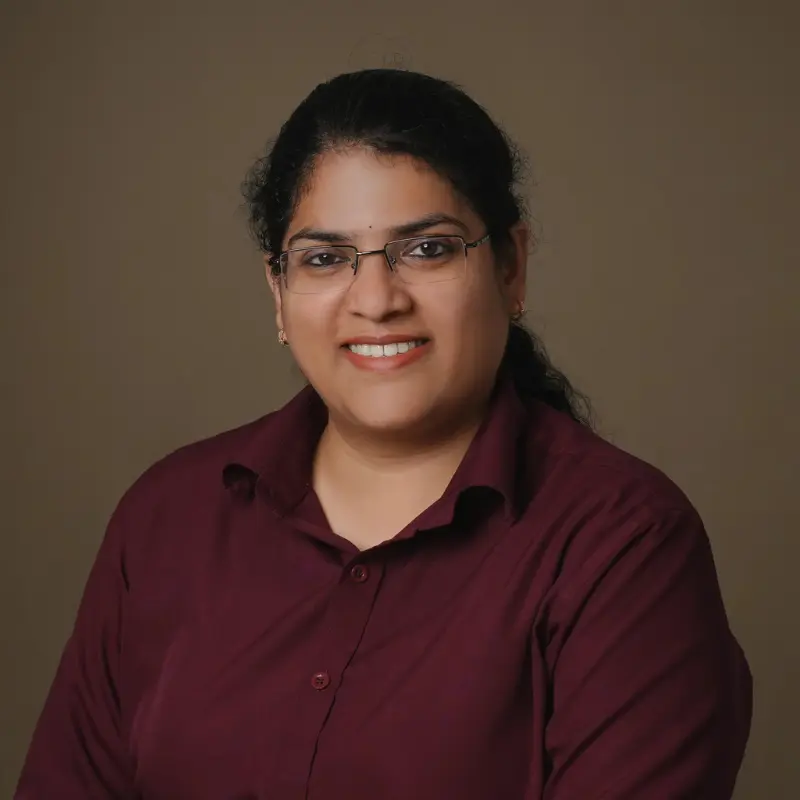
Ms. Meera K, M.Phil Clinical Psychology
has spent 8-9 years working with trauma and behavioural health, using CBT, DBT, and EMDR. She integrates trauma-informed, evidence-based therapies with a compassionate, person-centered approach to create lasting transformation.
Dr. Naveen Kumar V, MBBS, DPM (Psychiatry)
is a Senior Consultant Psychiatrist & Medical Director with more than 20 years of experience in psychiatry and addiction medicine. That includes dual diagnosis, where addiction and a mental health condition occur together.
Ms. Meera K, M.Phil Clinical Psychology
has spent more than 8 years working with trauma and behavioural health, using CBT, DBT, and EMDR. She integrates trauma-informed, evidence-based therapies with a compassionate, person-centered approach to create lasting transformation.
Want to know who you’d speak with? Ask us directly. Call +91-73736-44444 or write through Contact Us. You can also read more about Abhasa.
Why Choose Abhasa for Your Online Consultation?

Start with the people. Your consultation at Abhasa is with a qualified clinical team of psychiatrists and psychologists, not a call centre reading a script. Ongoing counselling draws on established approaches from the schools of therapy.
And what happens after the first call? Here, a consultation is the start of a path, not a one-off. If online support is enough, it can continue online. If you need more, the same team plans your admission with you. After a residential stay, online counselling can continue with familiar therapists, in a convenient virtual format with flexible scheduling. You can read about that in life after rehab.
Families are part of the picture from day one. Abhasa treats family as an essential partner in recovery, and online family counselling lets relatives in different cities, or different countries, join the same conversation.
Then there’s privacy and convenience. Our team is trained to keep what you share private. There’s no waiting room and no chance of meeting someone you know. There’s no travel either, which matters when the person who needs help isn’t ready to be seen walking into a centre.
You also get one number to call. Whether you want a first talk, help working out what to do next, or help with admission, the first step is the same phone call.
If a calm, private first step sounds right
Call +91-73736-44444 or WhatsApp us. We're glad to talk it through.
Can an Online Consultation Replace Rehab? When You Need More Than Online Care
Sometimes, but not always. Online consultation works well for first questions, ongoing counselling, and steady situations. It can’t replace supervised detox or emergency care. Severe withdrawal, suicidal thoughts, or safety concerns need in-person help. Your first conversation helps our team tell which one fits.
Detox is the clearest example. Stopping suddenly after heavy, long-term drinking can cause severe withdrawal, including seizures and a state called delirium tremens, which may be life-threatening [7].
That's why anyone who drinks heavily every day should speak to a doctor before stopping. Our page on detoxification explains how supervised detox works.
When residential care is the right step, it isn't a step backward. It's the next step, planned with you, not sprung on you. In most cases, admission can happen within 24 to 48 hours of your first call, depending on your needs and travel. Our admission guide explains what to expect.
Unsure whether online is enough? Don't wait to find out. Call +91-73736-44444 today, and we'll help you decide.
Call the Abhasa 24/7 Crisis Line on +91-73736-44444 (call) right away if there's:
- Any thoughts of suicide or self-harm.
- A sudden psychiatric crisis.
- Severe withdrawal symptoms.
- Any immediate safety concern.
Frequently Asked Questions About Online Consultation for Rehab
Yes. Addiction & Substance use counselling and Psychiatric counselling both cover alcohol. If someone drinks heavily every day, please speak to a doctor before they stop, because sudden withdrawal can be dangerous.
Yes. The same two services cover drug use. If someone has taken too much of a drug and is unwell, call 112 straight away. An online consultation isn’t an emergency service.
No. Online consultation isn’t supervised detox. If someone needs detox, our team will plan it with proper medical care.
Yes. You can call on your own. Our team can talk with you about how to approach the conversation, and Family counselling is there for you as well. You can’t force someone to accept help, but you can find out what to say and where to start.
If you’re not sure, start with an Insight & Guidance session, or call and describe what’s going on. Our team will help you choose. You can change services later as things change.
Yes. The first consultation is confidential, and our team is trained to keep what you share private. If you’re calling about a loved one, you can ask how information is handled before you share details.
Family counselling is one of the nine services, and families in different countries can ask about a joint online session. Our team will explain how it works when you book.
Yes. If rehab turns out to be the right step, the same team plans your admission with you. In most cases, admission can happen within 24 to 48 hours, depending on your needs and travel.
Call 112, or the Abhasa 24/7 Crisis Line on +91-73736-44444. Don’t wait for an appointment.
You Don't Have to Decide Everything Today
Reaching out for help takes something, and doing it online doesn’t make it less real. Many people begin with a single conversation and see how it feels. Recovery is possible, and it usually starts with someone calm and kind who listens.
Take the first step today. Call +91-73736-44444 or WhatsApp +91-86220-66666, or reach out through Contact Us. No pressure, no obligation. Just a conversation.
Related Guides on Rehab and Recovery
References
[1] Telemedicine Practice Guidelines of India, 2020. PubMed, PMID: 34083829. https://pubmed.ncbi.nlm.nih.gov/34083829/
[2] Telepsychiatry Operational Guidelines 2020. NIMHANS, Indian Psychiatric Society, Telemedicine Society of India.
https://nimhans.co.in/wp-content/uploads/2021/09/Telepsychiatry-Operational-Guidelines-2020.pdf
[3] Psychiatric Treatment Conducted via Telemedicine Versus In-Person Modality in Posttraumatic Stress Disorder, Mood Disorders, and Anxiety Disorders: Systematic Review and Meta-Analysis. JMIR Mental Health, 2023. PubMed, PMID: 37277113. https://pubmed.ncbi.nlm.nih.gov/37277113/
[4] Addiction Treatment and Telehealth: Review of Efficacy and Provider Insights During the COVID-19 Pandemic. Psychiatric Services, 2022. PubMed, PMID: 34644125.
https://pubmed.ncbi.nlm.nih.gov/34644125/
[5] Affordable and Accessible Healthcare for All (Tele-MANAS, 43.64 lakh calls as on 11 August 2026). Press Information Bureau, Government of India, 12 August 2026.
https://www.pib.gov.in/PressReleaseDetail.aspx?PRID=2298390®=3&lang=1
[6] Government Strengthens Drug De-addiction and Awareness Initiatives Under Nasha Mukt Bharat Abhiyaan (National Toll-Free De-addiction Helpline 14446). Ministry of Social Justice and Empowerment, via Press Information Bureau, 3 August 2026. https://www.pib.gov.in/PressReleasePage.aspx?PRID=2293976®=48&lang=1
[7] Delirium tremens. MedlinePlus, National Library of Medicine, page review date 1 January 2025. https://medlineplus.gov/ency/article/000766.htm
About the Author
This page was developed by the clinical content team at Abhasa Rehab and Wellness.
Abhasa Rehab and Wellness offers residential treatment and online consultation and counselling to people across India. For questions about this page or to speak with our team, visit Contact Us.
- Medically Reviewed by
- Senior Consultant Psychiatrist & Medical Director
- Abhasa Rehab and Wellness
Medical Disclaimer: This page is for information only and does not replace professional medical or psychiatric advice, diagnosis, or treatment. Always consult a qualified psychiatrist or mental health professional about your situation. If you or someone you know is having a psychiatric emergency or is at risk of self-harm, contact your nearest emergency room or a crisis helpline right away. Online consultation is not designed for emergency care.
Editorial process: This page follows Abhasa’s editorial policy and is reviewed for medical accuracy and updated to reflect current research and Indian telemedicine rules. Learn more about Abhasa or read our privacy policy.
If You Need Help Right Now
- Abhasa 24/7 Crisis Line: +91-73736-44444 (call or WhatsApp)
- Tele-MANAS (Government of India, toll-free): 14416
- National Toll-Free De-addiction Helpline: 14446
- Emergency Services: 112