Rehab Centre in Hyderabad
Abhasa Rehab and Wellness at Mambapur
Abhasa Rehab and Wellness is a residential rehab and mental health centre. Our Hyderabad centre is at Mambapur, Telangana, and it is open and admitting. This page is for families in Hyderabad who are looking for addiction treatment or mental health care, and want to know what happens next.

Medically Reviewed By Dr. Naveen Kumar V
MBBS, DPM (Senior Consultant Psychiatrist & Medical Director), Abhasa Rehab and Wellness Clinical Lead with 20 years of experience in addiction psychiatry


At a glance
Abhasa Rehab and Wellness, Mambapur is a residential centre for addiction and mental health care at Mambapur, Sangareddy district, Telangana, north of Hyderabad. Care brings together psychiatry, psychology, medically supervised detox where needed, family therapy and aftercare.
Abhasa works with a 2:1 staff-to-client ratio and 24/7 medical supervision. Every plan starts with a private assessment, so treatment fits the person.
Quick overview
What to know before you call
- Abhasa Rehab and Wellness runs a residential centre at Mambapur, Telangana, and it is open now.
- The centre treats addiction and mental health conditions, including dual diagnosis, where both occur together.
- Every plan starts with a full medical and psychological assessment.
- Detox is medically supervised, with 24/7 medical care, when it is needed.
- Families take part through structured family therapy from the start.
- You can speak to our team in confidence today on +91-73736-44444.
For families in Hyderabad
Looking for a Rehab Centre in Hyderabad?
If you are searching for a rehab centre in Hyderabad, this page gives you the short answer. Addiction and mental health care are both treated here, with residential care planned around the person after a private assessment. Family support is built in. You can speak to our team before you decide anything.
You may be reading this on a hard day. Perhaps someone at home is struggling. Perhaps it is you. You do not need every answer before you call.
This page is about addiction and mental health rehabilitation. It is not about physiotherapy or physical rehabilitation after injury. If you are looking for care after a stroke, a fracture or a surgery, a physiotherapy or neuro-rehabilitation clinic is the right search.
Addiction is a treatable condition. Relapse rates for substance use disorders are 40 to 60%, similar to those for other chronic health conditions such as high blood pressure and asthma (NIDA, 2024). A relapse does not mean treatment has failed. It means the plan may need adjusting.[1]
When is it time to ask for help?
It is not always easy to tell. A few things are worth noticing:
- Drinking or using more than planned, or finding it hard to stop.
- Work, health or relationships starting to suffer.
- Using alcohol or drugs to cope with stress, low mood or worry.
- Feeling anxious, low or unable to sleep without it.
If you see early signs, counselling can help. If the pattern has lasted two weeks or more, a professional assessment is the next step.
If someone is at risk of harming themselves, or cannot function at work or at home, contact a doctor or emergency service now.
Our short self-assessment can help you see where things stand, and families can read our guide to family support.
Why families choose Abhasa
What Makes a Good Rehab Centre in Hyderabad?
A good rehab centre in Hyderabad has medical supervision around the clock, a clear assessment before treatment, family involvement, and a plan for life after discharge. Ask how many staff work with each client, who makes the treatment plan, and what happens in the first week.
When families compare options, these questions help:
For what our residential care is built on, see why families choose Abhasa.
Admission and first steps
How Does Treatment Begin?
Six clear steps, starting with one private conversation. You decide nothing until you are ready.
A private first conversation
You speak with our team in confidence, with no pressure.
Assessment
A doctor and a psychologist review your health, history and goals.
Detox, if needed
Medically supervised and paced for safety and dignity.
Therapy and daily structure
Individual and group sessions, movement, mindfulness and life skills.
Cognitive behavioural therapy is one approach we use.
Family sessions
Loved ones learn how to support recovery.
A review in the Journal of Marital and Family Therapy (Rowe, 2012) found that involving family improves outcomes in drug abuse treatment.[3] That is why we bring families into care from the start.
Treatment and care approach
What Does Care at Abhasa Include?
Care at Abhasa includes medically supervised detox when needed, residential rehab, dual diagnosis care, family therapy and follow-up support after discharge. Every recovery journey is personal, so the programme and its length are set after assessment. Structured days, clinical expertise and flexible timelines respect your pace.
Our programmes
Alcohol de-addiction
Alcohol Rehabilitation in Hyderabad: What to Expect
Alcohol withdrawal can be dangerous, so stopping heavy drinking should be medically supervised. Delirium tremens, the most severe form of alcohol withdrawal, can be fatal. Without appropriate treatment, mortality has been reported as high as 37%; early treatment lowers it substantially.[8] Detox at Abhasa is usually two to seven days, followed by structured residential therapy. Cognitive behavioural therapy has good evidence for alcohol use disorders, and the national survey in India estimates that alcohol use disorders affect about 5% of people aged 10 to 75.[4]
After detox, treatment focuses on what kept the drinking going: stress, low mood, sleep, work pressure and the habits around drinking. Cognitive behavioural therapy is one of the best-studied approaches for alcohol use disorders.[5] Medication may also be used in some cases, and the choice is made after assessment.
For more on the medical side, read about alcohol addiction and withdrawal and detox. Our Hyderabad alcohol programme page is at alcohol addiction treatment in Hyderabad.
Who this care may help
What Do We Treat?
Abhasa treats addiction, mental health conditions and eating disorders, along with conditions such as sleep disorders. Families looking for a mental health rehabilitation centre in Hyderabad will find care for anxiety, depression, bipolar disorder, PTSD, OCD and schizophrenia alongside addiction care. Many people need help with more than one of these at the same time.
For the full list, see What We Treat.
Dual diagnosis
Addiction and mental health conditions often overlap. According to NIDA, many people with a substance use disorder also have another mental illness.[7] Treating only one can leave the cycle in place. Our dual diagnosis programme treats the whole person.
- Integrated treatment plans for both conditions.
- Safe medication management, with attention to interactions.
- Therapists who work with dual diagnosis care.
Neurofeedback therapy
We offer QEEG-based brain mapping with neurofeedback.
This optional therapy uses real-time brainwave training to support focus, sleep and emotional balance.
Residential experience
Abhasa’s Hyderabad Rehab Centre at Mambapur
Abhasa’s Hyderabad centre is at Mambapur, Telangana. It is open and admitting clients now. Families can contact the team for a private conversation about whether residential care is right, and what the first steps would look like.
Our team can talk you through the admission process, the assessment and the programme options before you decide. Full details of the centre, including its facilities, are shared during that conversation. For what our residential care is built on, see why families choose Abhasa and our admission guide. Abhasa’s other centres are listed on our locations page.
 A calm place to rest
 Mindfulness and movement
 Individual sessions
 Family sessions
Daily rhythm
What Is a Day at Abhasa Like?
Days have a gentle structure. Therapy, movement, rest and shared meals follow a steady rhythm.
Progress is tracked in ways that matter to you, and your family stays involved.
Family sessions are part of the weekly plan. Involving family in treatment is linked with better outcomes (Rowe, 2012).[3]
Clinical team and trust
Who Will Look After You?
Your care team at Abhasa includes psychiatrists, doctors, clinical psychologists, counsellors, a case manager and neurofeedback staff. Abhasa works with a 2:1 staff-to-client ratio and 24/7 medical supervision. The team is led by Dr. Naveen Kumar V, Medical Director.
Medical and clinical leadership
Dr. Naveen Kumar V
MBBS, DPM (Psychiatry)
Senior Consultant Psychiatrist & Medical Director
Over 20 years of clinical experience in addiction psychiatry and dual diagnosis treatment.
View profile of Dr. Naveen Kumar V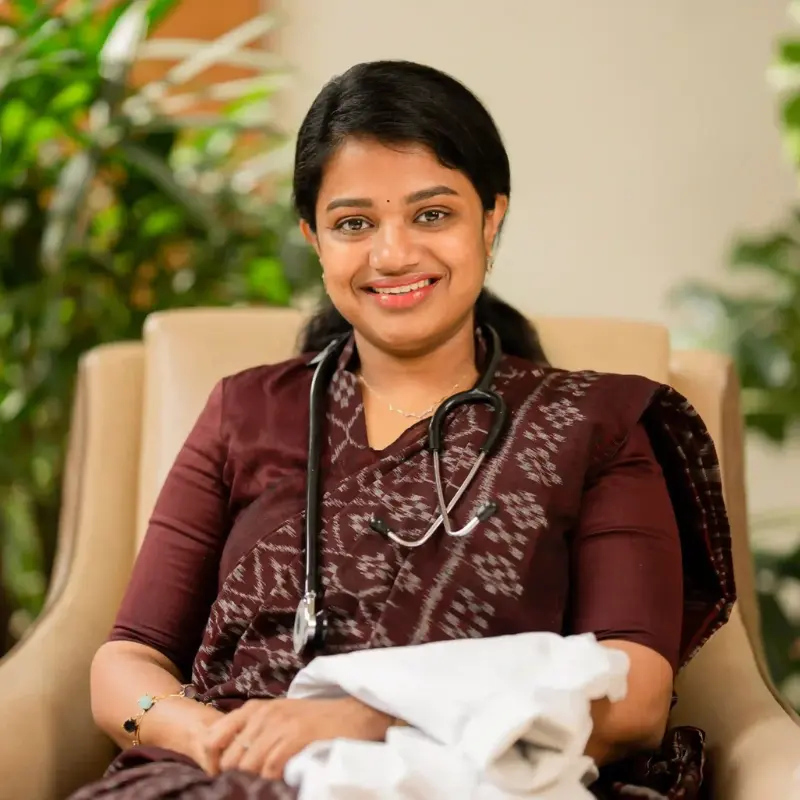
Dr. Shree Aarthi
MBBS, MD (Psychiatry), DNB (Psychiatry)
Senior Consultant Psychiatrist
12 years of clinical experience, specialising in dual diagnosis care.
View profile of Dr. Shree Aarthi
Dr. Karuppuchamy P
M.Phil. PSW (NIMHANS), Ph.D. (Social Work)
Senior Psychiatric Social Worker
30 years of clinical experience in psychotherapy, family therapy and de-addiction.
View profile of Dr. Karuppuchamy PPsychology and counselling
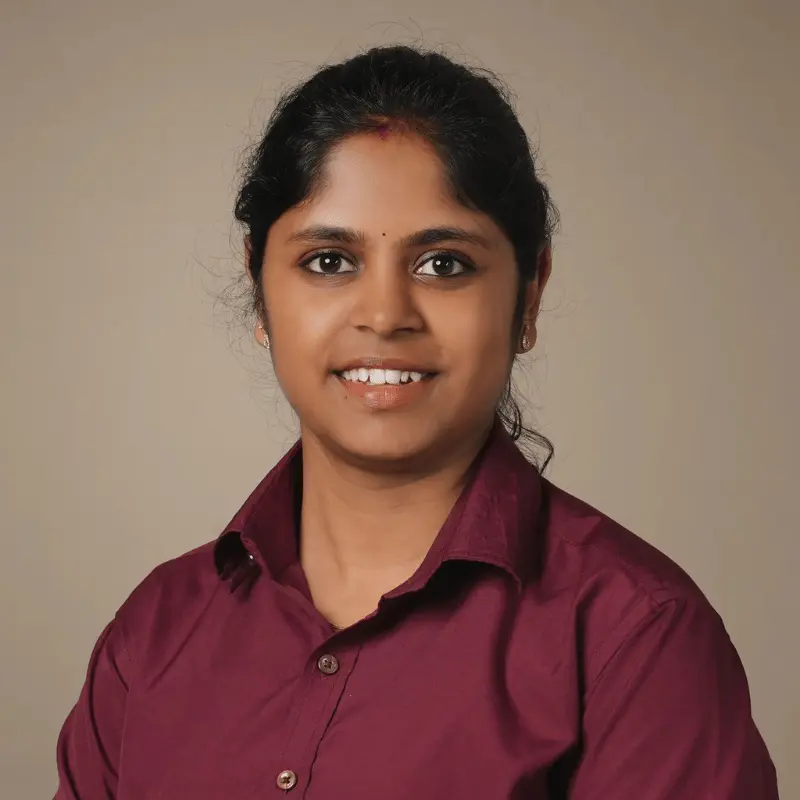
Mrs. Priyadharshini
M.Phil. Clinical Psychology · RCI CRR A70645
Head – Clinical Psychology
8 years of clinical experience. Trauma-informed, evidence-based care and clinical assessment.
View profile of Mrs. Priyadharshini
Mr. Mukesh Kanna V
M.Phil. Clinical Psychology · RCI CRR A110373
Clinical Psychologist
5 years of clinical experience, including substance use and dual diagnosis.
View profile of Mr. Mukesh Kanna VCase management

Mr. Sivaprakash S
MSW
Manager – Client Relations
7 years of experience in psychiatric social work and clinical case management.
View profile of Mr. Sivaprakash SI often tell patients: you wouldn't try to treat cancer at home. Addiction deserves the same level of professional care.
Dr. Naveen Kumar V, Medical Director, Abhasa Rehab and Wellness
Questions families ask
Frequently Asked Questions
Straight answers about the centre, treatment, cost, family involvement and admission.
About the Hyderabad centre
Is there a rehab centre in Hyderabad run by Abhasa?
Yes. Abhasa Rehab and Wellness has a residential centre at Mambapur, Telangana, and it is open and admitting. Call our team to talk through the options that fit your situation.
Is Abhasa a government or free rehabilitation centre in Hyderabad?
No. Abhasa is a private residential centre. Government options in Telangana include the Institute of Mental Health at Erragadda and Osmania General Hospital. The national Tele-MANAS helpline on 14416 is free to call. Private residential care differs in privacy, staff ratio and family involvement, and our team can explain the difference in your first conversation.
Do you have a deaddiction centre in Hyderabad for alcohol?
Yes. Alcohol detox is medically supervised and usually takes two to seven days. It is followed by structured residential therapy. See alcohol addiction treatment in Hyderabad.
Is Abhasa a nasha mukti kendra in Hyderabad?
“Nasha mukti kendra” is the Hindi term for a de-addiction centre. Abhasa provides residential de-addiction care at Mambapur. You can read more on our nasha mukti Hyderabad page.
Treatment, length and cost
What treatment will I receive?
Care is personalised after assessment. It can include detox, individual and group therapy, dual diagnosis care and family sessions.
How long is treatment?
The length is set after assessment. Programmes of 30, 45, 60 or 90 days are common, and the team will recommend what fits your situation.
How much does a rehab centre in Hyderabad cost?
Cost depends on your assessment and the programme you need. Our team gives a written estimate after assessment, so you know what to expect before you decide.
Family, admission and aftercare
Will my family be involved?
Yes. Family therapy is part of how we work, and visits are arranged in a way that supports the client's treatment.
What if my family member refuses treatment?
Refusing treatment is common, especially at first. Families can start with a consultation with our team before the person comes in, and we can talk through how to approach the conversation.
How fast can admission happen?
In urgent cases, admission can happen within 24 to 48 hours after a phone assessment.
What happens after I leave?
You leave with an aftercare plan and ongoing support, so recovery continues at home. The Substance Abuse and Mental Health Services Administration describes addiction as treatable, with recovery supported by care and community.[6] Read about life after rehab.
Speak to us
How Do You Reach Abhasa in Hyderabad?
You can speak to the Abhasa team today. Call +91-73736-44444 or message us on WhatsApp at +91-86220-66666. The conversation is private, with no obligation. We will help you understand your options and the next step.
You can also read about our centre in Thondamuthur, Coimbatore.
References
1.National Institute on Drug Abuse. (2024). Treatment and Recovery. nida.nih.gov/publications/drugs-brains-behavior-science-addiction/treatment-recovery
2.National Institute on Drug Abuse. Drug Misuse and Addiction. nida.nih.gov/publications/drugs-brains-behavior-science-addiction/drug-misuse-addiction
3.Rowe CL. (2012). Family therapy for drug abuse: review and updates 2003–2010. Journal of Marital and Family Therapy. PMID 22283381. pubmed.ncbi.nlm.nih.gov/22283381/
4.Ambekar A, et al. (2019). Magnitude of Substance Use in India. Ministry of Social Justice and Empowerment, with AIIMS and NIMHANS. socialjustice.gov.in/writereaddata/UploadFile/Survey%20Report.pdf
5.McHugh RK, Hearon BA, Otto MW. (2010). Cognitive behavioral therapy for substance use disorders. Psychiatric Clinics of North America. www.ncbi.nlm.nih.gov/pmc/articles/PMC2897895/
6.Substance Abuse and Mental Health Services Administration. (2023). Recovery and Recovery Support. www.samhsa.gov/find-help/recovery
7.National Institute on Drug Abuse. (2024). Common Comorbidities with Substance Use Disorders Research Report: Part 1. nida.nih.gov/publications/research-reports/common-comorbidities-substance-use-disorders/part-1-connection-between-substance-use-disorders-mental-illness
8.StatPearls. (2023). Delirium Tremens. National Center for Biotechnology Information. www.ncbi.nlm.nih.gov/books/NBK482134/
About this page
About the author: Written by the Abhasa Clinical Team, Abhasa Rehab and Wellness.
Medically reviewed by: Dr. Naveen Kumar V, MBBS, DPM (Psychiatry), Senior Consultant Psychiatrist & Medical Director, Abhasa Rehab and Wellness.
Medical disclaimer: This page is for general information only. It is not medical advice. Please speak with a qualified doctor about your own health.
If You Need Help Right Now
If You Need Help Right Now
If you or someone near you is in immediate danger, call your local emergency number now.
Still have a question?
Speak to our team in confidence. No obligation.