
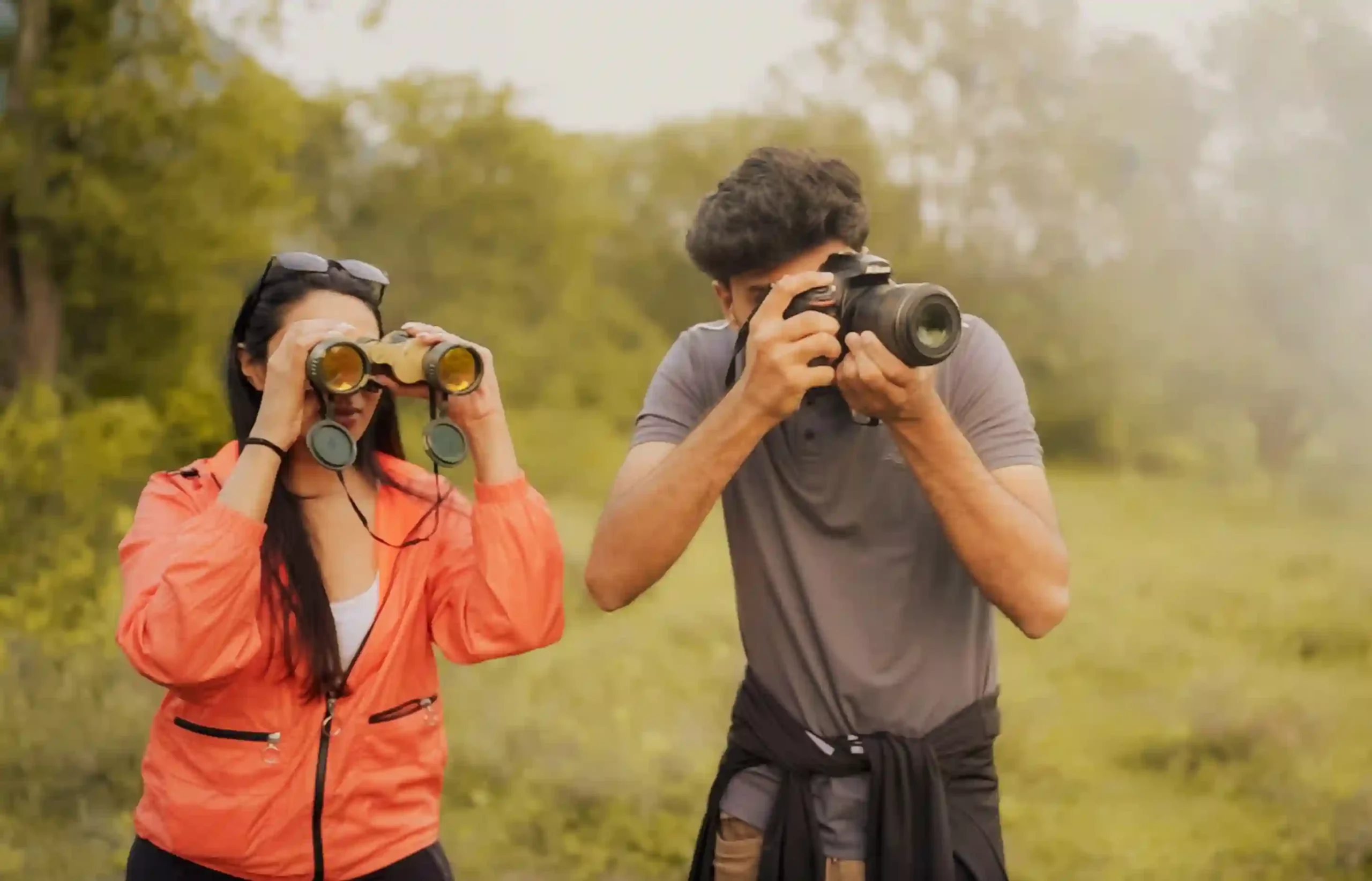
Photography as Mental Wellness Therapy: Capturing Your Recovery Journey
Reviewed by : Abhasa Clinical Team
Last Updated: December 2025
Introduction
Here’s something you might not expect: your smartphone camera can be a surprisingly powerful mental wellness tool. You don’t need expensive equipment, formal training, or artistic talent—you already have what you need in your pocket right now.
Photography therapy isn’t about creating gallery-worthy art. It’s about using your camera—whether that’s a professional setup or your mobile phone—to practise mindfulness, process emotions, and document your journey toward better mental health. Research shows that engaging in creative expression through photography can reduce anxiety, improve mood, and support recovery from mental health challenges.[1]
Whether you’re managing everyday stress, navigating recovery from substance use, or simply seeking more mindful moments in your day, photography offers accessible exercises you can start practising immediately. This guide will show you the science behind why photography works for mental wellness, offer seven practical smartphone exercises you can try today, and explain how visual practices integrate with professional treatment approaches.
Your smartphone is already a powerful wellness tool—you just need to know how to use it.
The best part? You can begin right after reading this article. No prior experience required, no pressure to create “perfect” images, and complete freedom to practise privately or share your work with others.
Let’s explore how something as simple as taking photographs can become part of your mental health toolkit—and how it complements professional support when you need more comprehensive care.
The Science Behind Photography Therapy
Photography therapy is a real, evidence-based approach to mental wellness—not just a trendy hobby dressed up as treatment. Let’s clarify what we mean when we talk about using photography for mental health support.
Phototherapy (sometimes called therapeutic photography) refers to the clinical use of photography within formal therapy sessions, typically guided by a trained mental health professional.[2] This might involve analysing family photographs, creating visual narratives, or using images as conversation starters during counselling.
Therapeutic photography, on the other hand, is the practice of taking photographs yourself as a self-help tool for managing stress, anxiety, or emotional challenges.[3] This is what most of us can do independently—using our cameras to practise mindfulness, document progress, or express feelings we struggle to put into words.
Both approaches work through similar mechanisms. When you focus your attention on composing a photograph—adjusting the angle, considering the light, noticing small details—you’re essentially practising mindfulness without calling it meditation.[4] Your attention shifts from ruminating thoughts to present-moment awareness of your surroundings.
Research from the American Art Therapy Association demonstrates that creative visual expression activates different neural pathways than verbal processing, offering alternative routes for emotional regulation and self-understanding.[5] A 2016 study found that participants who engaged in regular photography practice reported significant reductions in anxiety symptoms and improvements in overall mood compared to control groups.[6]
Here’s what happens in your brain when you practise therapeutic photography:
- Present-moment awareness: Searching for interesting subjects forces your attention into the “here and now,” interrupting anxious thoughts about the future or depressive rumination about the past.
- Perspective-shifting: Literally looking at the world through different angles and frames can metaphorically help you see problems from new perspectives.
- Sense of accomplishment: Creating something tangible—even a simple photograph—triggers reward circuits in your brain, countering feelings of helplessness or worthlessness.
- Emotional processing: Visual expression can help you explore complex feelings that resist verbal articulation, particularly useful for trauma survivors or those with alexithymia (difficulty identifying emotions).[7]
Creative expression isn't just enjoyable—it's evidence-based mental health support.
The therapeutic benefits extend beyond the moment of taking the photograph. Looking back at images you’ve created can serve as tangible evidence of your progress, remind you of moments of beauty or connection, and provide comfort during difficult periods.
How Photography Supports Recovery
If you’re navigating recovery from substance use or managing mental health challenges, photography offers specific benefits that complement professional treatment programmes. At Abhasa, creative therapies are integrated into holistic recovery programmes because we know healing involves more than clinical treatment alone.
Let’s talk about why photography works particularly well for people in recovery:
Mindfulness Without the Pressure
Many people struggle with traditional meditation or mindfulness exercises. Sitting still with your thoughts can feel uncomfortable, especially if you’re dealing with cravings, anxiety, or trauma. Photography offers what therapists call “active mindfulness”—you’re fully present and focused, but engaged in purposeful activity rather than passive observation.[8]
Research shows that mindfulness-based interventions reduce relapse rates in substance use recovery by approximately 20-30% when combined with standard treatment.[9] Photography can serve as your entry point into mindful practice if formal meditation feels inaccessible.
Creating Tangible Evidence of Progress
Recovery can feel invisible, especially in early stages when you’re working hard but can’t yet see dramatic changes. Photographs create visual documentation of your journey—not just “before and after” images, but daily evidence that you’re showing up, noticing beauty, and engaging with life beyond addiction.
Many Abhasa patients describe looking back at photos taken during their first weeks in treatment as powerful motivation during challenging moments. Seeing visual proof that they found moments of peace, connection, or even joy during difficult times reinforces the reality that recovery is possible.
Healthy Distraction from Cravings and Triggers
When cravings strike or you encounter triggers, you need immediate coping strategies. Taking your camera (or phone) outside for a 10-minute “photo walk” serves multiple functions: physical movement, mental distraction, environmental change, and purposeful focus—all evidence-based techniques for managing acute cravings.[10]
Unlike passive distraction (scrolling social media, watching television), active creative engagement produces neurochemical responses that can genuinely improve mood rather than simply passing time until the craving subsides.
Building New Identity Beyond Addiction
One of the deepest challenges in recovery involves reshaping your identity beyond “person with addiction” or “patient in treatment.” Taking up photography—even casually—helps you develop interests, skills, and self-narratives that aren’t defined by your struggles.
At Abhasa, creative therapies are integrated into holistic recovery programmes because we know healing involves more than clinical treatment alone.
You might become “someone who notices light and shadow,” “someone who appreciates nature photography,” or “someone who documents daily gratitude visually.” These identity elements, however small, contribute to building a fuller sense of self that supports long-term recovery.
Visual Gratitude Practice
Gratitude practices show strong evidence for improving mental health outcomes and supporting recovery.[11] But writing gratitude journals can feel tedious or formulaic. Visual gratitude—photographing one thing you’re grateful for each day—offers a fresh approach to this evidence-based practice.
The act of searching for something worth photographing naturally shifts your attention toward positive aspects of your environment, even on difficult days. Over time, you build a visual collection of “good things” you can review during low moments.
Social Connection Through Sharing
Recovery can be isolating. Photography offers opportunities for safe, low-pressure social connection—whether that’s sharing images with family, joining online photography communities, or participating in group activities at treatment centres.
Sharing your photographs allows others to see the world through your eyes, facilitating understanding and empathy. It also provides conversation starters beyond “How’s your recovery going?”—a question that can feel burdensome or invasive.
7 Smartphone Photography Exercises for Anxiety Reduction
You don’t need to wait until you “feel better” to start using photography for mental wellness. These seven exercises are designed to be accessible even when you’re struggling, and they require nothing more than your smartphone camera and a few minutes of your time.
1. Morning Light Hunt (5 minutes)
What to do: Before you check your phone messages or start your daily routine, spend five minutes searching for and photographing natural light. This might be sunlight coming through a window, the glow of dawn outside, shadows cast by objects, or reflections catching morning light.
Why it works: This exercise gets you focused outward rather than inward first thing in the morning, interrupting anxious thought patterns before they gain momentum. Searching for light requires visual attention, which activates present-moment awareness. Research shows that morning routines involving mindful activity (rather than immediately checking stressful news or messages) significantly reduce daily anxiety levels.[12]
Recovery connection: Morning cravings are common in substance use recovery. This five-minute exercise provides an immediate, healthy alternative behaviour when you wake up feeling vulnerable.
2. Texture Safari (10 minutes)
What to do: Wherever you are right now, find and photograph five different textures—rough bark, smooth glass, soft fabric, bumpy concrete, anything with distinct tactile qualities. Get close enough to capture the texture in detail.
Why it works: Focusing on texture engages your visual and imaginative tactile senses simultaneously, creating grounding through sensory awareness. This exercise is particularly effective for managing anxiety or dissociation because it anchors you firmly in physical reality. Studies on grounding techniques demonstrate that multi-sensory engagement reduces acute anxiety symptoms within minutes.[13]
Tip: Try to find at least one texture outdoors if possible. The combination of fresh air, movement, and visual focus amplifies the anxiety-reducing benefits.
3. Colour Mood Board (throughout the day)
What to do: Each day, choose a colour that matches or complements your current mood, then photograph anything you encounter in that colour throughout the day. If you’re feeling calm, you might photograph blue objects. Feeling energised? Capture yellows and oranges. Feeling sad? Perhaps greys or blues.
Why it works: This exercise builds emotional awareness without requiring you to articulate feelings verbally—which can be difficult when you’re overwhelmed. Associating emotions with colours, then finding those colours in your environment, externalises internal experiences in a manageable way. Art therapy research shows that colour work facilitates emotional processing for people who struggle with traditional talk therapy.[14]
Recovery connection: Many people in early recovery have difficulty identifying and naming emotions (alexithymia). Colour mood boards offer an accessible entry point to emotional awareness work.
4. Gratitude Snapshot (daily)
What to do: Once each day, photograph one thing you’re genuinely grateful for—no matter how small. This could be your morning coffee, a kind text message, comfortable shoes, a blooming flower, anything that generates authentic appreciation.
Why it works: Visual gratitude journaling combines two evidence-based practices: gratitude exercises and photographic mindfulness. Research demonstrates that daily gratitude practices reduce depression symptoms by approximately 30% when maintained consistently for eight weeks.[15] The visual format makes the practice feel less tedious than written journals for many people.
These exercises complement professional support—they don’t replace it.
Important note: If gratitude feels impossible or false, that’s not a personal failure—it can signal depression or unprocessed grief that deserves professional support. Don’t force gratitude photography if it feels inauthentic.
5. Before/After Progress Shots (Weekly)
What to do: Once a week, photograph something that represents your recovery progress. This might be a self-portrait showing healthier appearance, your journal or workbook pages, your neat living space, healthy meals you’ve prepared, or any tangible evidence of positive change.
Why it works: Recovery progress can feel invisible, especially during plateaus. Weekly documentation creates visual proof that you’re moving forward, even when emotional experience suggests otherwise. Seeing concrete evidence combats the cognitive distortion that “nothing is changing” common in depression and early recovery.[16]
Privacy note: These images are for you alone unless you choose to share them. Keep them in a private album where you can review progress during difficult moments.
6. Nature Macro (15 minutes)
What to do: Spend 15 minutes photographing extreme close-ups of natural objects—flower petals, leaf veins, tree bark patterns, insects, dewdrops, anything small and intricate in nature. Use your phone’s macro mode if available, or simply get as close as your camera allows while maintaining focus.
Why it works: Macro photography demands intense visual concentration, temporarily crowding out anxious or depressive thoughts. The combination of nature exposure and focused attention produces measurable reductions in cortisol (stress hormone) levels within 20 minutes, according to environmental psychology research.[17]
Accessibility tip: You don’t need wilderness access—potted plants, weeds growing through pavement cracks, or public parks all provide sufficient natural subjects.
7. Golden Hour Portrait (15 minutes)
What to do: During “golden hour” (the hour before sunset when light is soft and warm), take self-portraits in natural light. Experiment with angles, expressions, and lighting. This isn’t about creating flattering images—it’s about spending time with yourself in kind light.
Why it works: Self-portrait practice builds self-compassion and reduces negative self-focus.[18] Golden hour lighting is naturally flattering, which helps if you’re struggling with negative self-image. The practice of looking at yourself with curiosity rather than judgment parallels core self-compassion work in therapy.
Recovery connection: Addiction often damages self-image and self-worth. Spending intentional time with yourself—literally looking at yourself—can be part of rebuilding self-relationship during recovery.
Visual Gratitude Journaling: A Daily Practice
Let’s go deeper into visual gratitude journaling since it’s one of the most accessible and evidence-backed photography practices for mental wellness.
Traditional gratitude journals ask you to write three to five things you’re grateful for each day. Research consistently shows this practice improves mood, increases life satisfaction, and even improves physical health markers when maintained over time.[19] The challenge? Many people find written gratitude journals tedious, artificial, or difficult to sustain.
Visual gratitude journaling offers the same benefits through a different medium—one that might feel more natural and engaging for visual thinkers or people who struggle with written expression.
How to Set Up Your Visual Gratitude Practice
- Create a dedicated album on your smartphone called “Gratitude” or “Daily Good” (or whatever resonates with you)
- Set a daily reminder for a time when you’re typically available—perhaps during morning coffee or evening wind-down
- Photograph one thing you’re genuinely grateful for that day
- Add a brief caption if helpful, but don’t make it mandatory (sometimes the image speaks for itself)
- Review your collection weekly or when you’re having a difficult day
What Makes It Different from Written Gratitude
Visual gratitude journaling engages different cognitive processes than written lists. When you’re searching for something to photograph, you’re actively looking at your environment with “gratitude eyes”—literally scanning your surroundings for positive elements. This attention shift happens at a perceptual level, before cognitive processing, which can make it more effective for people struggling with persistent negative thought patterns.[20]
The resulting collection of images also provides visual comfort during difficult times. Looking at photographs you’ve taken of good moments, kind people, or beautiful details offers more emotional resonance than re-reading written lists for many people.
Research on Gratitude and Mental Health
A 2020 systematic review examining 27 studies on gratitude interventions found that gratitude practices produce moderate to large improvements in depression symptoms, with effects comparable to some first-line psychotherapy approaches.[21] The benefits extend beyond mood—gratitude practices also improve sleep quality, reduce inflammation markers, and strengthen immune function.
If gratitude feels difficult or impossible, that’s not a personal failure—it can signal depression or unprocessed grief that deserves professional support.
For people in recovery from substance use, gratitude practices show particular promise. A 2017 study found that individuals in addiction recovery who maintained daily gratitude practices showed 40% higher rates of sustained sobriety at six-month follow-up compared to those who didn’t engage in gratitude work.[22]
Tips for Consistency
Start absurdly small: If daily feels overwhelming, commit to three times per week. Success builds momentum better than ambitious failure.
Allow repetition: You can photograph the same subject multiple times if you’re genuinely grateful for it repeatedly. Your morning coffee can appear in your gratitude album fifty times—that’s completely valid.
Don’t force positivity: On truly difficult days, you might photograph something neutral that simply didn’t make things worse. That counts. Gratitude practice shouldn’t demand toxic positivity.
Make it private if needed: You don’t owe anyone access to your gratitude images. Keep the album entirely private if sharing feels performative or vulnerable.
Documenting Your Recovery Journey Through Photos
Beyond specific exercises, photography can serve as ongoing documentation of your recovery journey—creating visual evidence of transformation that words sometimes fail to capture.
Many people describe early recovery as feeling simultaneously profound and invisible. You’re working harder than you’ve ever worked, experiencing intense internal change, but the external world might not look dramatically different yet. Photography creates tangible markers of progress that honour the significance of your journey.
Why Visual Progress Documentation Matters
Recovery isn’t linear. You’ll have strong weeks and struggling weeks, periods of clarity and periods of confusion. When you’re in the middle of a difficult stretch, it’s easy to forget how far you’ve come. Visual documentation provides concrete evidence that you’ve navigated challenges before and survived them.
Abhasa encourages patients to document their transformation journey—many describe looking back at photos as powerful motivation during challenging moments.
Research on recovery capital (the resources that support sustained recovery) identifies “visible progress markers” as protective factors against relapse.[23] Photographs function as these markers—proof that you’re building a life worth protecting.
What to Photograph During Recovery
You don’t need dramatic transformation photos or perfectly curated recovery content. Meaningful documentation might include:
- Daily wins: The made bed, completed workbook pages, healthy meal, text from a supportive friend
- Milestones: 30-day chip, completed therapy session, first family visit, return to work
- Environmental healing: Your organised living space, plants you’re caring for, places you feel safe
- Connection moments: Group therapy circles (with permission), family visits, new friendships
- Nature and beauty: Sunrises, flowers, peaceful landscapes that remind you why sobriety matters
- Self-portraits: Tracking how your eyes look clearer, your posture changes, your genuine smile returns
Privacy Considerations
Recovery photography is personal. You decide what to document, what to keep private, and what (if anything) to share. Some people find sharing recovery images on social media supportive and accountability-building. Others keep everything private in password-protected albums.
Neither approach is superior—what matters is what feels authentic and safe for you. If you’re in professional treatment, discuss photography boundaries with your therapist. Some treatment centres have policies about photography in group settings to protect everyone’s privacy.
Creating Your Recovery Album
Set up a dedicated album on your phone called “Recovery Journey” or “My Path Forward” (choose language that resonates with you). Add to it whenever you encounter something worth documenting—don’t make it a daily obligation that creates pressure.
Review the album during difficult moments as evidence that you’ve made progress, overcome challenges, and found moments of peace or beauty even during hard periods. Let it serve as your visual reminder that recovery is possible because you’re already doing it.
Getting Started: Equipment and Tips
Here’s liberating news: you don’t need professional camera equipment to practise therapeutic photography. Your smartphone camera is genuinely sufficient—in fact, it offers advantages over traditional cameras for mental wellness practices.
Why Smartphones Are Perfect for Therapeutic Photography
Always available: Your phone is already with you, removing barriers to spontaneous practice when you need it most.
Familiar interface: No learning curve means you can start immediately rather than getting discouraged by technical complexity.
Immediate viewing: You can see your images instantly, providing immediate feedback and emotional response.
Easy organisation: Built-in albums and cloud storage make it simple to organise and review your photographs.
Sharing options: If you choose to share images for social connection, smartphones make that effortless.
Basic Composition Tips (Completely Optional)
You absolutely don’t need to follow artistic rules to gain therapeutic benefits from photography. That said, a few simple techniques can make the practice feel more satisfying:
Rule of thirds: Imagine your frame divided into thirds both horizontally and vertically. Placing subjects where these lines intersect often creates pleasing composition.
Natural lighting: Whenever possible, use natural light rather than flash. Early morning and late afternoon offer particularly beautiful light quality.
Get close: Don’t be afraid to fill your frame with your subject, especially for detail shots or texture photography.
Experiment with angles: Try photographing subjects from different heights and angles—looking up, looking down, getting low to the ground.
But seriously—ignore all these “rules” if they create pressure or reduce enjoyment. Therapeutic photography is about the process and emotional benefits, not creating exhibition-worthy art.
Free Apps for Simple Editing
If you enjoy editing your photographs (entirely optional), these free apps offer basic adjustments without overwhelming complexity:
- Snapseed (iOS and Android): Professional-level editing with intuitive interface
- VSCO (iOS and Android): Filters and basic adjustments, free version is sufficient
- Lightroom Mobile (iOS and Android): Free version offers excellent basic editing tools
- Native phone editing: Don’t overlook your phone’s built-in editing tools—they’re often sufficient
Sharing vs. Private Practice
Some people find sharing photographs on social media or with friends supportive and motivating. Others prefer keeping their therapeutic photography entirely private. Both approaches are valid.
If you do choose to share recovery-related photography publicly, consider these protective boundaries:
- Don’t share others’ faces without explicit permission
- Avoid location details if you’re in treatment to protect programme privacy
- Remember permanence: Social media posts are difficult to fully delete
- Protect vulnerability: Share what feels comfortable, not what generates the most engagement
Many people use private Instagram accounts shared only with supportive friends or family, or keep recovery photography entirely offline in phone albums.
FAQs - Photography Therapy
Is photography therapy a real therapy?
Photography is used both as a formal therapeutic modality (phototherapy) conducted by trained therapists and as a self-help practice (therapeutic photography) for managing stress and supporting mental wellness. Clinical phototherapy is an established approach recognised by organisations like the American Art Therapy Association and Phototherapy Centre.[24]
When practised independently as part of your mental wellness routine, photography functions as a complementary technique—it supports professional treatment but doesn’t replace it. Think of it like exercise or journaling: evidence-based tools that improve mental health but aren’t substitutes for therapy or medication when you need clinical support.
Do I need a professional camera?
Absolutely not. Smartphone cameras are completely sufficient for therapeutic photography practices. The therapeutic benefits come from the act of noticing, focusing attention, and creative expression—not from technical image quality. Some therapists actually prefer smartphones for therapeutic photography because the familiar interface removes barriers and the constant availability encourages consistent practice.
How often should I practise photography for mental health?
There’s no prescribed frequency—whatever feels sustainable and helpful for you is the right answer. Some people benefit from daily practices like visual gratitude journaling. Others use photography exercises as needed when they’re feeling anxious or struggling with cravings. Research suggests that even brief creative practices (5-15 minutes) several times per week can produce measurable mental health benefits when maintained consistently over time.[25]
Can photography help with depression?
Photography can be a helpful complementary practice for managing mild to moderate depression symptoms, but it shouldn’t replace professional treatment for clinical depression. The evidence-based mechanisms—increased behavioural activation, gratitude practice, mindfulness, and creative expression—all show benefits for depression in research studies.[26]
That said, severe depression often reduces motivation and interest in activities that previously brought pleasure (anhedonia). If photography feels impossible or joyless despite trying, that’s a signal to seek professional support rather than pushing harder with self-help strategies.
What if I'm not creative or artistic?
Therapeutic photography doesn’t require creativity or artistic ability. This isn’t about creating art—it’s about using your camera as a tool for mindfulness, emotional processing, and attention-shifting. The photographs themselves don’t need to be “good” in any artistic sense. A blurry image of morning light that helped you feel grounded is perfectly successful therapeutic photography, even if it wouldn’t win any contests.
Many people who insist they “aren’t creative” discover they actually enjoy photographic practices because the pressure to create “art” is removed. You’re simply noticing and documenting—skills everyone already possesses.
How does photography therapy work in rehabilitation?
At facilities like Abhasa, creative therapies including photography are integrated into comprehensive treatment programmes as complementary practices alongside evidence-based treatments like cognitive behavioural therapy, medication management, and family therapy. Photography offers several specific benefits during rehabilitation:
- Mindfulness training for managing cravings and triggers
- Emotional expression for people who struggle with verbal articulation
- Identity development beyond “person with addiction”
- Behavioural activation for depression that often accompanies withdrawal
- Tangible progress documentation during the recovery journey
Photography doesn’t replace core treatment components, but research shows that creative therapies improve engagement, completion rates, and sustained recovery outcomes when integrated into traditional rehabilitation programmes.[27]
Conclusion
Photography offers an accessible, evidence-based approach to supporting mental wellness—whether you’re managing everyday stress, navigating recovery, or simply seeking more mindful moments in your daily life. You already have the primary tool you need in your pocket, and the practices outlined here require no special training or artistic ability.
Start small. Try one exercise that resonates with you—perhaps the morning light hunt or gratitude snapshot. Give yourself complete permission to practise imperfectly. Blurry images, repetitive subjects, and missed days are all part of the process, not signs of failure.
Remember that photography is a complementary practice, not a replacement for professional support when you need it. If you’re struggling with substance use, mental health challenges, or both, creative practices work best when integrated with evidence-based treatment like therapy, medication management, and structured support.
At Abhasa Rehabilitation and Wellness Home, we integrate creative therapies into comprehensive, evidence-based treatment programmes. If you or someone you care about needs support, our team can help you understand your options with no pressure and complete confidentiality. +91-73736-44444 | WhatsApp: immediate, confidential response | info@abhasa.in
Recovery is possible. Sometimes it begins with something as simple as noticing light through a window, photographing a flower growing through concrete, or capturing visual evidence that you’re showing up for yourself each day.
Your camera—and your healing—are already in your hands.
Medical Disclaimer
This article provides educational information about photography as a complementary mental wellness practice. It is not intended as a substitute for professional medical advice, diagnosis, or treatment. Always seek the advice of qualified healthcare providers with questions regarding mental health conditions, substance use disorders, or treatment options.
If you or someone you know is experiencing a mental health crisis, please contact emergency services immediately or call Tele MANAS (National Mental Health Helpline): 14416 (available 24/7).
Photography therapy practices can complement professional treatment but should not replace evidence-based care for mental health disorders or substance use disorders. The information provided reflects current research but individual experiences may vary. Treatment decisions should be made in consultation with qualified healthcare professionals.
References
- Heenan D. Art as therapy: an effective way of promoting positive mental health? Disabil Soc. 2006;21(2):179-191.
- Weiser J. PhotoTherapy Techniques: Using Clients’ Personal Snapshots and Family Photos as Counseling and Therapy Tools. Afterimage. 1984;11(8):10-15.
- Loewenthal D. Phototherapy and therapeutic photography in a digital age. Routledge. 2013.
- Wheeler AM. Therapeutic photography: Enhancing self-efficacy, self-esteem and subjective well-being. European Journal of Psychotherapy & Counselling. 2011;13(1):65-77.
- American Art Therapy Association. What is Art Therapy? Retrieved from https://arttherapy.org/about-art-therapy/
- Gross JJ, Jazaieri H. Emotion, Emotion Regulation, and Psychopathology: An Affective Science Perspective. Clin Psychol Sci. 2014;2(4):387-401. PMC4340229.
- Taylor GJ, Bagby RM. Psychoanalysis and empirical research: The example of alexithymia. J Am Psychoanal Assoc. 2013;61(1):99-133.
- Kabat-Zinn J. Mindfulness-Based Interventions in Context: Past, Present, and Future. Clin Psychol Sci Pract. 2003;10(2):144-156.
- Bowen S, et al. Mindfulness-based relapse prevention for substance use disorders: A pilot efficacy trial. Subst Abus. 2009;30(4):295-305. PMC2900944.
- Melemis SM. Relapse Prevention and the Five Rules of Recovery. Yale J Biol Med. 2015;88(3):325-332. PMC4553654.
- Wood AM, et al. Gratitude and well-being: A review and theoretical integration. Clin Psychol Rev. 2010;30(7):890-905.
- Gregory AM, et al. Sleep, emotional and behavioural difficulties in children and adolescents. Sleep Med Rev. 2012;16(2):129-136.
- Keng SL, et al. Effects of mindfulness on psychological health: A review of empirical studies. Clin Psychol Rev. 2011;31(6):1041-1056.
- Malchiodi CA. The Art Therapy Sourcebook. McGraw-Hill Education. 2006.
- Emmons RA, McCullough ME. Counting blessings versus burdens: an experimental investigation of gratitude and subjective well-being in daily life. J Pers Soc Psychol. 2003;84(2):377-389.
- Beck AT. Cognitive Therapy of Depression. Guilford Press. 1979.
- Bratman GN, et al. Nature and mental health: An ecosystem service perspective. Sci Adv. 2019;5(7):eaax0903. PMC6664858.
- Neff KD, Germer CK. A pilot study and randomized controlled trial of the mindful self-compassion program. J Clin Psychol. 2013;69(1):28-44.
- Seligman MEP, et al. Positive psychology progress: empirical validation of interventions. Am Psychol. 2005;60(5):410-421.
- Lambert NM, et al. A changed perspective: How gratitude can affect sense of coherence through positive reframing. J Posit Psychol. 2009;4(6):461-470.
- Cregg DR, Cheavens JS. Gratitude Interventions: Effective Self-help? A Meta-analysis of the Impact on Symptoms of Depression and Anxiety. J Happiness Stud. 2021;22:413-445.
- Witkiewitz K, et al. Gratitude in addiction recovery. Addict Res Theory. 2017;25(5):435-441.
- Hennessy EA. Recovery capital: a systematic review of the literature. Addict Res Theory. 2017;25(5):349-360.
- Weiser J. PhotoTherapy Techniques in Counselling and Therapy. Afterimage. 2001;28(6):11-15.
- Stuckey HL, Nobel J. The connection between art, healing, and public health: a review of current literature. Am J Public Health. 2010;100(2):254-263. PMC2804629.
- Kaimal G, et al. Reduction of Cortisol Levels and Participants’ Responses Following Art Making. Art Ther. 2016;33(2):74-80. PMC4870883.
- Van Lith T, et al. Art-making as a mental health recovery tool for change and coping. Art Ther. 2013;30(1):2-12.