

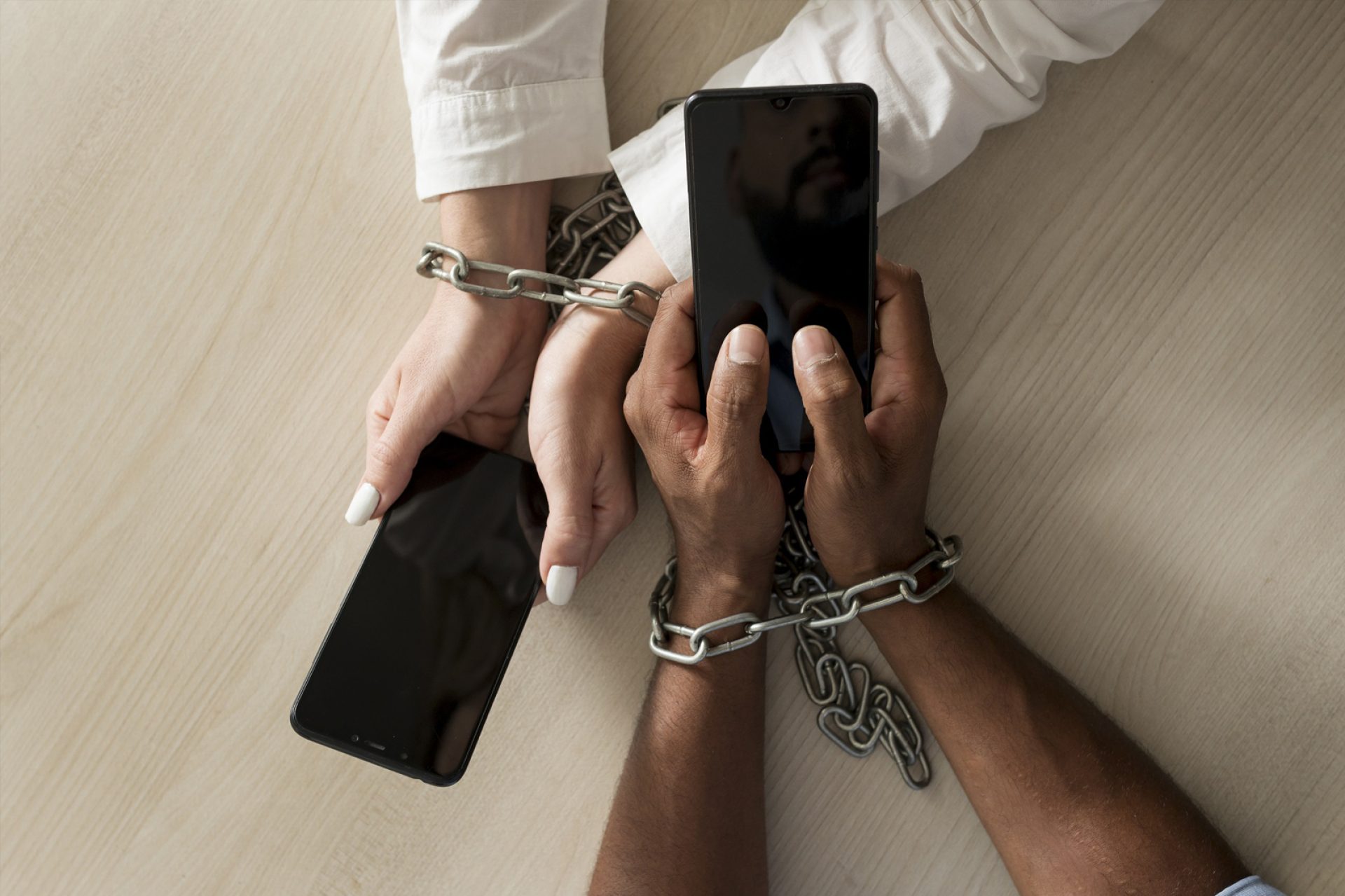
Mobile Addiction: Effects on Mental Health, Signs, and How to Regain Balance
Author: Abhasa Rehab and Wellness
Reviewed by: Dr. Naveen Kumar, MBBS, DPM (Psychiatry)
Last Updated: December 2025
Reading Time: 12 minutes
Expert Review: This article was developed by Abhasa Rehab and Wellness and reviewed by Dr. Naveen Kumar, MBBS, DPM (Psychiatry), with 15+ years of experience in addiction psychiatry. Based on evidence from peer-reviewed meta-analyses and current research. Last updated December 2025.
One in four people worldwide shows signs of problematic smartphone use. That’s not a guess—it’s what a massive study of over 1.5 million people found.
And here’s what’s more concerning: research shows that young people with digital addiction are more than twice as likely to experience suicidal thoughts compared to their peers. The link to anxiety and depression? Equally strong.
We’re not saying this to scare you. But it’s worth understanding what’s actually happening—in your brain, in your habits, and in your daily life—when phone use stops being a tool and starts becoming a compulsion.
In this guide, we’ll look at what mobile addiction actually is, how to recognize it in yourself or someone you care about, and what the research says about finding balance. Whether you’re worried about your own phone use or concerned about a family member—you’ll find clear, practical information here.
What Is Mobile Addiction?
More Than Just Heavy Use
Here’s a common question: “I use my phone a lot—does that mean I’m addicted?”
Not necessarily. The difference isn’t about hours. It’s about control.
Mobile addiction—sometimes called “nomophobia” (no-mobile-phone-phobia)—is a pattern of compulsive phone use that interferes with your life. It’s when you can’t stop checking even though you want to. When reaching for your phone feels automatic rather than intentional.
Think of it this way: using your phone a lot for work isn’t the same as compulsively checking Instagram during important conversations. One is a choice. The other feels more like a pull you can’t resist.
How This Pattern Develops
Your brain is wired to seek rewards. And smartphones have become remarkably good at delivering them.
Every notification triggers a small dopamine release. Every like, every message, every new content refresh—your brain registers these as rewards. The unpredictability makes it even more powerful. You never quite know when the next “hit” will come. It’s the same principle that makes slot machines compelling.
Over time, this creates a habit loop. Boredom becomes a trigger. Discomfort becomes a trigger. Even the absence of your phone in your hand can become a trigger.
And here’s the thing—this isn’t about willpower or weakness. It’s about how brains work when faced with something specifically designed to capture attention.
Who's Affected?
Research suggests approximately 27% of people globally show signs of problematic smartphone use. Among young people, rates are even higher—around 23% of adolescents and young adults meet criteria for problematic use.
The 17-19 age group shows particularly high rates. But it’s not just a youth issue. Adults of all ages can develop problematic patterns.
Understanding this is part of knowing what psychotherapy can offer when behavioral patterns become overwhelming.
Signs That Phone Use May Be Problematic
How do you know if phone use has crossed from normal to concerning? Here are patterns to notice.
Behavioral Signs
- Reaching for your phone first thing. Before you’re even fully awake. Before you’ve used the bathroom or said good morning to anyone. The phone comes first.
- Checking without notifications. You look at your phone and there’s nothing there. No message, no alert. But you still checked. Again.
- Panic at low battery. A 15% battery warning creates genuine anxiety. You’ll change plans to find a charger.
- Phone during conversations. You’re talking with someone—a friend, a family member—and you can’t help glancing at your screen. Or you’re physically present but mentally somewhere else.
- Phantom vibrations. You feel your phone vibrate. You check. Nothing. Your brain is creating sensations that aren’t there.
Emotional Signs
- Anxiety without access. Forgetting your phone or having it taken away creates real distress. Not just inconvenience—actual anxiety.
- Using phone to escape. When emotions get uncomfortable—boredom, stress, loneliness—the phone is your first response. Every time.
- Irritability when interrupted. Someone asks you to put your phone down and you feel genuinely annoyed. The interruption bothers you more than it should.
- Failed attempts to cut back. You’ve told yourself you’ll use it less. Set limits. Deleted apps. And somehow you’re back to the same patterns.
Physical Signs
“Text neck” and posture problems. Your neck and shoulders ache from looking down constantly.
Eye strain. Dry eyes, headaches, difficulty focusing on distant objects.
Sleep disruption. You’re scrolling in bed. The blue light affects your sleep. You’re tired but can’t put the phone down.
These patterns can overlap significantly with anxiety and depression. That’s not a coincidence—they often reinforce each other.
A Quick Self-Check
Consider these questions honestly:
- Do you feel anxious when you can’t access your phone?
- Do you check your phone within five minutes of waking?
- Do you use your phone during face-to-face conversations?
- Do you feel phantom vibrations?
- Do you lose track of time while scrolling?
- Is your phone your first response to boredom?
- Does phone use affect your sleep?
- Do you check your phone during important activities (driving, work, etc.)?
- Have you tried to reduce use but failed?
- Have you neglected responsibilities because of your phone?
If you answered yes to 0-3: Your phone use seems healthy. If you answered yes to 4-6: There might be patterns worth examining. If you answered yes to 7 or more: It could help to talk with someone about your phone use.
How Mobile Addiction Affects Mental Health
What the Research Shows
The connection between problematic phone use and mental health isn’t just theoretical. Large-scale research has documented clear associations.
The 2025 Meta-Analysis
Researchers analyzed 155 studies involving 1.5 million participants across 39 countries. What they found was sobering:
- Young people with digital addiction showed 2.6 times higher odds of suicidal ideation
- Depression risk was 1.76 times higher
- Anxiety risk was 2.14 times higher
- Stress was 2.15 times higher
Earlier Research (2023)
A meta-analysis of 27 studies with over 120,000 participants found consistent moderate associations between problematic smartphone use and both anxiety (r = 0.29) and depression (r = 0.28).
Youth-Specific Findings
Research focused on children and young people found even stronger associations:
- Depression risk increased by more than 3 times (OR = 3.17)
- Anxiety risk increased by 3 times (OR = 3.05)
- Poor sleep quality increased by 2.6 times (OR = 2.60)
Why This Connection Exists
Understanding the mechanism helps. Here’s what’s happening:
- Sleep disruption. Phone use before bed—especially the blue light and mental stimulation—interferes with sleep quality. Poor sleep is directly linked to anxiety and depression.
- Social comparison. Social media creates constant opportunities to compare yourself to others. And those comparisons usually make you feel worse, not better.
- Reduced real connection. Time on phones often replaces face-to-face interaction. And in-person connection is what humans actually need for emotional wellbeing.
- Avoidance pattern. Using your phone to escape uncomfortable emotions might work short-term. But it prevents you from developing healthy coping skills. The underlying issues remain—and often grow.
- Dopamine dysregulation. Constant small rewards from phone use can affect your brain’s reward system. Activities that used to feel satisfying may start feeling flat.
Physical Health Effects
It’s not just mental health. Research has documented:
- Sleep problems: 43% of people with smartphone addiction report reduced sleep hours
- Musculoskeletal issues: Cervical spine strain, neck and shoulder pain
- Eye problems: Strain, dryness, headaches
- Sedentary behavior: Less physical activity, associated health risks
- Brain changes: Research has documented changes in grey matter similar to those seen in substance addiction
If you’re experiencing these patterns alongside depression or anxiety, addressing phone use is often part of the solution.
What Happens in Your Brain
The Dopamine Connection
Every notification, every new message, every refresh of content—each triggers dopamine release in your brain. Dopamine is the “anticipation” chemical. It makes you want more.
What makes smartphones particularly powerful is the variable reward schedule. You don’t know when the next interesting notification will come. This uncertainty actually strengthens the habit loop—the same principle that makes gambling compelling.
Over time, your brain adapts. You need more stimulation to get the same effect. Activities without that constant stimulation start feeling boring by comparison.
Brain Structure Changes
Research has found actual structural changes in the brains of people with smartphone addiction. These include changes in grey matter volume and white matter integrity—patterns similar to those observed in substance use disorders.
The important thing to know? These changes appear to be reversible. When phone use becomes more balanced, the brain can recover.
The Attention Impact
Constant phone checking fragments your attention. You’re training your brain to expect interruptions. Deep focus becomes harder.
This isn’t just subjective. Research shows reduced sustained attention in people with problematic phone use. The constant task-switching creates cognitive fatigue. Memory consolidation can be affected.
What Actually Helps: Regaining Balance
Here’s the good news: change is possible. And you don’t have to go to extremes.
Professional Approaches
Cognitive Behavioral Therapy (CBT)
CBT has strong evidence for behavioral addictions, including problematic technology use. It works by:
- Identifying triggers (what situations lead to compulsive use)
- Understanding the thoughts and feelings driving the behavior
- Developing alternative coping strategies
- Building new habits gradually
The goal isn’t necessarily to use your phone less—it’s to use it more intentionally. To have choice in how you engage with it.
Different therapeutic approaches can be tailored to individual patterns and needs.
Practical Digital Detox Strategies
You don’t need to throw your phone away. Start with these practical approaches:
Immediate Changes
- Create phone-free zones. The bedroom is the most important. If your phone isn’t by your bed, you won’t check it first thing in the morning or last thing at night. Get a physical alarm clock.
- Audit your notifications. Go through every app and ask: does this notification actually need to interrupt me? Turn off everything that doesn’t. Keep only truly important alerts.
- Try grayscale mode. Color makes apps more visually appealing and harder to put down. Black and white makes your phone less engaging—intentionally.
- Phone-free first hour. Don’t check your phone for the first hour after waking. Let your brain ease into the day without the stimulation flood.
Building New Habits
- Scheduled phone-free time. Start with one meal per day. Expand from there. Family dinners. Weekend mornings. Build spaces in your day where your phone doesn’t exist.
- Charge outside the bedroom. This single change eliminates both late-night scrolling and morning phone-checking.
- Weekly screen time review. Most phones track this automatically. Look at it. Notice patterns. Awareness is the first step to change.
- App usage limits. Set time limits on your most problematic apps. Let your phone enforce the boundaries you have trouble maintaining.
Deeper Work
- Notice what you’re avoiding. When you reach for your phone, pause. Ask: what am I feeling right now? What am I trying to escape? The phone is often covering something underneath.
- Build offline alternatives. If you’re using your phone for connection—find other ways to connect. If you’re using it for entertainment—find activities that don’t involve screens. If you’re using it to avoid boredom—practice sitting with boredom.
- Strengthen real-world relationships. The connection you get from in-person interaction is qualitatively different from digital connection. Prioritize it.
For more on how digital detox supports mental health, see our articles on digital detox for anxiety and depression and the role of digital detox.
For Parents and Families
If you’re concerned about a child’s phone use:
- Model healthy use yourself. Children learn more from what they see than what they’re told. Your own phone habits matter.
- Create family phone-free times. Meals together. Weekend activities. Times when the whole family is disconnected. Make it normal.
- Avoid phone as reward or punishment. This gives the phone even more power and emotional significance.
- Have conversations, not lectures. Be curious rather than critical. Ask what they enjoy about their phone. What they might be avoiding. Listen before you advise.
- Gradual approach. Sudden removal often backfires. Work toward boundaries together. Small changes that build over time are more sustainable than dramatic interventions.
Support at Abhasa
At Abhasa, we understand that problematic phone use often isn’t just about the phone. It’s usually connected to something else—anxiety, depression, difficulty with emotions, or challenges in daily life.
Our approach includes:
- CBT-based interventions that address the thinking patterns and triggers driving compulsive use.
- Underlying issue identification—understanding what the phone use is serving. What it’s helping you avoid. What needs aren’t being met elsewhere.
- Building healthy coping skills—so you have alternatives when difficult emotions arise.
- Family involvement when appropriate—particularly when we’re working with adolescents. Learn more about our family support programmes.
- Our clinical team—including Dr. Naveen Kumar, MBBS, DPM (Psychiatry), with 25 years of experience in addiction psychiatry—takes a non-judgmental, person-centered approach. We focus on understanding, not blame. Learn more about how we treat.
Wondering if phone use is affecting your wellbeing—or your child’s? We’re here to answer questions and help you understand what healthy boundaries might look like. Start a conversation.
Frequently Asked Questions
Is mobile addiction a real addiction?
Yes. Research shows it activates similar brain pathways as substance addictions—the same dopamine-driven reward circuits. The WHO recognizes “gaming disorder” as a diagnosis, and problematic smartphone use shows similar patterns. It’s a behavioral addiction. The compulsive pattern matters, not the substance.
How much screen time is too much?
There’s no magic number. Quality matters more than quantity. Using your phone intentionally for four hours is different from compulsively checking it 200 times throughout the day. The concerning patterns are: phone use interfering with sleep, work, or relationships; inability to reduce use despite wanting to; using phone to escape emotions. Focus on how phone use affects your life, not just the hours.
Can children develop mobile addiction?
Yes, and they may be more vulnerable. Their developing brains are more susceptible to dopamine-driven reward cycles. Research found approximately 23% of young people show problematic phone use. Warning signs include irritability when phone is taken away, declining school performance, social withdrawal, and sleep changes.
My teenager won't put their phone down. What should I do?
Avoid power struggles—they usually make things worse. Instead: model healthy use yourself (they’re watching), create phone-free family times without exceptions, have curious conversations instead of lectures (“What do you like about TikTok?” not “You’re always on that phone”), set clear boundaries with natural consequences, and consider whether underlying issues (anxiety, social difficulties, loneliness) might be driving the phone use. Our family support team can help navigate these conversations.
Can mobile addiction cause physical problems?
Yes. Research documents “text neck” (cervical spine strain from looking down), eye strain, headaches, and significant sleep disruption. One study found 43% of people with smartphone addiction reported reduced sleep hours. These physical symptoms often improve when phone use becomes more balanced.
Does treatment for mobile addiction work?
Yes. CBT has shown effectiveness for behavioral addictions including problematic technology use. Treatment works best when it addresses underlying issues—why someone overuses their phone—rather than just restricting access. Many people find that understanding their patterns is the first step toward meaningful change.
When to Seek Professional Support
Signs It Might Be Time
Consider reaching out if:
- Phone use is affecting work, school, or relationships
- You’ve tried to cut back on your own but can’t sustain it
- Using your phone is the only way you cope with stress
- Sleep is significantly disrupted
- Physical symptoms are developing
- You feel you genuinely can’t function without your phone
These aren’t emergencies. But they’re signals that some support might help.
How to Start
- Recognize the pattern without judgment. This isn’t about being weak or having bad willpower. It’s about understanding a habit that’s stopped serving you.
- Talk to a mental health professional. Someone trained in behavioral patterns can help you understand what’s driving the use and develop practical strategies.
- Consider what’s underneath. Is the phone filling a gap? Helping you avoid something? Understanding the function helps with lasting change.
If phone use is interfering with your life or your child’s wellbeing—you don’t have to figure it out alone. We’re here to help. Reach out any time.
Finding Your Balance
Here’s what we hope you take away:
Mobile addiction is real. It affects roughly one in four people. And the mental health connections—to anxiety, depression, sleep problems—are well-documented.
But here’s what’s equally true: your brain can change. The patterns can shift. Balance is possible.
Your phone is a tool. It doesn’t have to control your life. The research is clear about the risks of compulsive use—but it’s equally clear that change is achievable.
Start small. One phone-free meal. One morning without immediately checking. One conversation where your phone stays in your pocket. Notice how it feels. Build from there.
And if you need support—that’s not weakness. It’s wisdom.
Your relationship with your phone can change.
Disclaimer: This article is for educational purposes and does not replace professional mental health assessment or treatment. If you’re struggling, please seek support from a qualified mental health professional. For crisis support in India: iCALL (9152987821), Vandrevala Foundation (1860-2662-345), NIMHANS (080-46110007).
References
- Shiferaw, B. D., Tang, J., Wang, Y., et al. (2025). Impact of digital addiction on youth health: A systematic review and meta-analysis. Journal of Behavioral Addictions. https://pmc.ncbi.nlm.nih.gov/articles/PMC12486297/
- Augner, C., Vlasak, T., Aichhorn, W., & Barth, A. (2023). The association between problematic smartphone use and symptoms of anxiety and depression—a meta-analysis. Journal of Public Health (Oxford), 45(1), 193-201. https://pubmed.ncbi.nlm.nih.gov/34585243/
- Ratan, Z. A., Parrish, A. M., Zaman, S. B., et al. (2021). Smartphone Addiction and Associated Health Outcomes in Adult Populations: A Systematic Review. International Journal of Environmental Research and Public Health, 18(22), 12257. https://pmc.ncbi.nlm.nih.gov/articles/PMC8622754/
- Sohn, S. Y., Rees, P., Wildridge, B., et al. (2019). Prevalence of problematic smartphone usage and associated mental health outcomes amongst children and young people: A systematic review, meta-analysis and GRADE of the evidence. BMC Psychiatry, 19(1), 356. https://pubmed.ncbi.nlm.nih.gov/31779637/
- Pham, P. T. T., Thai, T. T., Huynh, H. K. M., et al. (2025). Association of smartphone and internet addiction with mental health during the COVID-19 pandemic: A systematic review and meta-analysis. International Journal of Social Psychiatry. https://pubmed.ncbi.nlm.nih.gov/39797615/
- JMIR Publications. (2025). Interventions for Digital Addiction: Umbrella Review of Meta-Analyses. Journal of Medical Internet Research, 27(1), e59656. https://www.jmir.org/2025/1/e59656
- World Health Organization. (2019). Gaming disorder. International Classification of Diseases, 11th Revision. https://www.who.int/news-room/q-a-detail/gaming-disorder
- American Psychiatric Association. (2022). Internet Gaming Disorder: Conditions for Further Study. DSM-5-TR.