

- Last Updated: 2026-07-02
- Published: 2026-07-02
- 10 min read
Key Takeaways
- Exam stress in teenagers is real, recognise warning signs early, from mild sleep changes to severe panic attacks.
- Indian teens face unique pressure: cultural expectations, JEE/NEET competition, and social comparison intensify exam stress.
- Parents help most by listening, avoiding comparisons, and supporting routine not adding pressure with expectations.
- When stress persists for weeks or affects daily functioning, seek professional mental health support immediately.
Exam stress in teenagers is real and affects their mental and physical health. Parents can help by recognising warning signs early, providing emotional support without adding pressure, and knowing when professional help is needed.
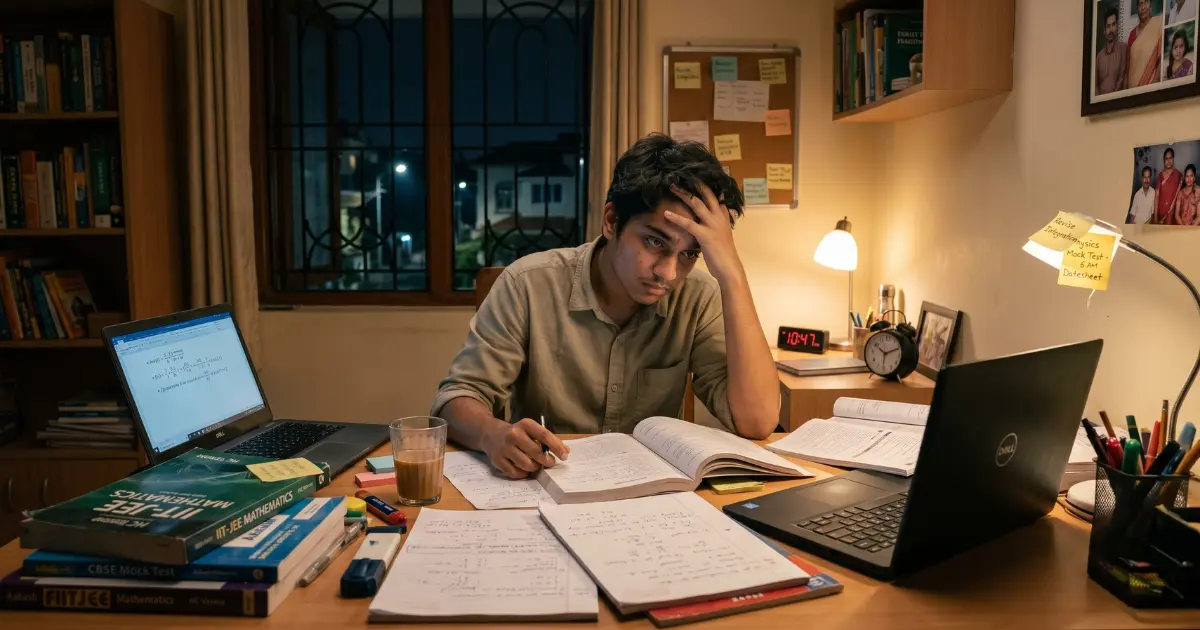
Have you noticed your teenager becoming unusually quiet, irritable, or withdrawn as exams approach?
Maybe they’re snapping at siblings over small things. Or staying up past midnight, staring at books but not really studying. Perhaps they’ve stopped talking about friends, or they’re picking at their food instead of eating.
You’re not imagining it. And you’re definitely not alone in worrying.
According to the National Institute of Mental Health and Neurosciences (NIMHANS), nearly 1 in 5 Indian adolescents experiences significant mental health challenges and academic pressure is one of the leading triggers.[1]
The World Health Organisation reports that exam-related stress affects millions of students globally, with India’s competitive education system creating particularly intense pressure.[2]
Here’s the thing, exam stress isn’t just “nerves.” It can genuinely affect your teenager’s mental and physical health. But with the right understanding and support, you can help them through this difficult time.
This guide explains:
- How to recognise signs of exam stress (mild to severe)
- Why academic pressure hits harder in India
- Practical ways to support your teen without adding pressure
- When stress becomes something that needs professional attention
Understanding Exam Stress: What Parents Need to Know
Exam stress is more than nervousness, it’s the body’s response to sustained academic pressure. Teenagers experience it differently because their brains are still developing, and India’s competitive education culture creates unique challenges.
What Is Exam Stress, Really?
So what exactly is exam stress? It’s more than just feeling nervous before a test.
Exam stress is the body’s response to academic pressure a combination of worry about performance, fear of disappointing others, and physical tension that can build up over weeks or months. In small doses, stress can actually help with focus. But when it becomes constant or overwhelming, it starts causing harm.
Why Do Teenagers Experience It Differently?
Teenagers experience stress differently than adults. Their brains are still developing, the prefrontal cortex, which handles decision-making and emotional regulation, isn’t fully mature until the mid-20s. This means they may struggle to manage intense emotions or think through consequences clearly.
What looks like overreaction to you might feel genuinely overwhelming to them.
The India Factor
And let’s be honest, India’s academic environment creates unique pressures. Board exams, JEE, NEET, competitive entrance tests. The stakes feel impossibly high. One exam can seem like it determines an entire future.
That pressure is real. Your teen isn’t being dramatic. They’re responding to a system that often sends the message: this test defines your worth.
Understanding this context matters. It helps you respond with empathy rather than dismissal.
For general stress management techniques, see our guide on managing stress effectively.
Signs Your Teen May Be Struggling
Section Summary: Recognising exam stress early helps you respond before it becomes serious. Signs range from mild (sleep changes, irritability) to severe (complete withdrawal, panic attacks).[1][5] This section helps you assess the severity.
How do you know when exam stress has crossed from “normal nerves” into something that needs attention? Here’s what to watch for organised by severity level.
What Are the Early Warning Signs? (Mild Stress)
| Sign | What It Looks Like |
|---|---|
|
Sign
Sleep changes
|
What It Looks Like
Difficulty falling asleep, waking tired, or sleeping too much
|
|
Sign
Appetite shifts
|
What It Looks Like
Eating less or constant snacking (especially sugary foods)
|
|
Sign
Mild irritability
|
What It Looks Like
Being short-tempered over small things
|
|
Sign
Procrastination
|
What It Looks Like
Avoiding study, finding excuses, last-minute cramming
|
|
Sign
Restlessness
|
What It Looks Like
Unable to sit still, fidgeting, difficulty concentrating
|

When Should I Be More Concerned? (Moderate Stress)
When you notice these signs, it’s time to pay closer attention:
- Withdrawing from family and friends: Preferring to stay alone, avoiding conversations
- Declining school performance: Grades dropping despite effort (or because of avoidance)
- Physical complaints: Frequent headaches, stomach aches, muscle tension without clear cause
- Mood swings: Happy one moment, upset the next more intense than typical teenage moodiness
- Negative self-talk: “I’m going to fail,” “I’m not smart enough,” “What’s the point?”
These signs suggest your teen needs more active support and possibly some changes to their environment or routine.
If you’re noticing persistent anxiety symptoms, it’s worth learning more about anxiety disorders and exploring strategies for dealing with fear and anxiety.
What Signs Mean It's Serious? (Severe Stress)
These signs require immediate attention:
| Warning Sign | Description |
|---|---|
|
Warning Sign
Complete withdrawal
|
Description
Refusing to leave room, cutting off all communication
|
|
Warning Sign
Panic attacks
|
Description
Sudden intense fear, racing heart, difficulty breathing
|
|
Warning Sign
Hopelessness
|
Description
"Nothing matters," "I wish I could disappear"
|
|
Warning Sign
Self-harm thoughts
|
Description
Any mention or evidence of hurting themselves
|
|
Warning Sign
Inability to function
|
Description
Can't eat, sleep, or do basic daily activities
|
If you see these signs, please reach out for professional help immediately. This isn’t something to manage alone at home.
Why Academic Pressure Hits Harder in India
India’s education system creates particular pressure through cultural expectations, intense competition, social comparison, and limited mental health awareness. Understanding this context helps parents respond with empathy.
Let’s talk about the elephant in the room.
India’s education system creates a particular kind of pressure. It’s not just about exams, it’s about what those exams represent.
How Does Culture Affect Exam Pressure?
Cultural expectations run deep. Academic success is often tied to family honour. Your teenager may feel they’re not just studying for themselves, they’re carrying the hopes of parents, grandparents, and extended family. That’s a heavy weight.
Is the Competition Really That Intense?
The competition is real. With millions of students appearing for board exams, JEE, and NEET, the numbers are daunting. A 2023 analysis found that over 20 lakh students appeared for JEE Main alone.[3] One mark can mean thousands of ranks difference.[3] This isn’t imagined pressure, it’s structural.
What About Social Comparison?
Social comparison is constant. “Sharma ji ka beta scored 98%.” We’ve all heard it. Your teen hears it too. Comparisons with cousins, neighbours children, classmates, they add up. Every conversation becomes a reminder of how they measure against others.
Why Don't More Families Seek Help?
Mental health awareness is still growing. Many families don’t talk openly about stress or anxiety. Seeking help can feel shameful. So teenagers suffer in silence, thinking something is wrong with them for not “handling” what everyone else seems to manage.
This context matters because it helps explain why your teen might be struggling. It’s not weakness. It’s a response to genuine pressure.
Our article on mental health stigma explores why talking about these issues matters.
How Parents Can Help (Without Adding Pressure)
Parents can make a real difference through emotional support, practical help, and knowing what NOT to do. The key is showing up with patience and love not adding to the pressure.
Here’s the good news: you can make a real difference. And it doesn’t require being a counsellor or having all the answers. It requires showing up with patience and love.
How Do I Create a Supportive Environment?
Keep communication open. Ask how they’re feeling, not just how studying is going. Listen without jumping to solutions. Sometimes they just need to vent.
Avoid comparisons. Not with siblings. Not with neighbours’ children. Not with how you performed at their age. Every comparison even well-intentioned, adds pressure.
Respect their study methods. If they study better with music or in short bursts, let them. Your way isn’t the only way. What matters is what works for them.
Reduce household tension. Exam season isn’t the time for family conflicts or big changes. Keep things calm and predictable at home.
What Practical Support Can I Provide?
Help with routine. Consistent sleep and wake times, regular meals, scheduled breaks. Structure reduces anxiety.
Ensure proper nutrition. Brain food matters proteins, fruits, vegetables, plenty of water. Limit excessive caffeine (yes, even that extra cup of coffee).
Encourage breaks. Short walks, a few minutes of stretching, time away from books. Rest isn’t laziness, it’s necessary for memory consolidation.
Handle logistics. Make sure they have what they need.. study materials, quiet space, transport to exams. Reduce their mental load wherever possible.
How Do I Provide Emotional Support?
Listen more than you advise. Your teenager knows they need to study. What they need from you is someone who hears them.
Validate their feelings. “It sounds like you’re feeling really overwhelmed” goes further than “Everyone feels nervous before exams.”
Share your own experiences. Talk about times you felt pressure or failed at something and recovered. It helps them see that struggles are normal and survivable.
Be present. Sometimes just sitting nearby while they study, not hovering, just being available provides comfort.
What Should I Avoid Doing?
| Don't | Why It Hurts |
|---|---|
|
Don't
Add pressure with expectations
|
Why It Hurts
"Score 90% or else" increases anxiety, not performance
|
|
Don't
Dismiss their stress
|
Why It Hurts
"It's just exams" shuts down communication
|
|
Don't
Compare them to others
|
Why It Hurts
Comparisons don't motivate—they shame
|
|
Don't
Check on them constantly
|
Why It Hurts
Micromanaging increases anxiety
|
When Stress Becomes Something More Serious
Sometimes exam stress masks deeper issues like clinical anxiety or depression. Knowing the difference and when to seek professional help can make a significant difference in your teen’s wellbeing.
Sometimes exam stress is the surface issue and something deeper is going on underneath.
How Do I Tell the Difference Between Normal Stress and Something Serious?
| Normal Stress | Something More Serious |
|---|---|
|
Normal Stress
Comes and goes
|
Something More Serious
Persists for weeks without improvement
|
|
Normal Stress
Responds to reassurance
|
Something More Serious
Doesn't improve with support
|
|
Normal Stress
Doesn't completely interfere with life
|
Something More Serious
Affects ability to eat, sleep, function
|
|
Normal Stress
Improves after exams end
|
Something More Serious
Continues even after stressful event passes
|
If you’re seeing signs of the latter, it’s time to consider professional support. This isn’t failure, it’s taking care of your child’s health.
Why Does Early Intervention Matter?
Early intervention makes a significant difference. A study in Lancet Psychiatry found that adolescents who receive early mental health support have significantly better long-term outcomes.[4] Conditions like anxiety and depression respond well to treatment when addressed early. Waiting and hoping things improve on their own can allow problems to deepen.
How Do I Start the Conversation About Professional Help?
Starting the conversation about professional help can feel awkward. Try: “I’ve noticed you’ve been struggling, and I’m wondering if it might help to talk to someone outside the family, someone trained to help with this kind of stress.”
If you’re unsure whether your teen’s symptoms warrant professional attention, our self-assessment guide can help you think through the signs.
Need guidance? Our clinical team, including psychiatrists experienced with adolescent mental health, can provide perspective through a confidential consultation. Call +91-73736-44444.
Creating a Mentally Healthy Home During Exam Season
Beyond immediate exam support, parents can build habits that protect long-term mental health—including modelling healthy coping, prioritising sleep, and managing their own anxiety.
Beyond immediate support during exams, there’s an opportunity here to build habits that protect mental health long-term.
How Can I Model Healthy Coping?
Should I Lower My Expectations?
Balance expectations with wellbeing. Yes, exams matter. But your child’s health matters more. A slightly lower score is infinitely better than a breakdown.
What About Sleep and Exercise?
Prioritise sleep. Pulling all-nighters hurts more than it helps. The brain consolidates learning during sleep. Encourage 7-8 hours, especially the night before exams.
Include physical activity. Even 20 minutes of walking or stretching releases tension and improves focus. Yoga can be particularly helpful for exam anxiety.
What If I'm Anxious About Their Results?
Manage your own anxiety. If you’re constantly worried about their results, they’ll feel it. Work on your own feelings separately, talk to a friend, exercise, do what you need to stay calm.
Build resilience for the future. These skills managing stress, asking for help, bouncing back from setbacks will serve them long after exams end. Our guide on building mental resilience offers practical approaches.
Frequently Asked Questions
Normal exam stress is temporary and manageable it might cause some sleepless nights or irritability, but your teen can still function and responds to support. Serious stress persists for weeks, doesn’t improve with reassurance, affects daily functioning (eating, sleeping, socialising), or includes thoughts of hopelessness or self-harm. When in doubt, a professional assessment can provide clarity.
Common physical symptoms include headaches, stomach aches or digestive issues, muscle tension (especially neck and shoulders), fatigue despite adequate sleep, appetite changes, difficulty sleeping or oversleeping, and frequent minor illnesses (stress weakens immunity). If physical symptoms persist, it’s worth seeing a doctor to rule out other causes.
Focus on emotional support rather than academic demands. Listen without judgement. Ask “How are you feeling?” not just “How’s studying going?” Help with practical matters, meals, quiet space, reduced household chores. So they can focus. Avoid comparisons with other students. And remind them regularly that you love them regardless of their scores.
Yes, but thoughtfully. It’s not about having no expectations it’s about shifting focus from specific scores to effort and wellbeing. Instead of “You need 90%,” try “I want you to do your best and take care of yourself.” Make clear that your love isn’t conditional on their grades.
Chronic, unaddressed stress can contribute to anxiety disorders, depression, and other mental health challenges. Research published in the Journal of Adolescent Health indicates that sustained academic pressure without adequate support increases risk of mental health difficulties.[5] However, with proper support both at home and professional when needed, most teenagers navigate exam stress without lasting effects.
Consider professional help if: symptoms persist for more than 2-3 weeks without improvement; your teen talks about hopelessness or not wanting to be around; there’s evidence of self-harm; they can’t function normally (eating, sleeping, attending school); or your family support isn’t making a difference. A consultation doesn’t commit you to treatment it simply provides expert perspective.
Choose a calm moment not during an argument or crisis. Use “I” statements: “I’ve noticed you seem stressed lately” rather than “You’re always anxious.” Share your own experiences with stress. Don’t demand they talk, offer availability: “I’m here whenever you want to chat.” Sometimes walks or car rides work better than face-to-face conversations.
Don’t force it. Let them know you’re available without pressuring. Consider whether there’s someone else they might open up to a trusted relative, school counsellor, or family friend. Sometimes teenagers find it easier to talk to someone who isn’t their parent. Keep showing up, keep being present, and keep the door open.
You're Not Alone in This
If you’ve read this far, you’re clearly a parent who cares deeply about your child’s wellbeing. That concern, that love is already the foundation of support.
Exam stress is real, and it affects millions of Indian families every year. But it doesn’t have to become something more serious. With understanding, patience, and the right support, most teenagers get through this difficult season and emerge stronger.
You don’t have to figure this out alone. If you’re concerned about your teenager’s mental health, reaching out for guidance is a sign of strength, not weakness.
Have questions? A confidential conversation can help clarify whether what you’re seeing is typical stress or something that needs attention. Sometimes just talking to someone who understands makes all the difference.
Contact Abhasa: +91-73736-44444 (WhatsApp available)
Your teenager needs you in their corner. And you don’t have to be perfect, you just have to be present. That’s enough.
Continue Your Learning
If you’d like to explore further, our guides on anxiety disorders and depression provide deeper understanding of these conditions.
For practical coping strategies, see our resources on stress management and building mental resilience. Parents seeking family-focused support may find our family support programme helpful.
Whether you have questions or need guidance, we're here to help.
Medical References
[2] World Health Organisation. (2024). Adolescent Mental Health: Global Status Report. Geneva: WHO.
[3] National Testing Agency. (2023). JEE Main 2023 Statistics Report. New Delhi: Ministry of Education.
Disclaimer: This article is for informational purposes only and does not constitute medical advice. If you’re concerned about your teenager’s mental health, please consult a qualified healthcare professional. In case of emergency or if your teen expresses thoughts of self-harm, contact emergency services immediately or call a crisis helpline.
If you or someone you know is in immediate danger:
Emergency Helplines:
- Vandrevala Foundation: 1860-2662-345 (24/7 Mental Health Crisis)
- iCall: 9152987821 (Mon-Sat, 8am-10pm)
- NIMHANS Helpline: 080-46110007 (Psychiatric Emergency)
- National Mental Health Helpline (India): 1800-599-0019 (Toll-free)
Abhasa 24/7 Helpline: +91-73736-44444
Emergency: If experiencing a medical emergency, call 112 or visit your nearest emergency room.