
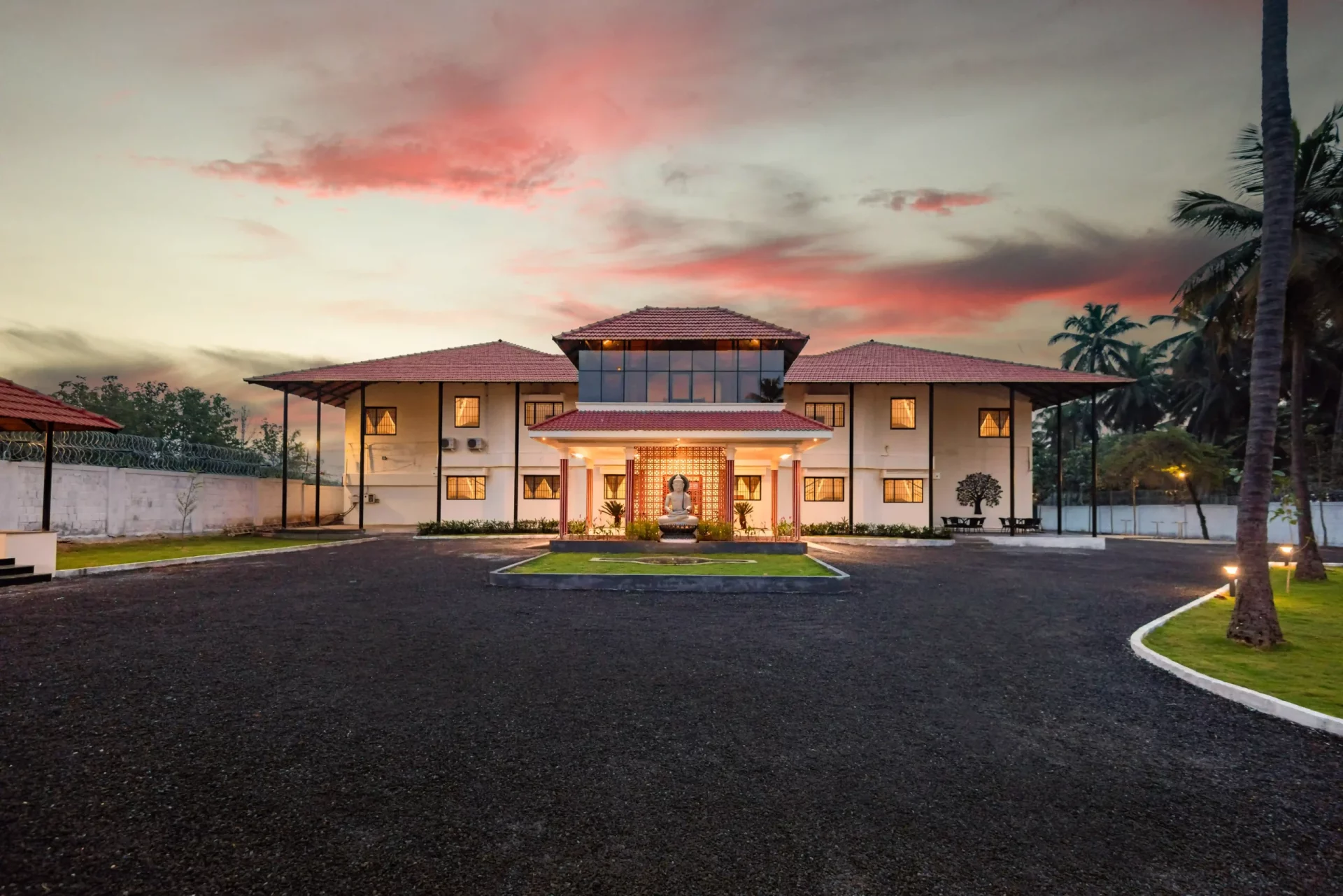
Best Rehabilitation Centre in Mumbai
Luxury Deaddiction & Mental Health Care
Expert-reviewed by Abhasa Clinical Team | Medical review by Dr. Naveen Kumar, MBBS, DPM (Psychiatry)
If you’re searching for a rehabilitation centre in Mumbai, you’re not just looking for a facility—you’re looking for hope. For your spouse who’s been drinking more than ever. For your son who can’t seem to stop despite promising he would. For your parent whose prescription medication use has spiralled out of control.
We understand that search. And we want to help you find the right path forward.
Mumbai’s relentless pace—the crowded locals, high-pressure corporate culture, and always-on lifestyle—creates unique challenges. When families search for a rehab centre in Mumbai, they often discover something important: the most effective recovery happens away from familiar triggers and stressors.
According to the AIIMS National Survey on Substance Use in India, approximately 16 crore Indians consume alcohol, with Maharashtra ranking among the top states for opioid and sedative use.[1] The 2023 McKinsey Health Institute survey revealed that 59% of Indian employees experience burnout symptoms—significantly higher than the 20% global average—with IT and corporate sectors particularly affected.[2]
For Mumbai families, this means watching loved ones struggle in silence while the city moves on around them.
Why Mumbai Families Choose Abhasa as Their Rehabilitation Centre
Families researching the best rehab centre in Mumbai find several options—local deaddiction centres, government hospitals, and private clinics. But here’s what they discover after trying other approaches: environment matters as much as treatment.
Think about it. Your loved one developed their addiction surrounded by familiar triggers—the colleague who drinks after work, the friend with party drugs, the corner shop that sells alcohol, the neighbourhood where dealers know their name. Will recovering in that same environment work? For some, it does. But for many, it doesn’t.
That’s why families searching for a rehabilitation centre in Mumbai often discover that stepping away—even for a short distance—creates the space needed for genuine healing.
Abhasa's Location: Therapeutic Distance with Family Accessibility
Abhasa operates a luxury residential facility in Karjat, Maharashtra—just 62 kilometres from Mumbai. That’s about 1.5 to 2 hours by road, or a quick train ride from CST, Dadar, or Bandra.
Abhasa's Location: Therapeutic Distance with Family Accessibility
Abhasa operates a luxury residential facility in Karjat, Maharashtra—just 62 kilometres from Mumbai. That’s about 1.5 to 2 hours by road, or a quick train ride from CST, Dadar, or Bandra.
Why does this matter for Mumbai families?
Close enough for family involvement. Unlike centres across the country, Karjat remains accessible for regular family therapy sessions. You can visit, participate in counselling, and stay connected without exhausting travel.
Far enough for therapeutic distance. Your loved one won’t bump into colleagues at the grocery store. They won’t drive past their usual drinking spots. They’re removed from triggers while remaining within Maharashtra—and within your reach.
Natural healing environment. The Karjat facility sits at the foothills of Lonavala in the Western Ghats, spread across 2 acres of lush greenery. The contrast to Mumbai’s urban landscape—the traffic, the crowds, the constant stimulation—supports the mental shift recovery requires.
“Recovery isn’t just about stopping a substance—it’s about rebuilding a life. The therapeutic distance from familiar triggers gives our patients the mental space they need to focus entirely on healing.” — Dr. Naveen Kumar, Medical Director, MBBS, DPM (Psychiatry), 15+ years experience
What Makes Abhasa a Top Rehabilitation Centre for Mumbai Residents
| Feature | Typical Deaddiction Centre | Abhasa |
|---|---|---|
| Staff Ratio | 5:1 or higher | 2:1 (Personalized attention) |
| Treatment Approach | Medication-focused | Bio-Psycho-Social-Spiritual |
| Environment | Clinical/institutional | Luxury resort-like sanctuary |
| Family Involvement | Limited or none | Integrated family therapy |
| Dual Diagnosis | Often untreated | Specialized programme |
| Aftercare | Basic or none | Comprehensive 1-year plan |
Drug Rehabilitation Centre in Mumbai: Understanding Your Options
If you’re looking for a drug rehabilitation centre in Mumbai, understanding what proper treatment involves is essential.
Addiction isn’t a character flaw or lack of willpower. The 2019 AIIMS report confirmed that only 1 in 10 people with substance use disorders receive treatment—reflecting a deep mismatch between need and care availability.[1] This treatment gap means most people either don’t seek help or receive inadequate care.
Experience unmatched treatment in complete privacy.
Alcohol Addiction Treatment
Families searching for the best alcohol rehabilitation centre in Mumbai understand that alcohol use disorder affects professionals, homemakers, and young adults alike. Our approach includes:
Medical Detoxification: Safe, medically supervised withdrawal management. Here’s the thing—alcohol withdrawal can be dangerous, even life-threatening, with delirium tremens having a mortality rate of up to 15% if untreated.[3] Our 24/7 medical team monitors vital signs, manages withdrawal symptoms, and ensures safety throughout the process.
Psychological Therapy: Understanding why you drink matters as much as stopping. Through Cognitive Behavioural Therapy (CBT), Dialectical Behaviour Therapy (DBT), and Motivational Interviewing, we help identify triggers, build coping skills, and address underlying emotional pain. CBT has demonstrated significant efficacy in treating substance use disorders, with research showing sustained effects that persist beyond treatment.[4]
Relapse Prevention: Recovery doesn’t end with detox. We create detailed relapse prevention plans including trigger identification, coping strategies, and ongoing support connections.
Learn more about our alcohol addiction programme.
Drug Rehabilitation Programmes
Whether prescription medications, cannabis, cocaine, or heroin—drug addiction requires specialized treatment. Our programmes address:
Prescription Drug Addiction
India’s prescription drug problem is often hidden. According to AIIMS data, sedative use is particularly prevalent in Maharashtra, Uttar Pradesh, Punjab, Andhra Pradesh, and Gujarat—states housing the largest populations of people using sedatives.[1]
Our prescription drug programme includes:
- Gradual, safe tapering protocols
- Non-addictive medication alternatives
- Pain management strategies (for those originally prescribed painkillers)
- Therapy addressing underlying anxiety, sleep disorders, or pain conditions
Cannabis Addiction
Cannabis use in India has a complex cultural history. The AIIMS survey found that more than 3.1 crore Indians (2.8%) reported using cannabis products including bhang, ganja, and charas in the past year.[1] But for some, what begins as recreational use becomes problematic dependence. Our cannabis programme focuses on:
- Understanding the psychology of use
- Addressing co-occurring anxiety or depression
- Building motivation for change
- Developing alternative coping strategies
Hard Drug Rehabilitation
For opioids, cocaine, methamphetamine, and other substances, comprehensive treatment is critical. Maharashtra ranks among the top states for injection drug use according to national data, alongside Uttar Pradesh, Punjab, Delhi, Andhra Pradesh, Telangana, Haryana, Karnataka, Manipur, and Nagaland.[1] Our programme includes:
- Medical stabilization and detox
- Opioid substitution therapy where appropriate
- Intensive therapeutic intervention
- Long-term recovery planning
Explore our drug addiction treatment options.
Luxury treatment is much more than comfort.
Mental Rehabilitation Centre in Mumbai: Treating Dual Diagnosis
Many families searching for a mental rehabilitation centre in Mumbai or psychiatric rehabilitation centre in Mumbai find that their loved one struggles with both addiction and mental health conditions—a situation called “dual diagnosis.” Simply put, this means having both a substance use problem and a mental health condition at the same time. Co-occurring mental health disorders are common among individuals with substance use disorders, with research showing that nearly half of those with a substance use disorder also experience a mental illness.[7]
The National Mental Health Survey (NMHS) conducted by NIMHANS found that approximately 10.6% of Indian adults suffer from mental disorders.[5] When addiction and mental illness occur together, treating only one rarely produces lasting recovery.
Abhasa offers integrated treatment for:
Depression and Addiction
The relationship between depression and addiction runs both ways. People drink or use drugs to escape depressive feelings. Then substances worsen depression over time, creating a vicious cycle. Our dual diagnosis programme breaks this cycle by treating both conditions simultaneously.
Anxiety Disorders
Social anxiety, generalized anxiety, panic disorder—these conditions often drive substance use. Learning to manage anxiety without alcohol or medications is central to lasting recovery. Learn more about anxiety treatment.
Bipolar Disorder
The highs of mania can lead to impulsive substance use. The lows of depression can trigger self-medication. Managing bipolar disorder while addressing addiction requires specialized psychiatric expertise. Explore our bipolar disorder treatment.
Trauma & PTSD
Childhood trauma, sexual abuse, domestic violence, accidents—traumatic experiences often underlie addiction. Our trauma-informed care approach, including EMDR therapy, helps process painful experiences safely. Read about PTSD treatment.
Find a place where comfort and healing join forces.
Luxury Rehab Facilities Serving Mumbai Families
Unlike typical clinical settings, families seeking a luxury rehab center in Mumbai find that Abhasa offers resort-like healing environments. Recovery involves the whole person—body, mind, and spirit.
Physical Wellness
Yoga & Meditation: Daily practice calms the nervous system, builds emotional regulation, and creates healthy routines. Our certified instructors tailor sessions to all ability levels. Learn about yoga for addiction.
Fitness & Gym: Modern facilities help rebuild physical strength depleted by addiction. And here’s something interesting—exercise releases natural endorphins, replacing artificial highs with healthy ones.
Nutritional Support: Addiction depletes the body of essential nutrients. Our chefs prepare balanced, delicious meals that support physical recovery while reintroducing healthy eating habits. Read about nutrition in healing.
Creative & Expressive Therapies
Art Therapy: Sometimes emotions are too complex for words. Art therapy provides alternative expression pathways, helping process trauma and build self-awareness.
Music Therapy: Sound and rhythm access emotional centres that talk therapy alone cannot reach. Music therapy supports emotional regulation and stress relief.
Nature-Based Healing
Horticultural Therapy: Caring for plants teaches patience, routine, and the value of nurturing. Our organic gardens provide therapeutic engagement with nature.
Nature Walks & Trekking: The Western Ghats setting offers trails that build resilience, clarity, and connection to something larger than oneself.
Pet Therapy: Our therapy dogs provide unconditional acceptance and emotional support—especially valuable for those rebuilding trust in relationships.
A Typical Day in Our Structured Rehab Programme
Structure provides safety. For someone whose life has become chaotic through addiction, knowing what comes next creates calm. Abhasa follows a carefully designed daily schedule:
| Time | Activity |
|---|---|
| 6:00 AM | Wake up & personal time |
| 6:30 AM | Yoga & meditation |
| 7:30 AM | Healthy breakfast |
| 8:30 AM | Individual therapy session |
| 10:00 AM | Group therapy |
| 12:00 PM | Nutritious lunch |
| 1:00 PM | Rest & personal reflection |
| 2:30 PM | Activity therapy (art, music, or movement) |
| 4:00 PM | Psychoeducation session |
| 5:00 PM | Physical exercise or nature walk |
| 6:30 PM | Dinner |
| 7:30 PM | 12-step or support group meeting |
| 9:00 PM | Journaling & personal time |
| 10:00 PM | Lights out |
This rhythm—repeated consistently over weeks and months—rewires habits and creates new neural pathways for sober living. Want to understand what to expect at rehab? We’ve covered it in detail.
Who Can Benefit from Our Programmes?
If you’re wondering whether Abhasa is right for your situation, consider these common scenarios:
High-Functioning Professionals
Mumbai’s corporate offices, Bandra-Kurla Complex, Lower Parel business district, and startup ecosystem create environments where high achievers struggle in silence. The 2024 Gallup State of the Global Workplace report found that only 14% of Indian employees describe themselves as “thriving” at work—the remaining 86% report struggling or suffering.[6]
Sound familiar? For executives, managers, and professionals, our programmes offer:
- Complete confidentiality and privacy
- Flexible communication for urgent business matters
- Executive accommodation options
- Focus on maintaining career trajectory post-recovery
Family Members of Addicted Loved Ones
Addiction affects the entire family. Spouses become caretakers. Children grow up walking on eggshells. Parents watch helplessly. Our family support programme helps:
- Establish healthy boundaries
- Address codependency patterns
- Heal family relationships
- Prepare for loved one’s return home
Young Adults
Youth substance exposure in urban areas is rising. For young adults whose academic or early career is derailed by addiction, our programmes provide:
- Age-appropriate peer groups
- Career and education counselling
- Life skills development
- Social skills training for sober socializing
Women's Rehabilitation Services
Families searching for a women’s rehabilitation centre in Mumbai understand that women face unique challenges in addiction and recovery—often related to trauma, relationships, and societal stigma. Our Coimbatore facility offers India’s only women-exclusive luxury rehabilitation centre, providing:
- Female-only clinical and support staff
- Trauma-informed care for women’s experiences
- Safe, private environment
- Programmes for eating disorders and relationship issues
Learn more about women’s rehabilitation services.
Step-by-Step Admission Process for Mumbai Patients
Getting started is simpler than you might think. Here’s our process:
Step 1: Confidential Assessment
Call our team at +91-73736-44444 (WhatsApp available). We’ll discuss:
- Your loved one’s substance use history
- Any mental health concerns
- Family situation and support system
- Questions you have about treatment
- This conversation is 100% confidential. No judgement. Just guidance.
Step 2: Family Consultation
We’ll schedule a detailed consultation—either at our Karjat centre or via video call. This helps us understand:
- Medical history and current health status
- Previous treatment attempts
- Family dynamics and relationships
- Goals for treatment
Step 3: Personalized Treatment Plan
Based on assessment, we create an individualized plan addressing:
- Detox needs and medical requirements
- Therapy modalities best suited to the individual
- Programme duration recommendation
- Family involvement opportunities
Step 4: Admission & Arrival
Once ready, we coordinate everything:
- Admission paperwork
- Room preparation
- Medical intake
- Orientation to the programme
Most admissions can happen within 24-48 hours of decision. Read our admission guide for more details.
Protect your privacy while you recover.
Travel & Access Support for Mumbai Patients
For families searching for a rehabilitation centre near me in the Mumbai area, Abhasa’s Karjat location offers convenient access:
How Do I Get to Abhasa from Mumbai?
| Route | Details |
|---|---|
| By Road from South Mumbai | 80 km via Eastern Freeway → Airoli → Mumbai-Pune Expressway (1.5-2 hours) |
| By Road from Western Suburbs | 75 km via Santa Cruz-Chembur Link Rd → JVLR → Expressway (1.5-2 hours) |
| By Train from CST/Dadar | Direct trains to Karjat Junction (2-2.5 hours); then 30 min to facility |
| By Train from Bandra/Andheri | Harbour Line to Panvel, then Karjat local (2.5-3 hours total) |
Transport Assistance
We provide:
- Airport/railway station pickup
- Direct transport from Mumbai addresses
- Family accommodation recommendations for visits
- Regular communication updates throughout treatment
For Families Visiting
Family involvement improves outcomes—research shows that family therapy significantly reduces relapse rates and improves long-term recovery.[8] We schedule regular family therapy sessions and encourage supervised visits at appropriate treatment stages. Most families from Mumbai visit weekly or bi-weekly without difficulty.
Recovery Outcomes & Success Stories
We’re careful about how we discuss outcomes—because every recovery journey is unique.
What We Can Share
- 75% Success Rate: Based on sustained recovery at one-year follow-up
- 1,500+ Patients Treated: Since founding in 2019
- 4.9/5 Google Rating: From verified patient and family reviews
- Award Recognition: Indian Health Professionals Award 2023 for “Best Rehabilitation and Wellness Home”
What We Won't Promise
We don’t guarantee results. Recovery depends on individual commitment, family support, and ongoing engagement with aftercare. What we can promise is evidence-based treatment delivered by qualified professionals in a supportive environment.
Family Perspectives (Without Identifiable Details)
“We searched for rehabilitation centres in Mumbai for months before finding Abhasa. The distance worried us at first, but we now see it was essential—our son needed to be away from his dealer, his drinking friends, and the stress of his job. He’s been sober for 14 months.”
“The family programme changed everything. We didn’t realize how we were enabling his addiction. Learning to set boundaries while staying supportive—that’s what helped him finally commit to recovery.”
FAQs – Mumbai Families
Q: Is there a rehabilitation centre in Mumbai that offers luxury treatment?
A: While our facility is located in Karjat (62 km from Mumbai), we serve hundreds of Mumbai families seeking luxury residential treatment. The therapeutic distance from the city—away from triggers and stressors—actually enhances recovery outcomes. Most Mumbai families can visit within 1.5-2 hours.
Q: What is the cost of rehabilitation treatment for Mumbai patients?
Abhasa’s programmes range from ₹2-6 lakhs per month, depending on accommodation type and treatment intensity. This includes medical care, therapy, meals, accommodation, and activities. Payment plans are available. We provide transparent pricing with no hidden fees.
Q: Is treatment confidential?
Absolutely. We maintain strict confidentiality policies. Your employment, social standing, and family privacy are protected. We do not share patient information with anyone without consent.
Q: What's the best rehab centre in Mumbai for alcohol addiction?
Families looking for the best rehab centre in Mumbai for alcohol addiction should consider several factors: medical detox capabilities, therapy approach, family involvement, and aftercare support. Abhasa offers all of these with a 75% success rate and luxury amenities—just 1.5 hours from Mumbai.
Q: Do you treat alcohol and drug addiction separately?
Treatment is individualized. While some therapeutic principles apply to all addictions, we tailor programmes based on specific substances, severity, and individual needs. Poly-substance use (multiple substances) requires integrated treatment.
Q: What mental health conditions do you treat alongside addiction?
Depression, anxiety disorders, bipolar disorder, PTSD, OCD, personality disorders, and other conditions—particularly when co-occurring with addiction. Our psychiatrists and clinical psychologists provide comprehensive mental health care.
Q: How long does rehab last?
Most patients benefit from 1-3 months of residential treatment. The exact duration depends on addiction severity, co-occurring conditions, and individual progress. Longer stays often produce better outcomes. We don’t rush recovery.
Q: Is detox included?
Yes. Medical detoxification is provided on-site when needed. Our 24/7 medical team ensures safe withdrawal management under Dr. Malarvilzhi G’s supervision (MBBS, MD, 20 years experience).
Q: Are private rooms available?
Yes. We offer suite rooms, deluxe rooms, twin sharing, and other accommodation options. Privacy levels can be customized based on preference and programme type.
Q: Can family visit?
Yes—family involvement is encouraged. We schedule regular family therapy sessions and allow supervised visits at appropriate treatment stages. Family members often stay overnight at nearby accommodations.
Q: How fast can admission happen?
Most admissions occur within 24-48 hours of decision. For urgent situations, same-day admission may be possible. Call our team to discuss timing.
Q: What aftercare is provided?
Before discharge, we create a comprehensive aftercare plan including:
Scheduled follow-up appointments
Support group recommendations
Relapse prevention strategies
Emergency contact protocols
Ongoing family support resources
Access to alumni community
Learn more about life after rehab.
Your privacy, comfort, and care remain our highest priorities.
Start Your Recovery Journey Today
Call: +91-73736-44444 (WhatsApp available 24/7)
Email: [email protected]
Website: www.abhasa.in
Or visit our contact page to schedule a confidential assessment. You can also take our Do I Need Rehab? self-assessment quiz.
You don’t have to navigate this alone. And neither does your loved one.
Your path to a healthier, stronger future begins in a place created with you in mind.
Why Mumbai Families Choose Abhasa
- Therapeutic Distance: Far enough from triggers, close enough for family involvement
- Luxury Environment: Resort-like healing sanctuary, not institutional facility
- Clinical Excellence: 2:1 staff ratio, psychiatrists with 15+ years experience
- Integrated Treatment: Addiction + mental health addressed together
- Family Focus: Comprehensive family therapy and support
- Proven Results: 75% success rate, 1,500+ patients, 4.9/5 rating
Resources
Research Citations (5 Most Authoritative Sources):
[1] Ambekar A, Agrawal A, Rao R, Mishra AK, Khandelwal SK, Chadda RK. (2019). Magnitude of Substance Use in India. Ministry of Social Justice and Empowerment, Government of India. Retrieved from https://socialjustice.gov.in/writereaddata/UploadFile/Survey%20Report.pdf
[2] McKinsey Health Institute. (2023). Employee Mental Health and Wellbeing Survey. McKinsey & Company. Retrieved from https://www.mckinsey.com/mhi/our-insights/
[3] Rahman A, Paul M. (2023). Delirium Tremens. StatPearls Publishing. Retrieved from https://www.ncbi.nlm.nih.gov/books/NBK482134/
[4] Magill M, Ray LA. (2009). Cognitive-Behavioral Treatment with Adult Alcohol and Illicit Drug Users: A Meta-Analysis of Randomized Controlled Trials. Journal of Studies on Alcohol and Drugs, 70(4), 516-527. Retrieved from https://www.ncbi.nlm.nih.gov/pmc/articles/PMC2722971/
[5] National Institute of Mental Health and Neurosciences (NIMHANS). (2015-16). National Mental Health Survey of India. Ministry of Health and Family Welfare, Government of India. Retrieved from https://nimhans.ac.in/wp-content/uploads/2019/05/NMHS-Report.pdf
[6] Gallup. (2024). State of the Global Workplace 2024 Report. Gallup Inc. Retrieved from https://www.gallup.com/workplace/349484/state-of-the-global-workplace.aspx
[7] National Institute on Drug Abuse. (2024). Part 1: The Connection Between Substance Use Disorders and Mental Illness. Retrieved from https://nida.nih.gov/publications/research-reports/common-comorbidities-substance-use-disorders/part-1-connection-between-substance-use-disorders-mental-illness
[8] Rowe CL. (2012). Family therapy for drug abuse: review and updates 2003-2010. Journal of Marital and Family Therapy. Retrieved from https://www.ncbi.nlm.nih.gov/pmc/articles/PMC3188398/
Abhasa Rehab and Wellness has been serving families from Mumbai, Navi Mumbai, Thane, and Maharashtra since 2019. Our Karjat facility (62 km from Mumbai) provides luxury residential treatment with 24/7 medical supervision. We’re rated 4.9/5 on Google and recipient of the Indian Health Professionals Award 2023.
Disclaimer: This content is for informational purposes only and does not constitute medical advice. Addiction treatment decisions should be made in consultation with qualified healthcare professionals. If you or someone you know is experiencing a medical emergency related to substance use, please call emergency services immediately or contact the national helpline: 14446.
Expert Review: Developed by Abhasa Rehab and Wellness. Medical review by Dr. Naveen Kumar, MBBS, DPM (Psychiatry), Medical Director with 15+ years experience in addiction psychiatry. Based on evidence from AIIMS-NIMHANS, WHO, and peer-reviewed research.
Last Updated: January 2026