Searching for the Best Rehabilitation Centre in Chennai?
Here's What Families Discover
When someone you love is struggling with addiction, the question isn’t just “where do we get help?”—it’s “where will they actually heal?”
If you’re searching for a rehabilitation centre in Chennai—or wondering about de addiction centres in Chennai that truly work—you’ve probably noticed something. Whether you’re looking for a rehab centre in Chennai or searching “rehabilitation centre near me” from anywhere in Tamil Nadu—most options feel clinical, crowded, or uncomfortably close to the triggers that made things difficult in the first place. And that’s exactly why thousands of Chennai families are choosing a different path.
Abhasa’s Coimbatore facility sits just 55 minutes by flight from Chennai—same state, familiar culture, South Indian food your loved one knows, Tamil-speaking staff. Close enough for regular family visits. Far enough to break the cycle.
Experience premium care.
Looking for a Rehabilitation Centre in Chennai?
Understanding Tamil Nadu's Addiction Crisis
Here’s what the numbers tell us. According to the AIIMS-NIMHANS National Survey 2019, Tamil Nadu has a 16.7% alcohol prevalence rate, with 5.8% experiencing harmful dependence.[1] Chennai, Coimbatore, and Madurai rank among the most vulnerable districts.
But statistics don’t capture what you’re living through. The late-night arguments. The broken promises. The feeling of watching someone you love disappear.
What makes Tamil Nadu’s situation unique? TASMAC shops on nearly every corner. That accessibility creates an environment where recovery in the same city—surrounded by the same triggers—becomes exponentially harder.
Beyond De Addiction Centres in Chennai: Why Therapeutic Distance Works
So why would travelling outside Chennai for rehabilitation actually help? It’s not about escaping. It’s about creating space for real change.
When your loved one enters rehabilitation in Coimbatore rather than a de-addiction centre in Chennai, several things happen:
The trigger network breaks
No more running into drinking buddies. No familiar bars on the route home. No TASMAC shop around every corner. The physical distance creates mental space for healing.
Anonymity protects dignity
In Chennai’s professional circles—whether IT, banking, or corporate—stigma is real. At Abhasa, nobody from your loved one’s Chennai network will accidentally encounter them. Complete privacy. Complete focus on recovery.
The environment changes
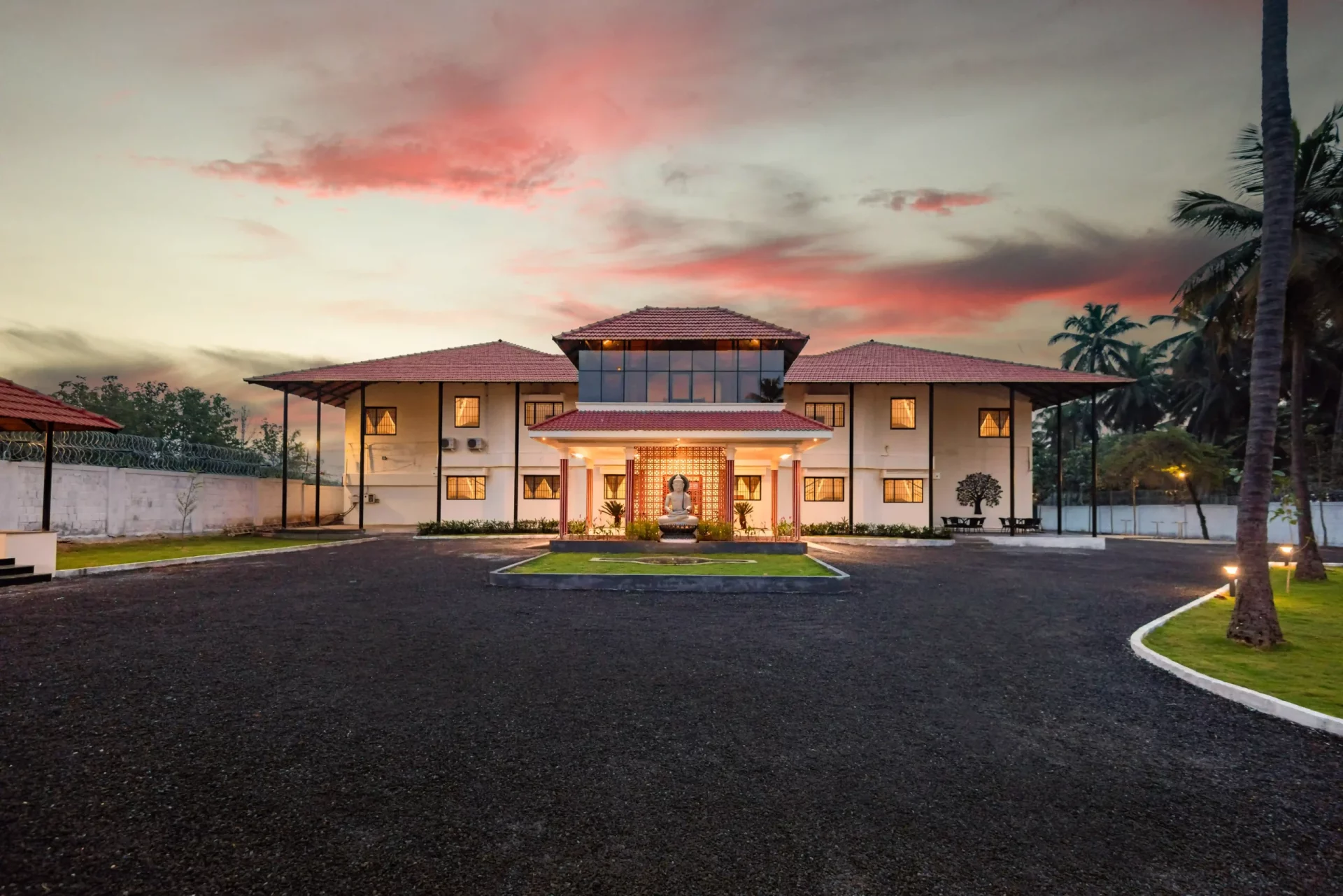
Instead of fluorescent hospital lights and clinical corridors, imagine waking to birdsong in Coimbatore’s Western Ghats. Recovery feels less like punishment, more like healing.
Every information, from the first conversation to the final day of your stay, is designed to safeguard dignity and inspire change.
Comparing Rehab Centres in Chennai with Distance-Based Alternatives
If you’re searching for the right rehabilitation centre for your Chennai family, understanding the landscape helps. De-addiction centres in Chennai range from government hospitals to private clinics—but each comes with trade-offs.
Government options
Institute of Mental Health (Kilpauk) offers free treatment but limited privacy and often overcrowded wards. Waiting lists can extend weeks.
Private Chennai clinics
Better privacy, but proximity to triggers remains a concern. And for high-profile families in IT, banking, or corporate Chennai, the risk of running into colleagues or acquaintances is real.
Distance-based rehabilitation
Facilities like Abhasa—just 55 minutes away in Coimbatore—combine the benefits of private care with the therapeutic advantage of physical separation from the Chennai environment that contributed to addiction.
The right choice depends on your specific situation. But for lasting recovery, many Chennai families find that some distance makes all the difference.
Many families first search for drug de addiction centres in Chennai, drug rehabilitation centre in Chennai, or alcohol rehabilitation centres in Chennai before discovering that location matters less than approach. Those specifically seeking a drug rehabilitation centre chennai often find that distance from dealers and triggers makes the difference between relapse and lasting recovery. What we’ve seen: families who initially sought local de addiction centres in Chennai eventually chose distance-based rehabilitation for stronger, more lasting outcomes.Facilities like Abhasa—just 55 minutes away in Coimbatore—combine the benefits of private care with the therapeutic advantage of physical separation from the Chennai environment that contributed to addiction.
Luxury treatment is much more than comfort.
When to Search for an Alcohol Rehabilitation Centre: Signs Chennai Families Notice
When does social drinking become something more serious? Families often ask this because the line blurs slowly—and by the time it’s obvious, the problem has deepened.
With alcohol—Tamil Nadu's primary concern
| Stage | What You Might Notice |
|---|---|
| Early | Morning drinks to "steady nerves," hiding consumption, drinking alone |
| Middle | Missing work, relationship conflicts, physical tolerance increasing |
| Advanced | Daily dependence, health complications, failed attempts to quit |
With prescription drugs and other substances:
The patterns differ. Someone might start with legitimate pain medication after surgery. Tolerance builds. They need more. Eventually, they’re obtaining pills through multiple doctors or other means.
The common thread? When use continues despite clear negative consequences—job problems, relationship damage, health issues—it’s time to seek professional help.
Specialized Treatment Needs
Different challenges require different expertise. If you’re searching for:
- Psychiatric rehabilitation centres in Chennai for dual diagnosis care
- Mental rehabilitation centres in Chennai for conditions like schizophrenia or severe anxiety
- Smoking rehabilitation centre in Chennai for nicotine and tobacco dependence
Abhasa addresses all these through integrated psychiatric care. Our team includes RCI-registered clinical psychologists and psychiatrists experienced in treating complex cases that many local centres aren’t equipped to handle.
At Abhasa, we pay attention to every detail so you feel secure, cared for, and ready to begin your next chapter.
Unlike Typical Rehab Centres in Chennai: How Abhasa's Approach Differs
Most rehabilitation centres operate on a model that’s decades old. Abhasa was built differently from the ground up.
When Mrs. Gayathri Arvind founded Abhasa in 2019, she did so after watching a family member struggle through conventional Indian rehab—the kind with punishment culture, forced compliance, and little dignity. After six years researching what actually works, she created something different.
Here's what that means for Chennai families:
Holistic Treatment, Not Just Detox
Detoxification is just the first step. At many de-addiction centres in Chennai, patients complete detox and leave—only to relapse within weeks because the underlying causes weren’t addressed.
At Abhasa, treatment looks at the whole picture: childhood trauma, work stress, relationship patterns, mental health conditions that fuel substance use. CBT, DBT, REBT—evidence-based therapies[2] that create lasting change, not temporary fixes.
Family Involvement from Day One
Addiction doesn’t happen in isolation. It affects everyone. That’s why Abhasa’s family support programme brings you into the healing process.[3] Weekly family sessions. Counselling for spouses and parents. Education about enabling versus supporting.
Recovery is a family journey. We treat it that way.
The Right Staff-to-Patient Ratio
Abhasa maintains a 2:1 staff-to-patient ratio. That means your loved one isn’t lost in a crowd. They have psychiatrists who remember their name, therapists who understand their story, and 24/7 support when moments get difficult.
Meet the Clinical Team
The people treating your loved one matter. At Abhasa, the clinical team brings decades of specialized experience:
Dr. Naveen Kumar — Medical Director MBBS, DPM (Psychiatry), 25 years experience in addiction psychiatry and dual diagnosis treatment. He oversees all medical protocols across Abhasa’s facilities.
Ms. Meera K — Clinical Psychology Lead M.Phil Clinical Psychology (RCI registered), specializing in trauma-informed care, CBT, DBT, and EMDR therapy. 9 years of focused addiction treatment experience.
Together with 200+ staff members across three facilities, they’ve helped 1,500+ families navigate the path from crisis to recovery—with a 75% success rate.
Travelling from Chennai to Our Rehabilitation Centre: Your Options
Travel concerns are natural. Here’s exactly what the journey looks like:
By Flight (Recommended)
- Duration: 55 minutes (shortest travel time among Tier 1 cities)
- Airlines: IndiGo, Air India Express
- Frequency: 6-8 flights daily
- Cost: INR 2,000-5,000 one way
We provide complimentary airport pickup from Coimbatore Airport directly to the facility.
By Train
| Train | Duration | Frequency | Comfort Level |
|---|---|---|---|
| Shatabdi Express | 5h 30m | Daily (except Sunday) | Most comfortable |
| Kovai Express | 7 hours | Daily | Multiple AC classes |
| Cheran Express | 8 hours | Daily | Budget option |
By Road
- Distance: 505 km via NH48
- Duration: 7-8 hours
- Route: Chennai → Krishnagiri → Salem → Coimbatore
- Note: Well-maintained highway, scenic drive
Many Chennai families find the 55-minute flight most convenient—especially for regular visits during treatment.
Your Drug Rehabilitation Journey from Chennai: What to Expect
Phase 1: Assessment (Days 1-3)
Comprehensive evaluation—physical health, mental health, substance history, family dynamics. We look at everything because everything connects.
Phase 2: Medical Detoxification (Days 3-14)
24/7 medical supervision by Dr. Malarvilzhi G (MBBS, MD, 20 years experience). Medication-assisted treatment when needed. Safe, comfortable withdrawal management.
Phase 3: Intensive Therapy (Weeks 2-8)
Individual therapy, group sessions, family counselling. CBT to change thought patterns. DBT for emotional regulation. Trauma processing with EMDR when past wounds fuel current struggles.
Phase 4: Holistic Integration (Ongoing)
Phase 5: Aftercare Planning
Before discharge, we plan what comes next. Outpatient support, family involvement protocols, relapse prevention strategies specific to returning to Chennai’s environment.
Why Rehabilitation Programme Duration Matters
Short-term detox programmes (7-14 days) rarely produce lasting results. The brain needs time to heal.[4] Neural pathways built over years of substance use don’t rewire in a week.
Research consistently shows that rehabilitation programmes of 60-90 days have significantly higher success rates than shorter alternatives.[5] At Abhasa, we recommend minimum stays of 45 days—with most Chennai families opting for 60-90 days after seeing the difference it makes.
Mental Health and Addiction Treatment: What Chennai Residents Search For
If you’re searching for depression treatment in Chennai or bipolar disorder treatment in Chennai, understanding dual diagnosis is crucial. Abhasa’s clinical team specializes in treating a range of addiction and mental health conditions. For Chennai residents dealing with dual diagnosis—addiction combined with underlying mental health issues—our integrated approach addresses both simultaneously.
Addiction Treatment
- Alcohol addiction and alcohol dependency
- Drug addiction including prescription medications
- Cannabis addiction and marijuana dependence
- Gambling addiction and behavioral addictions
Mental Health Treatment
- Depression and major depressive disorder
- Anxiety disorders including panic and generalized anxiety
- Bipolar disorder management
- PTSD and trauma-related conditions
- Dual diagnosis—addiction with co-occurring mental health conditions
Many Chennai residents initially seek rehabilitation for substance use, only to discover during assessment that underlying anxiety or depression was fueling their addiction.[6] Our rehabilitation programme addresses both—because treating one without the other rarely works.
You are not alone in this. Family comfort is part of the care we provide.
Recovery Outcomes: What Chennai Families Experience at Abhasa
Abhasa has helped numerous Chennai and Tamil Nadu families reclaim their lives. While we protect patient privacy, our 75% success rate and 4.9/5 Google rating across 1,500+ patient families reflect the outcomes that matter.
What families often share: “We didn’t just get our loved one back—we got a better version. Someone who finally addressed the pain they’d been numbing.”
FAQs: Finding the Best Rehabilitation Centre for Chennai Residents
How can we travel from Chennai to Abhasa?
Can family members visit during rehabilitation?
What if our loved one initially refuses rehabilitation?
This is common. Our family support counsellors can guide you through intervention strategies that work—compassionate, effective approaches developed specifically for resistant cases. Call us for a confidential consultation before your loved one even agrees.
How long does rehabilitation treatment typically take?
Minimum recommended stay is 28-45 days. Most Chennai families find that 60-90 days produces the strongest, most lasting outcomes. Treatment duration depends on substance type, duration of use, and co-occurring mental health conditions.
Is there a rehabilitation centre specifically for women?
If you’re searching for a women’s rehabilitation centre in Chennai, here’s what you should know. Yes—Abhasa’s Sowripalayam facility in Coimbatore is India’s first and only women-exclusive luxury rehabilitation centre—staffed entirely by female clinical professionals, addressing gender-specific recovery needs like trauma, hormonal factors, and domestic pressures. Just 55 minutes by flight from Chennai.
What does rehabilitation at Abhasa cost?
Treatment ranges from ₹2-6 lakhs per month depending on programme type and room category. This includes all medical care, therapy sessions, accommodation, meals, and activities. Given the comprehensive nature of treatment, families often find this more cost-effective than repeated failed attempts at shorter programmes.
Are there Abhasa de addiction centres in Chennai?
Is there an alcohol de addiction centre in Chennai from Abhasa?
Families asking about the best rehabilitation centre in Chennai often discover that “best” means different things: best outcomes, best amenities, or best location. For lasting recovery, the top rehabilitation centre in Chennai families consider isn’t necessarily located in Chennai itself. Abhasa consistently ranks among the highest-rated facilities families choose—with a 75% success rate and 4.9/5 Google rating. The therapeutic advantage of distance, combined with world-class care, is why many searching for the best rehab centre in Chennai choose Abhasa instead.
Your privacy, comfort, and care remain our highest priorities.
Tamil Nadu Mental Health Resources
While professional rehabilitation offers the best outcomes for addiction, these resources can provide immediate support:
Emergency Helpline
- Tamil Nadu State Mental Health Helpline: 104 (24/7, toll-free, Tamil & English)
Government Facilities (for initial assessment)
- Institute of Mental Health (IMH), Kilpauk, Chennai — 044-26432823
- Coimbatore Medical College Hospital
- Government Rajaji Hospital, Madurai
Why Chennai Families Choose Coimbatore Over Local Rehab Centres
Why are so many Chennai families choosing Abhasa over de-addiction centres in Chennai?
Same culture, healing environment
Tamil-speaking staff. South Indian food prepared fresh daily. The familiarity helps your loved one feel less displaced while still gaining necessary distance from triggers.
Better than local luxury options
Unlike searching for luxury rehabilitation centers in Chennai or luxury rehab centre in Chennai—where options are limited—Abhasa delivers five-star amenities with clinical excellence. This isn’t compromise; it’s an upgrade. Families searching for best deaddiction centres in Chennai often discover that Coimbatore offers what Chennai can’t: therapeutic distance combined with world-class care.
55 minutes, not 55 hours
Award-winning care
Abhasa received the Indian Health Professionals Award 2023 for “Best Rehabilitation and Wellness Home”—recognition of what families already knew.
ISO certified, SMHA licensed
All the credentials you need, plus the care standards that matter more.
For every family researching a rehabilitation centre in Chennai, the question eventually becomes: what environment gives our loved one the best chance? A rehabilitation centre in Chennai keeps them close—but also keeps them close to the people, places, and patterns that contributed to addiction. Abhasa offers the alternative that works.
Ready to Find the Right Rehabilitation Centre? Take the First Step
Maybe you’re reading this at 2 AM, worried sick about someone you love. Maybe you’ve had this browser tab open for days, unsure what to do next.
Here’s what we know after helping 1,500+ families: waiting rarely makes things better. And reaching out—even just to ask questions—doesn’t commit you to anything.
Our counsellors understand Chennai’s culture, Tamil Nadu’s unique challenges, and what it takes to navigate this as a family.
Ready to talk?
Call: +91-73736-44444 (WhatsApp available) We’re available 7 days a week.
Or start with our online self-assessment: Do I Need Rehabilitation?
Learn more about our approach: How We Treat
Connect with our team: Contact Abhasa
Recovery isn’t about willpower. It’s about the right support, the right environment, and the right approach. Abhasa provides all three.
Medical Disclaimer
This content is reviewed by Abhasa’s clinical team under the supervision of Dr. Naveen Kumar, MBBS, DPM (Psychiatry). The information provided is for educational purposes and should not replace professional medical consultation. If you or a loved one is experiencing a mental health crisis, please contact emergency services or call 104 (Tamil Nadu Mental Health Helpline).
About Abhasa
Abhasa Rehab and Wellness operates three luxury residential facilities in Coimbatore and Karjat (near Mumbai), providing evidence-based addiction treatment and mental health care since 2019. Our 16 Guiding Principles and 2:1 staff-to-patient ratio ensure personalized, dignified care for every individual.
Resources
Research Citations (All Sources):
- Ministry of Social Justice and Empowerment, Government of India. (2019). Magnitude of Substance Use in India. AIIMS-NIMHANS National Survey. Available at: https://socialjustice.gov.in/writereaddata/UploadFile/Survey%20Report.pdf
- McHugh RK, Hearon BA, Otto MW. (2010). Cognitive behavioral therapy for substance use disorders. Psychiatric Clinics of North America. Available at: https://www.ncbi.nlm.nih.gov/pmc/articles/PMC2897895/
- Rowe CL. (2012). Family therapy for drug abuse: review and updates 2003-2010. Journal of Marital and Family Therapy. Available at: https://www.ncbi.nlm.nih.gov/pmc/articles/PMC3188398/
- National Institute on Drug Abuse. (2024). Drugs, Brains, and Behavior: The Science of Addiction. Available at: https://nida.nih.gov/publications/drugs-brains-behavior-science-addiction
- National Institute on Drug Abuse. (2024). Treatment and Recovery. Available at: https://nida.nih.gov/publications/drugs-brains-behavior-science-addiction/treatment-recovery
- National Institute on Drug Abuse. (2024). Common Comorbidities with Substance Use Disorders. Available at: https://nida.nih.gov/publications/research-reports/common-comorbidities-substance-use-disorders/part-1-connection-between-substance-use-disorders-mental-illness