Cannabis Addiction Treatment in Pune
What Families Need to Know
- 1,500+ families have trusted us with their loved ones' recovery journey
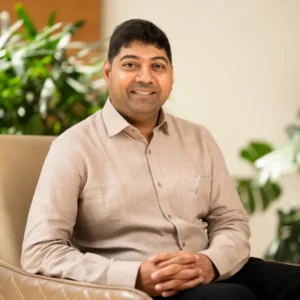
MBBS, DPM (Psychiatry),Abhasa Rehab and Wellness
Senior Consultant Psychiatrist
Dr. Naveen Kumar V
MBBS, DPM (Psychiatry),Abhasa Rehab and Wellness
Senior Consultant Psychiatrist
- Last Medically Reviewed: 2026-09-04
- Published: 2026-09-04
- Last Updated: 2026-09-04
- 17 min read



WHAT IS CANNABIS ADDICTION?
Cannabis use disorder is a diagnosable medical condition in which a person continues using cannabis despite it causing harm to their health, relationships or daily functioning. It is recognised in the DSM-5-TR, the manual clinicians use to make a diagnosis, and it has treatments with real evidence behind them.
That last part matters. A great deal of what is written about ganja online treats it either as harmless or as a disaster. Neither helps a family decide what to do on a Tuesday evening.
Key Takeaways
- Cannabis use disorder is a recognised medical condition, not a lack of willpower and it is treatable.
- Talking therapies carry the strongest evidence. No medicine is currently approved to treat cannabis dependence itself.
- Withdrawal from cannabis is real and uncomfortable, but rarely dangerous in the way alcohol withdrawal can be.
- Young adults are more vulnerable than older adults, both to dependence and to mental health effects.
- Residential treatment at Abhasa Rehab and Wellness runs 30 to 90 days, and costs between ₹2,00,000 and ₹6,00,000 a month depending on programme and room.
This page explains what the condition is, what recovery actually involves, and how to judge one treatment option against another. If you would rather talk it through than read on, a confidential assessment call is available any time. There is no cost and no obligation.
Ready to take the first step?
Contact Abhasa’s team directly. Call +91-73736-44444 or WhatsApp us at.
What Is Cannabis Use Disorder?
Cannabis use disorder is diagnosed when someone shows at least two of eleven specific signs within a twelve-month period.
Those signs fall into four groups: losing control over use, harm to work or relationships, using in risky situations, and physical changes such as tolerance or withdrawal.
Two or three signs means mild. Six or more means severe. Those criteria come from the DSM-5-TR, summarised by the National Institutes of Health in its StatPearls clinical reference. The ICD-11, which Indian hospitals also use, describes the same condition in slightly different words.
DIRECT ANSWER
Cannabis use disorder is diagnosed when a person shows at least two of eleven signs within twelve months. Two or three signs means mild, six or more means severe.
The number of criteria is less important than what it captures. The question is not how much someone smokes. It is whether cannabis has started making decisions that the person used to make.
Two beliefs delay treatment more than any others. The first is that cannabis is natural and therefore harmless. The second is that it is not addictive. Both contain a grain of truth, which is exactly what makes them so hard to argue with at the dinner table.
Cannabis is less physically dangerous than several other substances. And most people who try it do not become dependent. But some do, and telling them their experience is impossible does not help them.
If you want the wider picture of how the plant itself has changed, the potency of cannabis covers it in more detail.
Is There a Cannabis Addiction Treatment Centre in Pune?
Yes. Pune has government psychiatric services, private hospitals with de-addiction departments, and a number of private residential centres. If you are looking for a cannabis rehabilitation centre in Pune, you will find options within the city, and some of them are good.
DIRECT ANSWER
Yes. Pune has government psychiatric services and private de-addiction centres. Abhasa itself does not have a centre in Pune – its facilities are near Coimbatore and at Karjat in Maharashtra.
We should be straightforward with you about our own position. Abhasa Rehab and Wellness does not have a centre in Pune. Our residential facilities are in Thondamuthur and Sowripalayam near Coimbatore, in Tamil Nadu, and at Karjat in Maharashtra.
We are telling you this early because you will find it out eventually, and it is better said plainly. Families searching for rehab in Pune often end up travelling anyway, and there are clinical reasons for that which we explain further down. But the decision belongs to you, and it should be made with accurate information.
If a local option suits your family better, that is a reasonable choice. You may find our pages on rehabilitation support for Pune residents and de-addiction care for Pune families useful as you compare.
How Common Is Cannabis Use in India and Maharashtra?
Cannabis is the most widely used controlled substance in the world. The United Nations Office on Drugs and Crime reported 228 million users globally in 2022[5], in its World Drug Report published in June 2024.
The same report carries a figure worth sitting with. Of roughly 64 million people worldwide living with a drug use disorder[5], only about one in eleven receives any treatment[5].
That is a global number, not an Indian one, and we are not going to pretend otherwise. But it describes a gap that anyone working in this field in India will recognise.
Cannabis use in India was last counted at approximately 29 million users aged 18 to 75[4], alongside around 2 million aged between 10 and 17[4], in figures reported to Parliament in March 2023.
Those figures were cited in the Indian Journal of Psychiatry in 2025. They are a few years old now, and we quote them as what was reported then rather than as today’s count.
Pune’s own situation is shaped less by numbers than by circumstance. It is a young city. A very large student population, a substantial IT workforce, hostel living, and a social culture in which cannabis use is often treated as unremarkable.
None of that causes dependence on its own. It does mean that a young adult in Pune who is developing a problem will find it easy to hide, and easy to explain away.
228M
People used cannabis worldwide in 2022. Of roughly 64 million living with a drug use disorder, only about 1 in 11 receives treatment.
29M
Users aged 18–75 in India, plus around 2 million aged 10–17 — as reported to Parliament, March 2023.
What Are the Signs of Cannabis Addiction in Young Adults?
- Warning Signs
- Why It's Harder to Stop
- Withdrawal
Include red eyes, a persistent cough, changes in appetite, and disturbed sleep. These are the easiest to attribute to something else, and usually are.
Are more telling. Money that does not add up. A new set of friends, and a quiet dropping of the old ones. Plans made and not kept. Time that used to go to cricket, or music, or studying, going somewhere unaccounted for.
Show up in the things that used to be easy. Trouble holding attention through a lecture. Forgetting conversations. Marks slipping without any obvious reason.
A 2023 umbrella review in the BMJ, which pooled findings across many meta-analyses, documented measurable cognitive effects among regular users, and a longitudinal study in Cerebral Cortex found structural changes in the developing adolescent brain.
Are the ones that look like personality. Motivation draining away. A young person who used to argue about the future and now shrugs about it. And, tellingly, defending the use rather than hiding it – the shift from concealment to justification is often the point at which casual use has become something else.
“In Indian families, I see two sides of the same coin: incredibly strong involvement and support, but also intense stigma that delays treatment. The key is channeling that family strength in the right direction.” – Dr. Naveen Kumar, MBBS, DPM (Psychiatry), Abhasa Rehab and Wellness
If you have noticed several of these and are unsure what they add up to, that uncertainty is worth a conversation with a clinician rather than another month of watching.
Our team can talk it through with you confidentially. The connection between cannabis and mental health is explored further in marijuana and mental illness.
Why Cannabis Is Harder to Stop Than Families Expect
Here is the part that surprises most parents. The cannabis available today is not the cannabis of twenty years ago.
Cannabis potency has risen roughly three to five times over the past two decades, and higher potency raises the risk of developing cannabis use disorder in a dose-response pattern, according to the National Institutes of Health.
Stronger product, used more often, produces a different result than the same plant did a generation earlier. A father comparing his son’s use to his own college years is comparing two different substances.
Average THC potency has risen roughly three to five times over the past two decades.
– National Institutes of Health, Cannabis Use Disorder clinical reference
The brain adapts. Cannabis acts on the endocannabinoid system, which is involved in regulating mood, appetite, sleep and stress. With heavy repeated use, that system adjusts to the constant presence of the drug.
The comprehensive review in Nature Reviews Disease Primers describes how these changes underpin dependence. What the person then experiences is not pleasure but normality – using to feel level rather than to feel high.
This is why “he can stop whenever he wants” is usually an untested claim rather than a false one. Nobody has checked. And when a genuine attempt is made, what comes next is often unexpected.
“What many people don’t realize is that addiction literally changes the brain’s chemistry. That’s why willpower alone isn’t enough – the brain needs help to heal.”
– Dr. Naveen Kumar, MBBS, DPM (Psychiatry), Abhasa Rehab and Wellness
What Does Cannabis Withdrawal Actually Feel Like?
Cannabis withdrawal typically begins within twenty-four hours of stopping, peaks around the third day, and settles over about two weeks.
Common symptoms include irritability, anxiety, difficulty sleeping, loss of appetite, restlessness and low mood, usually alongside at least one physical symptom such as headache, tremor, sweating, or stomach pain.
That description comes from the NIH clinical reference, and a 2022 review in the journal Addiction covers how withdrawal is managed in practice.
DIRECT ANSWER
Withdrawal usually starts within 24 hours, peaks around day three and settles over about two weeks. It is uncomfortable rather than dangerous, but it is the most common reason a quit attempt fails.
Two things are worth saying clearly about it.
The first is reassuring. Cannabis withdrawal is rarely medically dangerous in the way that withdrawal from alcohol or from sleeping-pill medication can be. Those can cause seizures and require urgent medical supervision. Cannabis withdrawal is largely miserable rather than life-threatening.
The second is the reason people relapse. Miserable is enough. Someone three days into stopping, who has not slept properly, cannot eat and feels their skin crawling, is being handed a very simple solution to all of it. This is the single most common point at which a quit attempt fails, and it fails for reasons that have nothing to do with commitment.
This also changes entirely if other substances are involved. If alcohol, sleeping medication or opioids are in the picture alongside cannabis, stopping without medical supervision can be genuinely unsafe.
Please do not attempt it at home. A clinician needs to assess that first. Our pages on detoxification and what happens after detox explain how supervised stabilisation works.
When Cannabis Use Becomes a Mental Health Emergency
Most cannabis use does not lead to a psychiatric emergency. Some does, and families should know what it looks like.
Cannabis can trigger acute psychosis in some people a state involving paranoia, hearing or seeing things that are not there, and losing contact with reality. It can also cause severe panic states. In most cases these settle as the drug clears. In some, they do not.
Cannabis potency and psychosis risk were examined together in a large European multi-site study published in Lancet Psychiatry in 2019, which estimated that a meaningful proportion of first-episode psychosis cases across the sites studied might be prevented if high-potency cannabis were unavailable.
That study was conducted in Europe, and we cite it as European data rather than implying it describes India.
What is most relevant to a parent reading this is age. A 2024 study in Psychological Medicine found the association between cannabis use and psychotic disorder is concentrated in adolescence and young adulthood. The same use pattern does not carry the same risk at nineteen as it does at forty.
“In my clinical experience, more than half of patients with addiction are also dealing with an underlying mental health condition. Treating one without the other is like fixing half a problem.”
– Dr. Naveen Kumar, MBBS, DPM (Psychiatry), Abhasa Rehab and Wellness
If someone is expressing paranoid beliefs, appears to be responding to things nobody else can perceive, or talks about harming themselves, that needs attention the same day.
The crisis numbers are at the end of this page. Where a mental health condition sits alongside substance use, both need treating together; this is covered in dual diagnosis care.
Which Treatments for Cannabis Addiction Actually Work?
This is the section we would most like families to read carefully, because a great deal of what is advertised as cannabis treatment has no evidence behind it at all.
DIRECT ANSWER
Talking therapies carry the strongest evidence cognitive behavioural therapy, motivational enhancement therapy and contingency management. No medicine has consistent evidence for treating cannabis dependence itself.
The good news? These patterns respond well to treatment. Especially when that treatment happens in an environment where you can truly step away from the pressures driving your drinking.
The comprehensive review in Nature Reviews Disease Primers identifies three as first-line: cognitive behavioural therapy, which works on the thinking patterns and situations that drive use; motivational enhancement therapy, which works on ambivalence rather than arguing against it and contingency management, which provides structured incentives for verified abstinence.
A 2024 review in European Addiction Research found contingency management effective as an addition to treatment.
In practice, good treatment is not a single method but a sequence – assessment, stabilisation, structured therapy, then a plan for the year that follows.
A randomised controlled trial of multidimensional family therapy, published in 2018, found long-term benefits for adolescents with cannabis use disorder.
This matters in Indian families, where the family is usually already involved – the question is whether that involvement is structured or improvised.
Cannabis use disorder pharmacotherapy was assessed in a Cochrane systematic review published in 2025, which examined the medicines trialled for it and found none with consistent, strong evidence of benefit.
Cochrane reviews are the most rigorous form of evidence synthesis available.
That does not mean medication has no role. It means medication treats the things sitting alongside the dependence – the sleeplessness, the anxiety, the depression – rather than the dependence itself.
Any centre that offers you an injection or a course of tablets as the treatment for cannabis addiction is describing something the evidence does not support.
You can read more about the therapeutic approaches used in structured treatment in schools of therapy, family therapy in addiction recovery and group therapy.
Finding the Right Rehabilitation Centre in Pune: What to Check
The first real decision is not which centre. It is which level of care.
| Factor | Outpatient treatment | Residential treatment |
|---|---|---|
|
Factor
Supervision
|
Outpatient treatment
Scheduled sessions
|
Residential treatment
24 hours a day
|
|
Factor
Typical length
|
Outpatient treatment
3 to 12 months
|
Residential treatment
30 to 90 days
|
|
Factor
Best suited to
|
Outpatient treatment
Mild dependence, stable home, strong support
|
Residential treatment
Moderate to severe dependence, repeated relapse, unstable environment
|
|
Factor
Contact with triggers
|
Outpatient treatment
Daily
|
Residential treatment
Removed for the treatment period
|
|
Factor
Family involvement
|
Outpatient treatment
Continuous
|
Residential treatment
Structured visits and family sessions
|
|
Factor
Cost pattern
|
Outpatient treatment
Lower per month, longer overall
|
Residential treatment
Higher per month, shorter overall
|
A 2025 national cohort study in Social Psychiatry and Psychiatric Epidemiology compared residential and ambulatory treatment on readmission risk, and the broad pattern holds: residential care earns its place where dependence is more severe, where previous attempts have not held, or where the home environment is part of the problem.
Once you know the level of care, judge any centre – in Pune or anywhere else – on six things:
- Who actually treats your family member. Is there a qualified psychiatrist involved, and how often do they see each person?
- Is there a written treatment plan, specific to this person, that you can see?
- How many hours of actual therapy happen each week? Ask for the number.
- What happens after discharge? A centre without a real aftercare programme is offering you a pause, not a treatment.
- Are the fees transparent, with everything included stated up front?
- What is the family policy – visits, family sessions, how information is shared?
A centre that answers these clearly is telling you something. So is one that does not. Our admission guide sets out what to expect from a good process.
Why Distance From Pune Can Help Recovery
Most rehab centres in Pune keep a person within reach of everything that shaped the problem. This is not a criticism of those centres. It is a description of geography. Recovery from cannabis dependence is largely about breaking patterns, and patterns are held in place by places and people.
The friend who always has some. The route home that passes the right corner. The group chat. A young person in outpatient treatment in Pune goes back into all of it every evening.
Time away changes that arithmetic:
- Separation from the supply network. Not willpower against availability — simply removing the availability.
- Privacy. For many Pune families, this is the deciding factor. In a city where colleagues, neighbours and extended family overlap, treatment somewhere else means nobody has to know.
- Distance from the social group that treats use as normal, long enough for other habits to form.
- Travel time stops mattering. When a stay is one to three months, whether the journey took two hours or ten is irrelevant.
For families in Pune, Coimbatore is a direct flight of about one hour and thirty-five minutes, with two to three services daily and airport pickup arranged.
For those who prefer to stay within Maharashtra, our Karjat facility is closer to home. Families in and around Mumbai often ask about rehabilitation support in Mumbai for the same reason.
None of this makes travelling the right answer for everyone. It makes it worth considering rather than dismissing.
What Treatment Does Abhasa Offer for Pune Families?
Treatment at Abhasa Rehab and Wellness begins with a clinical assessment and moves through structured therapy into a planned period of aftercare.
Assessment
A psychiatric and psychological evaluation that establishes what is actually happening - severity of the cannabis use, whether other substances are involved, and whether there is an underlying mental health condition. Nothing sensible can be planned before this.
Medically supervised stabilisation.
Where withdrawal needs managing, it is managed with medical supervision rather than endurance. This matters most where more than one substance is involved. Our approach to supervised detoxification is described separately.
Individual therapy
Regular one-to-one sessions using the approaches with evidence behind them - cognitive behavioural therapy and motivational work - delivered by qualified clinical psychologists.
Group therapy
Structured groups, which do something individual sessions cannot: they put a person among others who recognise the pattern and will not accept the usual explanations for it.
Dual diagnosis care
Where depression, anxiety or another condition sits alongside the cannabis use, both are treated together by the same team rather than referred separately. This is set out in dual diagnosis rehab in India.
Family programme
Structured sessions that help families understand what is happening and learn the difference between supporting and enabling. More on this in family support.
Aftercare. A continuing plan for the months after discharge. Continuing care has a solid evidence base – a 2021 review in Alcohol Research – Current Reviews found it meaningfully improves long-term outcomes across substance use disorders.
Our clinical team includes psychiatrists, clinical psychologists with M.Phil qualifications, and resident medical officers providing round-the-clock cover. We are not going to quote you a success rate. Any centre that does is quoting a number it cannot substantiate.
If you would like to understand how treatment would be structured for your specific situation, an assessment call is the place to start.
How Can Pune Families Begin the Admission Process?
A first conversation with our team, confidential, with no commitment. Many families make this call before they have decided anything.
A clinician gathers the history – what is being used, for how long, what has been tried, what else is going on.
You are told what level of care is appropriate. Sometimes that recommendation is outpatient treatment closer to home, and we will say so.
Dates, what to bring, flight or road options from Pune, and pickup arrangements.
Medical review on arrival, settling in, and an introduction to the daily structure.
Your family is briefed on the treatment plan, how contact works, and what to expect over the coming weeks.
Three questions come up almost every time, so let us answer them here.
- Confidentiality. Clinical information is not shared outside the treating team without consent.
- Does the person have to agree first? Ideally yes, and in practice families often arrive at treatment through a long negotiation rather than a single decision. Our team can advise on how to have that conversation. What we will not do is help arrange anything coercive.
- What to bring. A simple list is provided before admission. Nothing complicated.
The family involvement guide covers the first visit in more detail.
Google Reviews:
Voices That Speak For Us
Hundreds have entrusted us with their journeys, shared openly,
in their own voice. Each review is a glimpse into real healing, in real words.
- I had a good experience with abhasa, Hasini mam and ante pas sir were very knowledgeable and helped me a lot
 Deepak Gotrala12/31/2025Abhsa wellness center is one of the best centres we came across in south india..we were happy with the treatment and postcare also..
We wish the doctors, psychologists and counsellers and other staff were excellent..
Cheers to the organisation .. renu depshikha4/09/2026I came to Abhasa to take help for my son's phychiatic issues. The team worked with my very closely and with a holistic approach was able to resolve his issues and help him lead a normal life. Thank you Abhasa team. Baskaran Gopalan7/08/2026 - I am really grateful to Abhasa, the people, environment and the process. A great place to rediscover inner peace. Gained insights about myself with the help of the wonderful counselor(Mr. Sebastian) and therapist(Mr. Antipas). Praveen Menon12/12/2025Very comfortable and safe enviroment for women. The treatment is very different from other rehabs and they have evidence based approach. Definitely helps. Dr Naveen is one of the best psychiatrist we have met. It is very rare to see a psychiatrist to spend hours with clients during consultation but he does that with ease, he also spends enough time with family to understand the family dynamics and beautifully explains. Highly recommended.….👍 Manisha Unni3/27/2026Good Morning Abhasa Team , Thank you for the support. We are really happy about all the services , courtesy with the client and keep it up. All the best for the team 🙏 Chef Ravi3/11/2026
- Excellent center for individuals requiring inpatient psychiatric, deaddiction and overall wellness and life skills.
One of my acquaintances changed her life here and grateful for this place. Indrani Bongu3/14/2026It was a wonderful experience I had in Abhasa. I like very much here the team co ordination and spirit. I had a great time here. elakiya elakiya2/27/2026One of the best place to get treated, the treating team docs, therapist and counselors are very supportive. They have a very organised structure which integrates lot of ways to bring them back on good track. Will recommend this for anyone who needs support. Trust process things will get better. Geethanjali Ravishankar7/03/2026


4.5
Begin a Confidential Conversation
Reach out for yourself or someone you care about. There’s no obligation, and the conversation stays private.
Confidential admissions line
For WhatsApp
Response within 24 hours
Send a Confidential Enquiry
You’ll hear back within 24 hours
Frequently Asked Questions About Cannabis Rehab in Pune
Yes – Pune has government psychiatric services and several private de-addiction centres. Abhasa’s own residential facilities are in Coimbatore and at Karjat in Maharashtra, so families choosing us do travel.
Residential treatment is typically thirty to ninety days, with the length depending on severity and on whether other conditions are present. Aftercare then continues for months afterwards.
Cost depends on the level of care, the length of stay and the type of accommodation. We would rather discuss it honestly against your situation than publish a figure that turns out not to apply. Ask on the assessment call, and ask what is included.
Often, yes. Mild dependence with a stable home and good support can respond well to outpatient therapy. Admission becomes the better option where dependence is more severe, where previous attempts have not held, or where home is part of the problem.
Yes. Clinical information stays within the treating team. For many families, treatment outside their own city is itself part of the privacy they are looking for.
It helps enormously, but ambivalence is normal rather than disqualifying motivational approaches exist precisely because most people arrive unsure. Very few people begin treatment fully convinced.
Aftercare. Research on relapse, including a large national epidemiological study, points to younger age of onset, co-occurring psychiatric conditions and the absence of continued treatment as the main predictors of relapse. The months after discharge are where recovery is won or lost.
It depends on severity and on the home environment. Where the local surroundings are closely tied to the use, distance helps. Where support at home is strong and dependence is mild, local outpatient care may serve better.
Women’s treatment questions are addressed separately in women’s rehabilitation support for Pune families.
Taking the Next Step
If you have read this far, you have probably already decided that something needs to change. The next step is smaller than it looks: one conversation with a clinician who can tell you what you are actually dealing with.
You do not need to have made a decision before you call. Most families have not.
Continue Your Learning
References
[1] Cannabis Use Disorder. StatPearls, National Center for Biotechnology Information, 2025. https://www.ncbi.nlm.nih.gov/books/NBK538131/
[2] Hasin DS et al. DSM-5 criteria for substance use disorders: recommendations and rationale. American Journal of Psychiatry, 2013. https://pubmed.ncbi.nlm.nih.gov/23903334/
[3] Concordance between the diagnostic guidelines for alcohol and cannabis use disorders in the draft ICD-11 and other classification systems. Addiction, 2019. https://pubmed.ncbi.nlm.nih.gov/30370636/
[4] Sahasrabuddhe A, Purohit N. Beyond regulation: Reimagining India’s narcotic drugs and psychotropic substances policy. Indian Journal of Psychiatry, 2025. https://pubmed.ncbi.nlm.nih.gov/40443815/
[5] World Drug Report 2024. United Nations Office on Drugs and Crime, June 2024. https://www.unodc.org/unodc/en/press/releases/2024/June/unodc-world-drug-report-2024_-harms-of-world-drug-problem-continue-to-mount-amid-expansions-in-drug-use-and-markets.html
[6] Clinical management of cannabis withdrawal. Addiction, 2022. https://pubmed.ncbi.nlm.nih.gov/34791767/
[7] Di Forti M et al. The contribution of cannabis use to variation in the incidence of psychotic disorder across Europe. Lancet Psychiatry, 2019. https://pubmed.ncbi.nlm.nih.gov/30902669/
[8] Age-dependent association of cannabis use with risk of psychotic disorder. Psychological Medicine, 2024. https://pubmed.ncbi.nlm.nih.gov/38775165/
[9] Balancing risks and benefits of cannabis use. BMJ, 2023. https://pubmed.ncbi.nlm.nih.gov/37648266/
[10] Adverse Effects of Cannabis on Adolescent Brain Development: A Longitudinal Study. Cerebral Cortex, 2017. https://pubmed.ncbi.nlm.nih.gov/26912785/
[11] Cannabis use and cannabis use disorder. Nature Reviews Disease Primers, 2021. https://pubmed.ncbi.nlm.nih.gov/33627670/
[12] Contingency Management for Cannabis Use Disorder Treatment. European Addiction Research, 2024. https://pubmed.ncbi.nlm.nih.gov/39374591/
[13] Pharmacotherapies for cannabis use disorder. Cochrane Database of Systematic Reviews, 2025. https://pubmed.ncbi.nlm.nih.gov/41025421/
[14] Probability and predictors of cannabis use disorders relapse: results of NESARC. Drug and Alcohol Dependence, 2013. https://pubmed.ncbi.nlm.nih.gov/23415849/
[15] McKay JR. Impact of Continuing Care on Recovery From Substance Use Disorder. Alcohol Research: Current Reviews, 2021. https://pubmed.ncbi.nlm.nih.gov/33500871/
[16] Effect of residential versus ambulatory treatment for substance use disorders on readmission risk. Social Psychiatry and Psychiatric Epidemiology, 2025. https://pubmed.ncbi.nlm.nih.gov/40029406/
[17] Multidimensional family therapy in adolescents with a cannabis use disorder: long-term effects on delinquency. Child and Adolescent Psychiatry and Mental Health, 2018. https://pubmed.ncbi.nlm.nih.gov/30140308/
Based on evidence from the National Institutes of Health, Cochrane, UNODC and peer-reviewed psychiatric literature.

- Medically Reviewed by
- Senior Consultant Psychiatrist & Medical Director
- Abhasa Rehab and Wellness
Medical Disclaimer: This content is for informational purposes only and does not constitute medical advice, diagnosis, or treatment. Always consult qualified healthcare professionals for medical concerns. Individual outcomes vary based on multiple factors including treatment adherence and co-occurring conditions.
If you or someone you know is in immediate danger:
Emergency Helplines:
- Vandrevala Foundation: 1860-2662-345 (24/7 Mental Health Crisis)
- iCall: 9152987821 (Mon-Sat, 8 am-10 pm)
- NIMHANS Helpline: 080-46110007 (Psychiatric Emergency)
- National Mental Health Helpline (India): 1800-599-0019 (Toll-free)
Abhasa 24/7 Helpline: +91-73736-44444
Email: Info@abhasa.in
Emergency: For substance-use medical emergencies (severe withdrawal, overdose), go to the nearest hospital emergency department.