
Rehabilitation Centre in Bangalore: What Karnataka Families Discover
Searching for a rehabilitation centre in Bangalore? Whether you need addiction treatment, or mental health support, here’s what Karnataka families discover about finding the right care—and why distance might be your greatest ally in the journey to recovery.
Reviewed by Dr. Naveen Kumar, MBBS, DPM (Psychiatry), 15+ years experience
Are You Searching for the Right Rehabilitation Centre in Bangalore?
Have you been searching for a rehabilitation centre in Bangalore—one that actually understands what you’re going through? You’re not alone. Thousands of families across Karnataka find themselves in the same position every year, looking for a rehabilitation centre bangalore that offers real, lasting change.
And here’s the thing—finding the right treatment isn’t just about picking a name from a list.
According to national survey data, approximately 14.5% of Karnataka’s population struggles with alcohol use disorders, with cannabis and opioid issues affecting additional segments of the community.[1] In Bangalore specifically, IT professionals and startup founders face unique pressures that can accelerate substance dependence. The startup grind. The constant deadlines. The pressure to perform. Sound familiar?
Here’s what most families from Bangalore tell us: they tried local deaddiction centres in Bangalore first—searched for a deaddiction centre in Bangalore with good reviews. Some helped for a while. But the triggers were everywhere. The drinking buddies. The dealers. The stress of Bangalore’s tech culture. And relapses kept happening.
So what does meaningful recovery actually look like for someone from Bangalore?
Experience premium care.
Understanding Addiction: What the Research Tells Us
The World Health Organization defines addiction as a chronic, relapsing disorder characterised by compulsive substance seeking and use despite harmful consequences.[2] It’s classified under ICD-10 as a mental and behavioural disorder—not a moral failing. This distinction matters.
Here’s the thing—your brain physically changes with prolonged substance use. The neural pathways that govern decision-making, impulse control, and reward systems become rewired.[3] This is why neurofeedback-based approaches to addiction treatment are becoming increasingly important. They target the actual brain mechanisms driving dependence.
Recovery isn’t simply about willpower. It requires structured intervention that addresses these biological changes alongside psychological and social factors.
The DSM-5 (Diagnostic and Statistical Manual of Mental Disorders) identifies substance use disorders across a spectrum—from mild to severe.[4] And treatment approaches must match this complexity. Cookie-cutter programmes don’t work. (Why? Because addiction doesn’t follow a cookie-cutter pattern.)
If you’re struggling with alcohol specifically, understanding the signs of alcohol dependence can help clarify whether professional treatment is needed.
Why Distance from Bangalore Might Be Your Greatest Asset
If you’re looking for addiction treatment in Bangalore, you’ve probably noticed the options. Government hospitals. Private clinics. Outpatient programmes. Each has its place.
But here’s what many Bangalore families discover—staying close to home often means staying close to triggers. The same social circles. The same stress patterns. The same environments that contributed to the problem in the first place.
Looking for drug rehab in Bangalore or alcohol rehab in Bangalore? Here’s what families discover: most local rehab centres in Bangalore keep patients near their familiar world—which sounds comforting but can actually hinder recovery. That colleague who “just wants to check in.” That friend who still drinks. That route home that passes the usual spot.
Therapeutic distance changes everything.
When you’re physically removed from your regular environment—even by just a short flight—something shifts. The mind has space to heal. There’s breathing room.
Nobody from your professional circle will accidentally encounter you. The anonymity itself becomes therapeutic.
Research confirms that environmental changes significantly impact treatment outcomes. Removing patients from triggering environments improves focus on recovery.[5]
What Makes Treatment Actually Work
Evidence-Based Therapies
Not all rehabilitation centres are created equal. The difference between effective treatment and expensive time-wasting? It often comes down to methodology.
Cognitive Behavioural Therapy (CBT) helps identify and restructure thought patterns that drive addictive behaviour. Research shows CBT significantly reduces relapse rates when delivered by trained therapists, with effect sizes ranging from moderate to large (d = 0.29-0.71).[6] Learn more about how CBT helps with anxiety and addiction.
Dialectical Behaviour Therapy (DBT) builds emotional regulation skills—particularly valuable for those whose substance use masks underlying anxiety or depression. Many high-functioning professionals fall into this category. If this sounds relevant, explore our overview of depression treatment.
Motivational Enhancement Therapy (MET) works with your natural motivation rather than against it. It’s not about being lectured—it’s about finding your own reasons for change. MET is among the best validated and most widely disseminated of all psychosocial interventions for alcohol use disorders.[7]
EMDR (Eye Movement Desensitisation and Reprocessing) addresses trauma that often underlies addiction. The connection between unprocessed trauma and substance use is well-documented in clinical literature.
Medical Supervision Matters
Detoxification—especially from alcohol or benzodiazepines—requires proper medical oversight. This isn’t optional. Alcohol withdrawal can be medically dangerous, with severe cases like delirium tremens having mortality rates up to 15% if untreated.[8]Withdrawal can be medically dangerous without appropriate monitoring and intervention.
At Abhasa, medical supervision happens round-the-clock. Dr. Malarvilzhi G, MBBS, MD, oversees residential medical care with 20 years of experience. This isn’t a formality. It’s a safety essential.
A Different Approach: What Abhasa Offers
Searching for the top rehabilitation centre in Bangalore? Here’s why Karnataka families consistently choose Abhasa—and why distance-based recovery delivers better outcomes.
Unlike typical local options, Abhasa takes a fundamentally different approach. Located in Coimbatore—just a 1-hour 5-minute flight from Bangalore—the centre offers what many IT professionals and their families specifically seek: privacy, evidence-based care, and therapeutic distance.
The Staff-to-Patient Ratio
Here’s something most centres won’t tell you: staffing ratios matter enormously. At Abhasa, it’s 2:1—meaning two staff members for every patient. This isn’t about luxury for its own sake. It’s about ensuring you actually receive the personalised attention that recovery demands.
Most centres operate with minimal staffing. That translates to group-heavy programming with little individual focus. Real recovery requires both.
The Setting
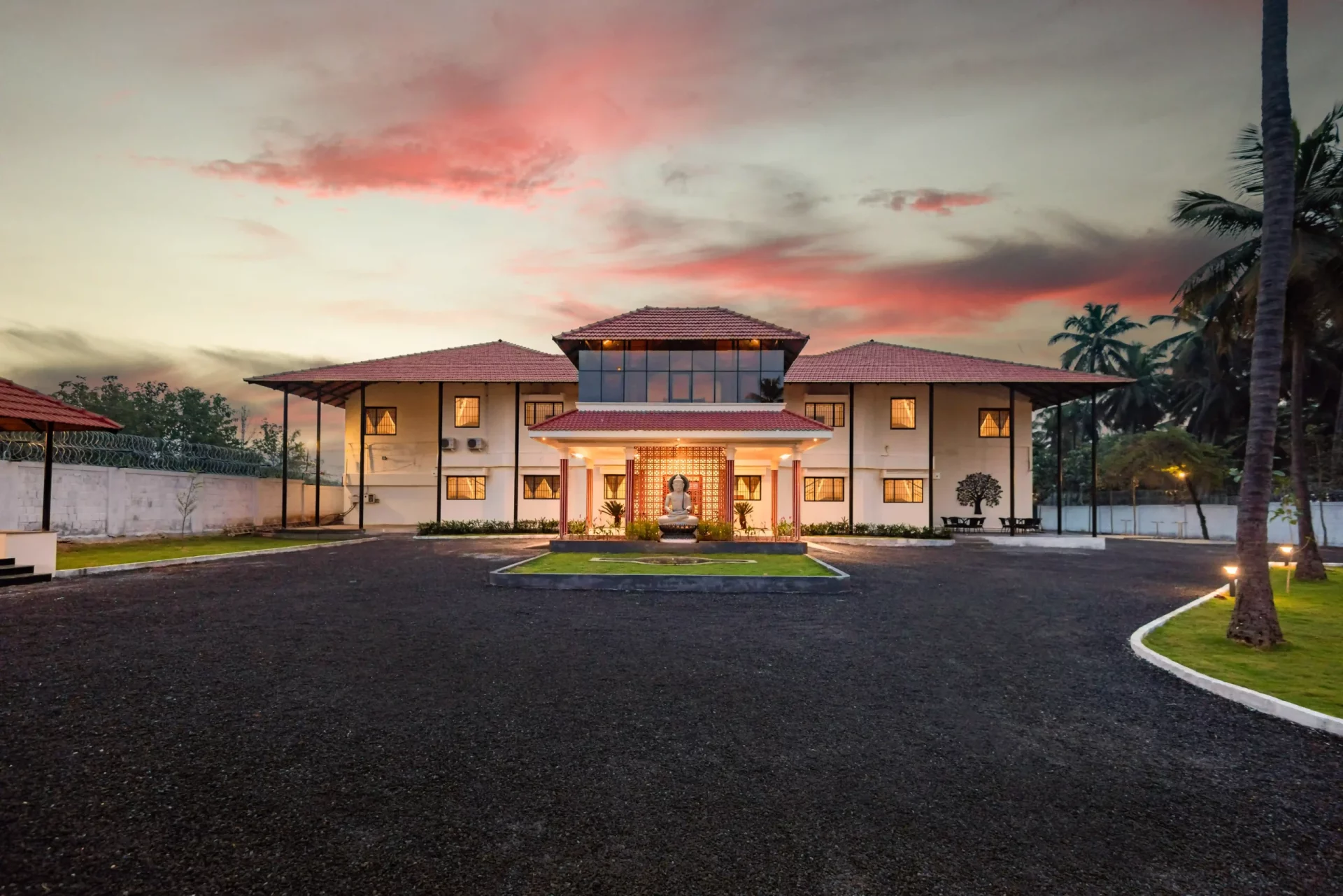
Unlike most luxury rehab centres in Bangalore area, our Coimbatore rehabilitation centre is surrounded by the Western Ghats. Think calm. Natural. The Thondamuthur facility feels more like a retreat than a hospital—and that’s intentional. The pollution-free environment, the greenery, the space to breathe. All of it supports healing.
For Bangalore residents accustomed to the city’s pace, this environment provides genuine respite. Not an escape from life, but a space to rebuild yourself before returning to it.
Wondering what life in a rehab centre actually looks like? It’s different from what most people imagine.
Treatment Philosophy: The 16 Principles
Abhasa was founded after Mrs. Gayathri Arvind witnessed firsthand the inadequacies of traditional Indian rehabilitation—centres that operated through punishment rather than compassion. The organisation’s 16 Principles guide everything from how staff interact with patients to how treatment plans are developed.
The core philosophy: dignity-centred care that addresses root causes rather than just suppressing symptoms. Families aren’t excluded—they’re considered essential partners in recovery.
Discover more about why Abhasa is considered among India’s best rehabilitation centres.
Every information, from the first conversation to the last day of your stay, is designed to safeguard dignity and motivate change.
Our Treatment Philosophy: Mental Health and Addiction Treatment
We believe recovery isn’t just about stopping a behaviour—it’s about building a life worth staying sober for. And that’s a crucial distinction.
Looking for a rehabilitation centre in Bangalore for alcoholics or a rehabilitation centre in Bangalore for drugs? If you’re searching for a rehabilitation centre in Bangalore for mental health, you’ve likely seen many options. But here’s what families discover: residential treatment away from daily stressors often works better than outpatient care alone.
At Abhasa, treatment includes:
Medical stabilization first. If detox is needed, our residential medical team provides 24/7 supervision. Dr. Malarvilzhi G (MBBS, MD, 20 years experience) ensures safety during withdrawal.
Psychological healing. Unlike typical psychiatric rehabilitation centres in Bangalore, we go beyond medication. Individual therapy, group sessions, family counselling. We address trauma, anxiety, depression—whatever underlies the addiction.
Holistic practices. Looking beyond typical holistic rehab centres in Bangalore? Our approach combines yoga, meditation, art therapy, and nature walks. Evidence supporting the efficacy of mindfulness-based interventions for substance use disorders is growing, with research suggesting that mindfulness training can produce significant therapeutic effects and help prevent relapse.[9] Our Coimbatore campus is designed for calm. It feels more like a retreat than a hospital—and that’s intentional.
Life skills for after. We don’t just treat addiction. We help people rebuild careers, relationships, and purpose. That’s what prevents relapse.
What Treatment Looks Like: A Typical Journey
Phase 1: Comprehensive Assessment
Before any treatment begins, Abhasa conducts thorough evaluation. This includes:
- Psychiatric assessment by qualified psychiatrists
- Medical examination and laboratory investigations
- Psychological testing and evaluation
- Family history and social assessment
- Nutritional status evaluation
This isn’t paperwork for its own sake. (You’d be surprised how many centres skip proper assessment.) Understanding the complete picture—biology, psychology, relationships, lifestyle—determines what treatment approach will actually work.
Phase 2: Medically-Supervised Detoxification
For those requiring detox, this phase proceeds under careful medical supervision. Duration varies based on substance type and severity. The goal: safe stabilisation that prepares the body and mind for therapeutic work. Learn more about what to expect during alcohol detox.
Phase 3: Intensive Therapeutic Intervention
This is where the actual change happens. Individual therapy sessions, group therapy, family counselling, and specialised modalities combine to address the underlying drivers of addiction.
For high-functioning professionals from Bangalore, this often means exploring:
- Work-life imbalance and its role in substance use
- Performance anxiety and coping mechanisms
- Relationship dynamics affected by professional stress
- Identity beyond career accomplishments
Understanding the stages of addiction helps contextualise where you or your loved one might be on the journey.
Phase 4: Aftercare Planning
Recovery doesn’t end at discharge. Abhasa develops structured aftercare plans that support long-term sobriety. This includes follow-up protocols, family support resources, and connections to local support networks—including those in Bangalore for returning residents.
Explore what life after rehab looks like and how to maintain recovery gains.
Why Bangalore Families Choose Abhasa for Rehabilitation
If you’ve been searching for a rehabilitation centre in bangalore or a drug rehabilitation centre bangalore families can trust, here’s what sets Abhasa apart from local options.
Distance Creates Safety in Rehabilitation
When your loved one is 365 kilometres from their triggers, rehabilitation becomes more effective. No chance encounters. No temptations. Just space to heal.
Privacy and Discretion
Looking for a private rehab centre in Bangalore that offers complete confidentiality? No one from your community will encounter your family member. Complete anonymity. This matters in Bangalore’s close-knit tech circles—especially for professionals and executives.
For IT professionals and executives, anonymity often matters as much as treatment quality. Being in Coimbatore rather than Bangalore means:
- No accidental encounters with colleagues or business contacts
- Complete discretion regarding treatment location
- Physical separation from professional network
- Freedom to focus entirely on recovery without social concerns
Environment for Rehabilitation and Healing
Searching for a luxury deaddiction centre in Bangalore area? Our Coimbatore rehabilitation centre offers premium facilities in Tamil Nadu’s hill country. Green spaces, quiet surroundings, fresh air. A world away from Bangalore’s intensity. The environment itself becomes part of rehabilitation therapy—premium facilities without the urban triggers.
Proven Results
Across 1,500+ patient families since 2019, we’ve seen a 75% success rate with continued aftercare. That’s not a number we share lightly—it’s backed by follow-up data.
Family Support Throughout
Addiction affects everyone. We include family counselling, regular updates, and education about how to support recovery when your loved one returns home. Research shows family involvement in treatment improves recovery outcomes and reduces relapse rates.[10]Learn more about our family support programme.
Luxury care is more than comfort.
Practical Considerations for Bangalore Families
Getting There
By Flight: IndiGo and Air India Express operate 4-6 daily direct flights from Kempegowda International Airport (BLR) to Coimbatore International Airport (CJB). Flight time: approximately 1 hour 5 minutes. Ticket prices typically range from INR 2,500 to INR 6,000.
By Train: The Shatabdi Express (12007/08) connects Bangalore to Coimbatore in 5 hours 30 minutes, running daily except Sunday. For those preferring rail travel, it’s a comfortable option.
By Road: The 365 km journey via NH48 takes approximately 6-7 hours. Road conditions are good, and the route through Mysore is scenic.
Airport Pickup: Abhasa arranges complimentary airport pickup for all admissions. The drive from Coimbatore airport to the Thondamuthur centre takes approximately 45 minutes.
Treatment Duration
Residential programmes typically range from 30 to 90 days, though duration is customised based on individual needs. Some patients choose extended stays for consolidation of recovery gains. The investment is significant—but so is the outcome when treatment is approached seriously.
Not sure if you need residential treatment? Take a moment to explore whether you need rehab.
Local Resources in Karnataka
If you’re exploring treatment options, here are some local resources to be aware of:
Helplines:
- National: 14446 (Nasha Mukt Bharat Helpline, 24/7)
- Karnataka: 080-46110007 (Karnataka Mental Health Helpline, 24/7)
Local government and private de addiction centres in Bangalore provide accessible services. But if you’re looking for complete privacy away from your local community, luxury residential treatment with low staff-to-patient ratios, escape from local triggers and environments, and personalised care that addresses root causes—then travelling to Abhasa’s Coimbatore facility may offer the focused healing environment your family needs.
Voices from Bangalore
“The startup grind in Bangalore pushed me to drink every night. I tried quitting twice on my own, failed both times. At Abhasa, the peaceful Coimbatore setting—just a short flight from Whitefield—helped me finally break the cycle. No office calls, no deadlines, just healing.”
— P.V., Tech Founder, Whitefield (2024)
Read more success stories from families who found their path to recovery.
Frequently Asked Questions from Bangalore Families
Is there an alcohol rehabilitation centre in Bangalore or deaddiction centre that offers the same level of care?
Bangalore has several government and private de addiction centres in Bangalore. Each offers different approaches. What sets Abhasa apart is the combination of therapeutic distance, 2:1 staffing ratio, evidence-based treatment, and luxury residential setting—elements that support focused recovery away from triggers.
How do families stay connected during treatment?
Abhasa facilitates regular family counselling sessions via video call. Families are considered partners in recovery, not visitors. Structured communication ensures connection while protecting the therapeutic environment.
What about work during treatment?
For residential treatment to be effective, complete focus is essential. That said, Abhasa helps coordinate with employers when needed—providing documentation and supporting smooth transition back to work after recovery.
Is the treatment suitable for IT professionals specifically?
Yes. Many of Abhasa’s patients come from Bangalore’s tech sector. The programme addresses professional stress, work-life imbalance, and the specific pressures of startup culture that often contribute to substance use. Alcohol use among corporate employees is more common than many realise.
How long does recovery typically take?
Recovery timelines vary based on substance type, duration of use, and individual factors. Most residential programmes run 30-90 days, with aftercare continuing beyond. Read more about how long addiction recovery takes.
Where can I find alcohol deaddiction treatment near Bangalore?
Many families searching for alcohol deaddiction centres in Bangalore or drug rehabilitation centre in Bangalore options discover that Abhasa’s Coimbatore facility—just over an hour by flight—offers advantages that local centres cannot match: complete anonymity, therapeutic distance from drinking triggers, and a 2:1 staff-to-patient ratio that ensures personalised attention.
Is there a best drug rehab in Bangalore for Karnataka families?
If you’re searching for the best drug rehab in Bangalore, here’s what we’ve found works best: distance-based residential care away from dealers and triggers. Bangalore’s tech hub environment creates high stress patterns that fuel substance use. Abhasa provides comprehensive drug rehabilitation including medical detox, therapy, and 6-12 months aftercare. Many families searching for drug rehab in Bangalore choose us specifically because the 1-hour flight creates meaningful separation for recovery.
Is there a best alcohol rehab in Bangalore?
Yes, we serve many Karnataka families dealing with alcohol dependency. If you’re looking for the best alcohol rehab in Bangalore, our residential programme addresses the physical and psychological aspects of alcohol addiction. Distance from Bangalore’s pub culture, corporate drinking norms, and social triggers significantly improves recovery outcomes. Families searching for alcohol rehab in Bangalore often discover that leaving the city is the most effective choice.
Is there a psychiatric rehabilitation centre in Bangalore for mental health?
Absolutely. Many people searching for a psychiatric rehabilitation centre in Bangalore or the top mental health rehab in Bangalore find us through referrals. We specialize in dual diagnosis—treating mental health conditions like depression, anxiety, bipolar disorder, and schizophrenia alongside addiction. Co-occurring mental health disorders are common among individuals with substance use disorders.[11] Our psychiatric team, led by Dr. Naveen Kumar (15+ years experience), provides medication management, therapy, and holistic support. The calm environment of our Coimbatore facility is especially beneficial for psychiatric recovery.
Is there a holistic rehab centre in Bangalore?
Looking for a holistic rehab centre that serves Bangalore? Our approach at Abhasa goes beyond clinical treatment. We combine evidence-based therapy (CBT, DBT, trauma-informed care) with yoga, meditation, art therapy, nature walks, and nutritional support. This holistic model addresses mind, body, and spirit—something many urban-based centres struggle to provide. Our campus environment naturally supports holistic healing.
Is there an affordable rehab centre in Bangalore? What are the costs?
Searching for an affordable rehab centre in Bangalore? We understand cost is a concern. While we’re a premium facility, we offer different programme tiers to accommodate various budgets. When you factor in relapse rates at cheaper local centres versus our 75% success rate with aftercare, Abhasa often provides better value long-term. We provide transparent pricing after assessment—no hidden costs. Many families find that investing in effective treatment once is more affordable than repeated local attempts.
How do I find a rehabilitation centre near me in Bangalore?
If you’re searching for a rehabilitation centre near me in Bangalore, you’ll find several local options. However, many families discover that “near” isn’t always “better” for addiction recovery. Proximity to triggers, drinking buddies, and familiar stress patterns can undermine treatment. That’s why families from Bangalore increasingly choose Abhasa in Coimbatore—close enough for family visits (1-hour flight), far enough for meaningful therapeutic distance. The separation itself becomes a tool for healing.
What is the best alcohol rehabilitation centre in Bangalore for families?
When searching for the best alcohol rehabilitation centre in bangalore, families consistently prioritise three factors: medical safety during detox, evidence-based therapy, and protection from relapse triggers. Abhasa addresses all three. Our medical team supervises alcohol withdrawal round-the-clock (critical given the dangers of delirium tremens). Our therapists use proven approaches like CBT and MET. And our Coimbatore location removes your loved one from Bangalore’s pub culture and corporate drinking norms. If you’re looking for rehabilitation centre for alcohol in bangalore, consider whether distance-based treatment might offer better long-term outcomes.
Your privacy, comfort, and care remain our highest priorities
Taking the First Step
Looking for a rehabilitation centre in Bangalore? Here’s what families discover: the right treatment isn’t always the closest one. Sometimes, the distance itself becomes part of the healing.
Recovery is possible. Research shows that most people who seek help for addiction eventually achieve long-term recovery.[12] Lasting change happens when treatment addresses the whole person—not just the addiction. And the right environment makes all the difference.
Ready to explore your options? A confidential conversation can help clarify whether Abhasa is the right fit for your situation.
- Phone/WhatsApp: +91-73736-44444
- Email:info@abhasa.in
- Website:https://www.abhasa.in
- Admission Information:View our admission guide
Related Reading
References
Research Citations (All Sources):
[1] Ministry of Social Justice and Empowerment, Government of India. (2019). Magnitude of Substance Use in India. AIIMS-NIMHANS National Survey. Retrieved from https://socialjustice.gov.in/writereaddata/UploadFile/Survey%20Report.pdf
[2] World Health Organization. (2023). Mental Health: Substance Abuse. Retrieved from https://www.who.int/health-topics/addiction
[3] National Institute on Drug Abuse. (2024). Drugs, Brains, and Behavior: The Science of Addiction. Retrieved from https://nida.nih.gov/publications/drugs-brains-behavior-science-addiction
[4] American Psychiatric Association. (2022). Diagnostic and Statistical Manual of Mental Disorders, Fifth Edition (DSM-5). Retrieved from https://psychiatry.org/psychiatrists/practice/dsm
[5] National Institute on Drug Abuse. (2018). Principles of Drug Addiction Treatment: A Research-Based Guide (Third Edition). Retrieved from https://nida.nih.gov/publications/principles-drug-addiction-treatment-research-based-guide-third-edition
[6] Magill M, Ray LA. (2009). Cognitive-Behavioral Treatment with Adult Alcohol and Illicit Drug Users: A Meta-Analysis of Randomized Controlled Trials. Journal of Studies on Alcohol and Drugs. Retrieved from https://www.ncbi.nlm.nih.gov/pmc/articles/PMC6856400/
[7] Macgowan MJ, Engle B. (2010). Evidence for optimism: Behavior therapies and motivational interviewing in adolescent substance abuse treatment. Child and Adolescent Psychiatric Clinics of North America. Retrieved from https://www.ncbi.nlm.nih.gov/pmc/articles/PMC3383096/
[8] Rahman A, Paul M. (2023). Delirium Tremens. StatPearls Publishing. Retrieved from https://www.ncbi.nlm.nih.gov/books/NBK482134/
[9] Li W, et al. (2017). Mindfulness meditation in the treatment of substance use disorders and preventing future relapse: neurocognitive mechanisms and clinical implications. Substance Abuse and Rehabilitation. Retrieved from https://www.ncbi.nlm.nih.gov/pmc/articles/PMC6247953/
[10] Rowe CL. (2012). Family therapy for drug abuse: Review and updates 2003-2010. Journal of Marital and Family Therapy. Retrieved from https://www.ncbi.nlm.nih.gov/pmc/articles/PMC3188398/
[11] National Institute on Drug Abuse. (2024). Part 1: The Connection Between Substance Use Disorders and Mental Illness. Retrieved from https://nida.nih.gov/publications/research-reports/common-comorbidities-substance-use-disorders/part-1-connection-between-substance-use-disorders-mental-illness
[12] Substance Abuse and Mental Health Services Administration. (2023). Recovery and Recovery Support. Retrieved from https://www.samhsa.gov/find-help/recovery
Developed by Abhasa Rehab and Wellness. Reviewed by Dr. Naveen Kumar, MBBS, DPM (Psychiatry). Clinical guidance by Ms. Meera K, M.Phil Clinical Psychology, Trauma Specialist. Based on evidence from WHO, NIMHANS, NIDA, and peer-reviewed research.
Medical Disclaimer
Emergency Resources
- Nasha Mukt Bharat Helpline: 14446 (24/7)
- Karnataka Mental Health: 080-46110007
- iCALL: 9152987821
Rehabilitation Centre for Bangalore Residents | Abhasa Rehab and Wellness
Expert Review: Developed by Abhasa Rehab and Wellness, reviewed by Dr. Naveen Kumar, MBBS, DPM (Psychiatry). Based on evidence from AIIMS-NIMHANS, WHO guidelines, and clinical research.
Disclaimer: This content is for informational purposes only and should not replace professional medical advice. If you or someone you know is experiencing a mental health crisis, please contact emergency services or a mental health helpline immediately. Individual results vary based on many factors including treatment adherence, co-occurring conditions, and family support.
Last Updated: January 2026
Abhasa Rehab and Wellness has served 1,500+ patient families since 2019 with a 75% success rate for those who complete treatment and engage in aftercare. We hold a Google rating of 4.9/5 across patient families. Recognized with the Indian Health Professionals Award 2023.