


Maybe your family member has just come home from a hospital stay. Maybe the medicines stopped, the voices came back, and home feels tense again.
Or maybe you have been worried for months and don't know where to start. If you have been searching for "schizophrenia treatment near me" in Coimbatore or anywhere in Tamil Nadu, this page is for you.
It explains the kinds of care available, what happens at our Coimbatore centres, and how to take the first step without pressure.
Understanding the condition
What Is Schizophrenia, in Simple Words?
Schizophrenia is a mental health condition that changes how a person thinks, feels and understands what is real. It often starts in late teens or early adulthood.
With steady treatment and support, many people live settled, meaningful lives, and the World Health Organization reports that at least one in three people fully recover[1].
Doctors usually describe the symptoms in three groups:
- Positive symptoms add experiences that others don't share. A person may hear voices or hold fixed beliefs that are not true, such as being watched.
- Negative symptoms take things away. Motivation drops, the face shows less feeling, and the person may pull back from family and friends.
- Thinking symptoms make it harder to focus, plan or remember.
None of this is anyone's fault. It is an illness of the brain, and it responds to care.
72%treatment gap: the share of current schizophrenia spectrum disorder cases in India that were not receiving treatment[2].
In India, schizophrenia spectrum disorders affect about 1.4 in every 100 adults at some point in life, and about 72 in every 100 people with current symptoms were not getting treatment, according to the National Mental Health Survey analysis[2].
So if your family member has not had steady care yet, you are far from alone.
For a fuller explanation of symptoms and causes, see our schizophrenia guide and our page on schizophrenia symptoms.
Choosing the right support
What Level of Care Does Your Family Member Need?
The right level of care for schizophrenia depends on safety and daily functioning. A person who is stable and coping may need only regular psychiatric follow-up. A person whose symptoms are returning, or who cannot manage daily life at home, often does better in a residential programme. Immediate danger always means emergency help first.
This table is a rough guide. A psychiatrist will confirm what fits your family member.
- SituationUsual next stepWhy
- Early concerns, or stable on medicine and coping at home.Online consultation and regular follow-up.It keeps an eye on progress without changing daily life.
- Symptoms are returning, or the person is struggling at home.Residential programme.It gives a calm, structured setting with daily support.
- First episode, or a medicine change that needs close watching.Residential programme with medical monitoring.Side effects and response can be checked every day.
- Immediate danger to self or others.Call 112 or go to the nearest hospital emergency department now.Safety comes before everything else.
Residential centre or hospital?
Families often ask how a residential centre is different from a mental hospital in Coimbatore. A schizophrenia treatment hospital in Coimbatore usually gives short, acute care during a crisis, on a hospital ward.
A residential rehabilitation centre is for the weeks and months after that, or before things reach a crisis. The days have a steady rhythm: medicine review, therapy, rehabilitation work, rest and family time. Many people move from one to the other, and a good plan explains how.
Clinical guidelines also recommend that people with schizophrenia are offered family intervention and psychological therapy alongside medicine, not medicine alone[3].
Not sure which row fits? Talk to our team and we will help you think it through.
Signs It May Be Time for More Support
Relapse rarely arrives out of nowhere. Families often notice small changes first, before symptoms are obvious:
- Sleeping much less, or at odd hours.
- Pulling away from family, friends or work.
- Becoming suspicious, tense or easily upset.
- Skipping medicines or saying they are no longer needed.
- Using alcohol or cannabis more often.
What the research says
Relapse after a first episode of psychosis was about four times as likely when people stopped their medicine, three times as likely with ongoing substance use, and about twice as likely when carers made critical comments, according to a meta-analysis of 29 studies[12].
None of these is a reason for blame. Each one is something a treatment plan can work on.
If you are seeing two or more of these signs, it is a good time to call. An early conversation usually means a gentler change of plan.
It also helps to write down what you notice, with dates, so the psychiatrist can see the pattern rather than a single bad day.
Treatment programmes
Treatment Programmes at Our Schizophrenia Treatment Centre in Coimbatore
Our schizophrenia treatment centre in Coimbatore is built for people who need more than a short clinic visit. Every programme starts with an assessment and is planned around the person. There is no fixed package.
Most schizophrenia programmes at Abhasa Rehab and Wellness run from 30 days to 6 months or longer. The team sets the length with the person and family, based on symptom severity, daily functioning, response to treatment and readiness to go home.
Inpatient Schizophrenia Treatment in Coimbatore
Inpatient care at Abhasa covers four things:
- A psychiatric assessment on admission. The psychiatrist reviews symptoms, history, current medicines and physical health.
- Medicine review and monitoring. Doses are adjusted carefully, and side effects are watched for every day.
- Physical health checks. Weight, sleep and general health are tracked, because some medicines affect them.
- A choice between tablets and long-acting injections. Injections given every few weeks can suit people who find daily tablets hard to keep up with. The psychiatrist decides this with the person and family.
What the research says
Antipsychotic medicines differ a great deal in their effects on weight, blood sugar and cholesterol, according to a network meta-analysis of 18 antipsychotics[13]. The same review advises choosing medicine for each person, with their preferences and their family's in mind. That is why regular physical health checks, including weight, are part of the stay, not an extra.
Continuing antipsychotic medicine after symptoms settle lowers the chance of relapse compared with stopping it, according to a large review of trials in The Lancet[4]. That is why stopping medicine is always planned with a doctor, never done suddenly. Our schizophrenia medication guide explains the options in more detail.

If you'd like to understand which programme might suit your family member, Speak to our admissions team today.
The patient journey
How Does Residential Treatment Work, Step by Step?
Residential schizophrenia treatment at Abhasa follows seven steps. It starts with a free consultation and an admission assessment. Then come settling in with a medicine review, a structured daily routine, rehabilitation and skills work, and family sessions. It ends with a written discharge plan and online follow-up. Each step moves at the person's own pace.
- Free consultation. Call or message us. The conversation is free and confidential, and there is no obligation to join.
- Admission assessment. A psychiatrist and the clinical team assess symptoms, medical history, medicines and daily functioning.
- Settling in and medicine review. The first days focus on rest, safety and a medicine plan that suits the person.
- A structured daily routine. Regular sleep, meals, therapy and activity help the person find a steady rhythm again.
- Rehabilitation and skills. Work on social skills, daily living and thinking skills begins, adjusted to the person's goals.
- Family sessions. Relatives join planned sessions to learn how to support recovery at home. Family visits are scheduled as part of treatment.
- Discharge plan and follow-up. Before going home, the team writes a plan covering medicine, follow-up and warning signs. Follow-up can continue online.
Nothing here is rushed. Some people move through the early steps in days, and others need weeks. Both are normal.
Rebuilding daily life
Schizophrenia Rehabilitation Centre in Coimbatore: Rebuilding Daily Life
Getting symptoms under control is one goal. Getting a life back is the other. As a schizophrenia rehabilitation centre in Coimbatore, Abhasa puts real time into the skills people need for everyday living.
Rehabilitation at Abhasa includes:
- Social skills. Practising conversations, asking for help and handling disagreements.
- Daily living skills. Routines for sleep, meals, money, medicines and self-care.
- Cognitive remediation. Short, regular exercises that train attention, memory and planning.
- Physical activity. Supervised exercise, walks and outdoor activity.
- Vocational planning. Thinking through study or work goals, step by step.
Why this approach works
Research supports this approach. Cognitive remediation produces moderate improvements in thinking skills for people with schizophrenia, according to a meta-analysis in the American Journal of Psychiatry[7].
Aerobic exercise improves cognitive functioning in people with schizophrenia, especially working memory and attention, according to a meta-analysis in Schizophrenia Bulletin[8]. Supported employment helps adults with severe mental illness find and keep paid work, according to a Cochrane review[9].
Small, steady gains matter here. Making tea for the group, finishing a book, joining a walk without being asked: progress often looks like this before it looks like anything bigger.
Clinical leadership
Who Leads Schizophrenia Care at Abhasa?
Schizophrenia care at Abhasa Rehab and Wellness is led by consulting psychiatrists, supported by clinical psychologists and nursing staff available around the clock. A psychiatrist assesses each person on admission and reviews the medicine plan throughout the stay, so families always know who is responsible for medical decisions.
Families looking for a schizophrenia psychiatrist in Coimbatore, a schizophrenia specialist in Coimbatore, or the best schizophrenia doctor in Coimbatore are really asking one question: who will look after my family member? Here is our answer.
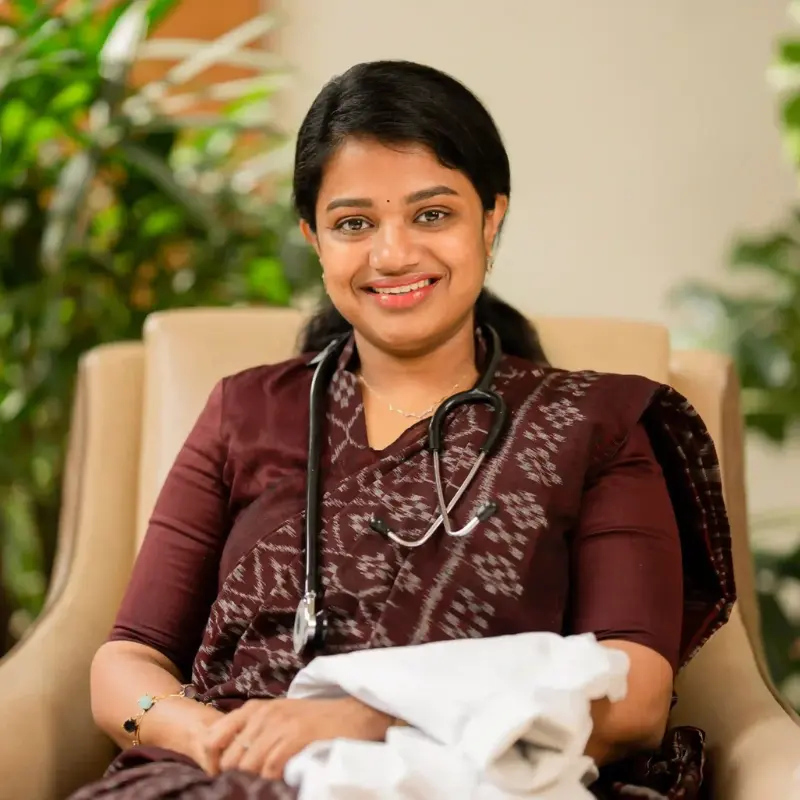
Dr. Shree Aarthi, MBBS, MD, DNB (Psychiatry), Consulting Psychiatrist, with 12 years of clinical experience.

Dr. Naveen Kumar, MBBS, DPM (Psychiatry), Consulting Psychiatrist, with more than 20 years of psychiatric experience.
Clinical psychologists with M.Phil training, who provide individual and group therapy. Therapy throughout the stay
Nursing and care staff, available 24 hours a day. On site at both centres Day-to-day care and safety
Searching for the best psychiatrist in Coimbatore usually means looking for someone experienced, available and clear.
We can't promise a title. We can promise named, qualified doctors, a clear plan, and a team that explains its decisions to you.
Want to speak with the clinical team about your family member? Contact us today.
Start from home
Online Consultation and Follow-Up from Anywhere in Tamil Nadu
Not every family can travel straight away, and that's fine. If you are looking for a schizophrenia clinic in Coimbatore but need to start from home, an online consultation is a good first step. The team listens, asks about what you are seeing, and suggests a level of care.
Our online consultation service includes:
- Psychiatric counselling, for questions about symptoms, medicines and next steps.
- Family counselling, for relatives trying to cope and support at the same time.
Families can also use these sessions after discharge, to keep the plan on track once their family member is home.
An online session cannot replace an in-person assessment when someone is very unwell. If the team is worried about safety, they will tell you plainly and advise an in-person assessment or emergency help straight away.
Ready to start from home? Book online consultation
Our centres
Our Facilities at Thondamuthur and Sowripalayam
Abhasa has two centres in Coimbatore. Both are residential, and both offer care for schizophrenia.
 Flagship centre | All genders
Thondamuthur
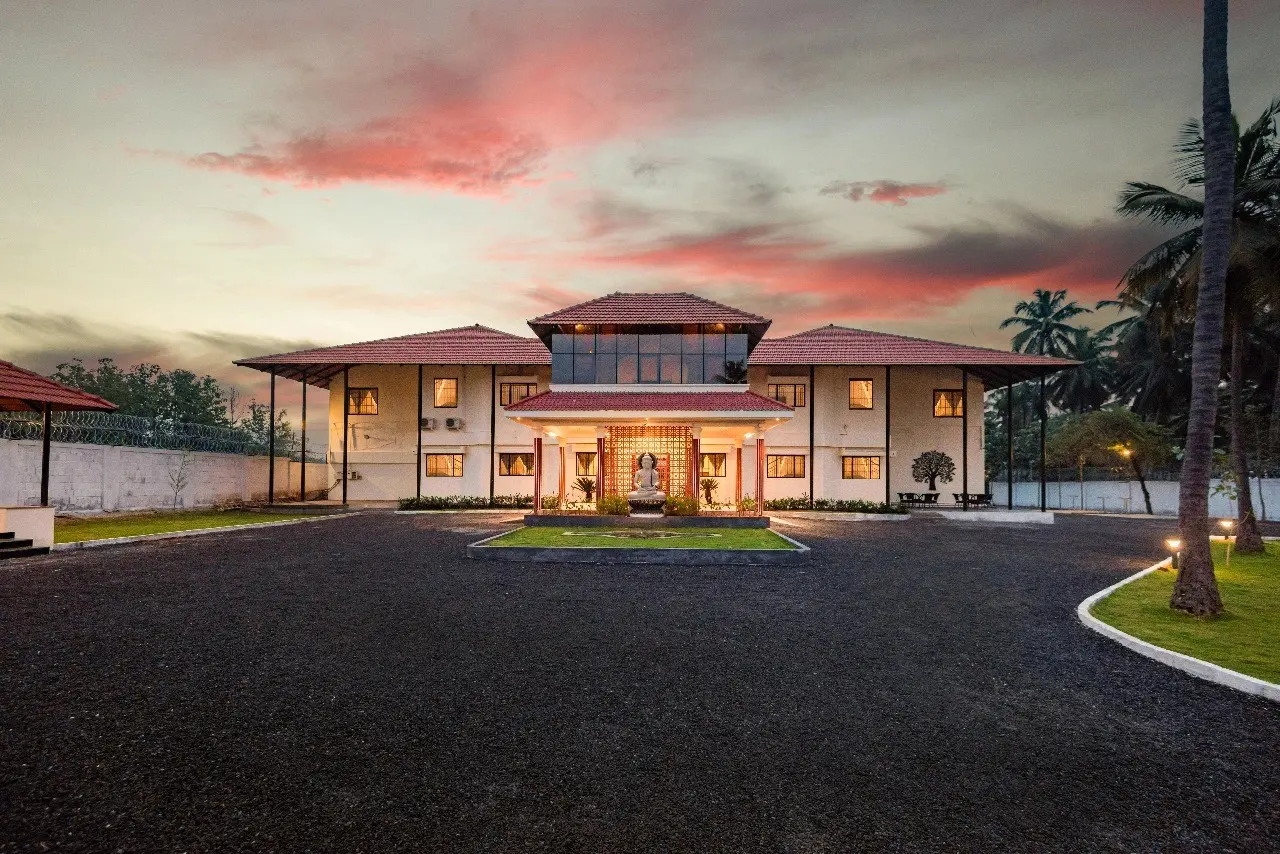
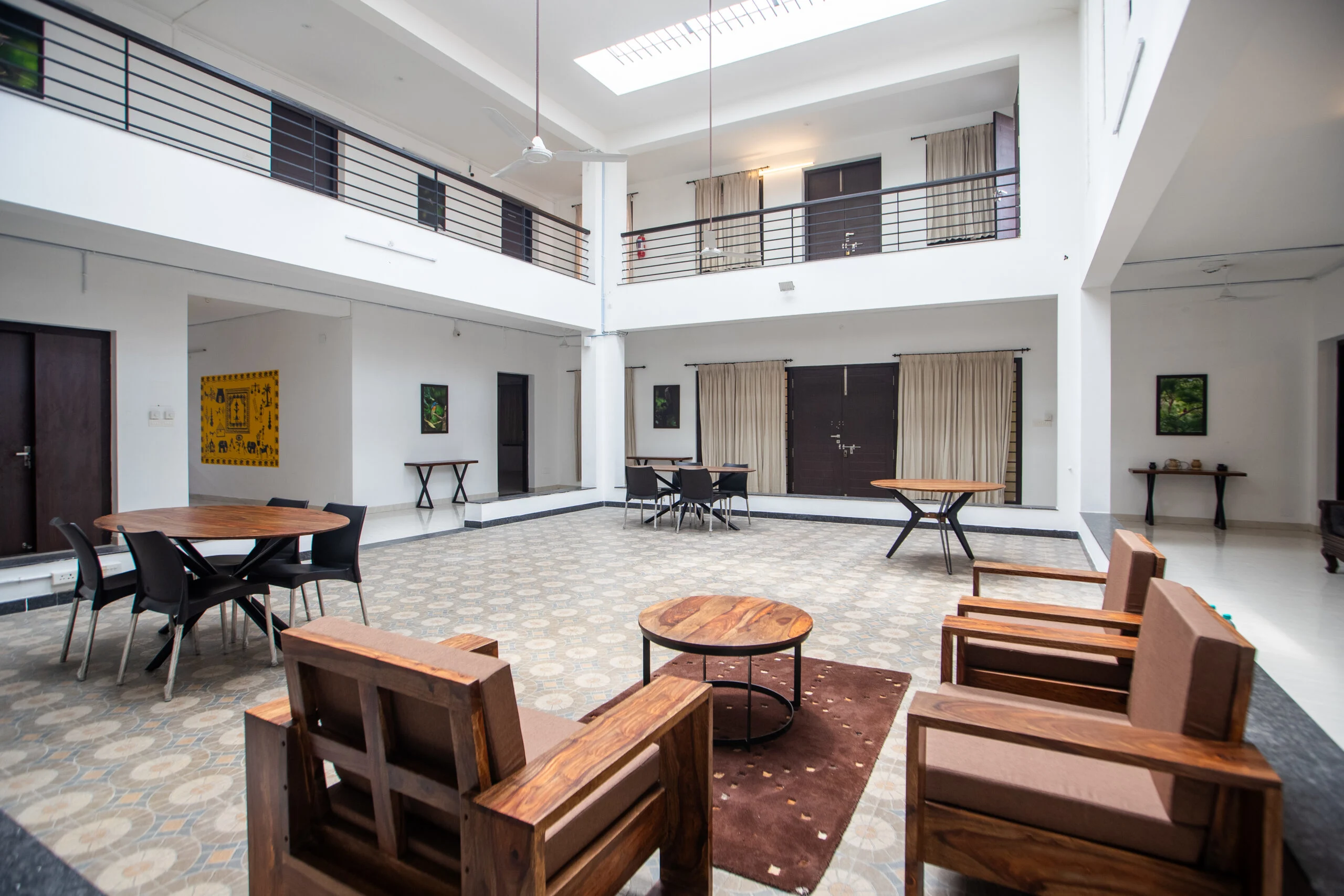
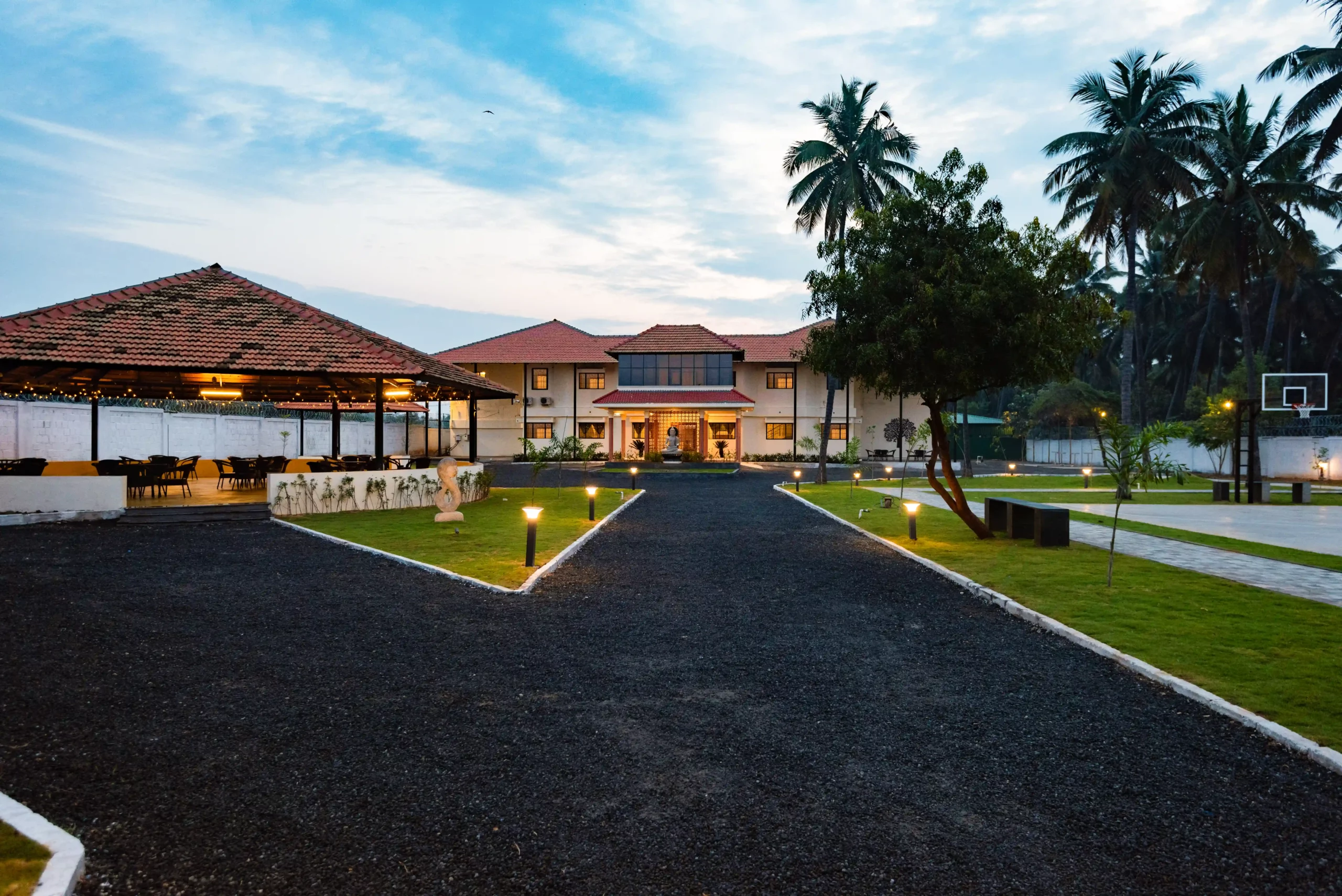
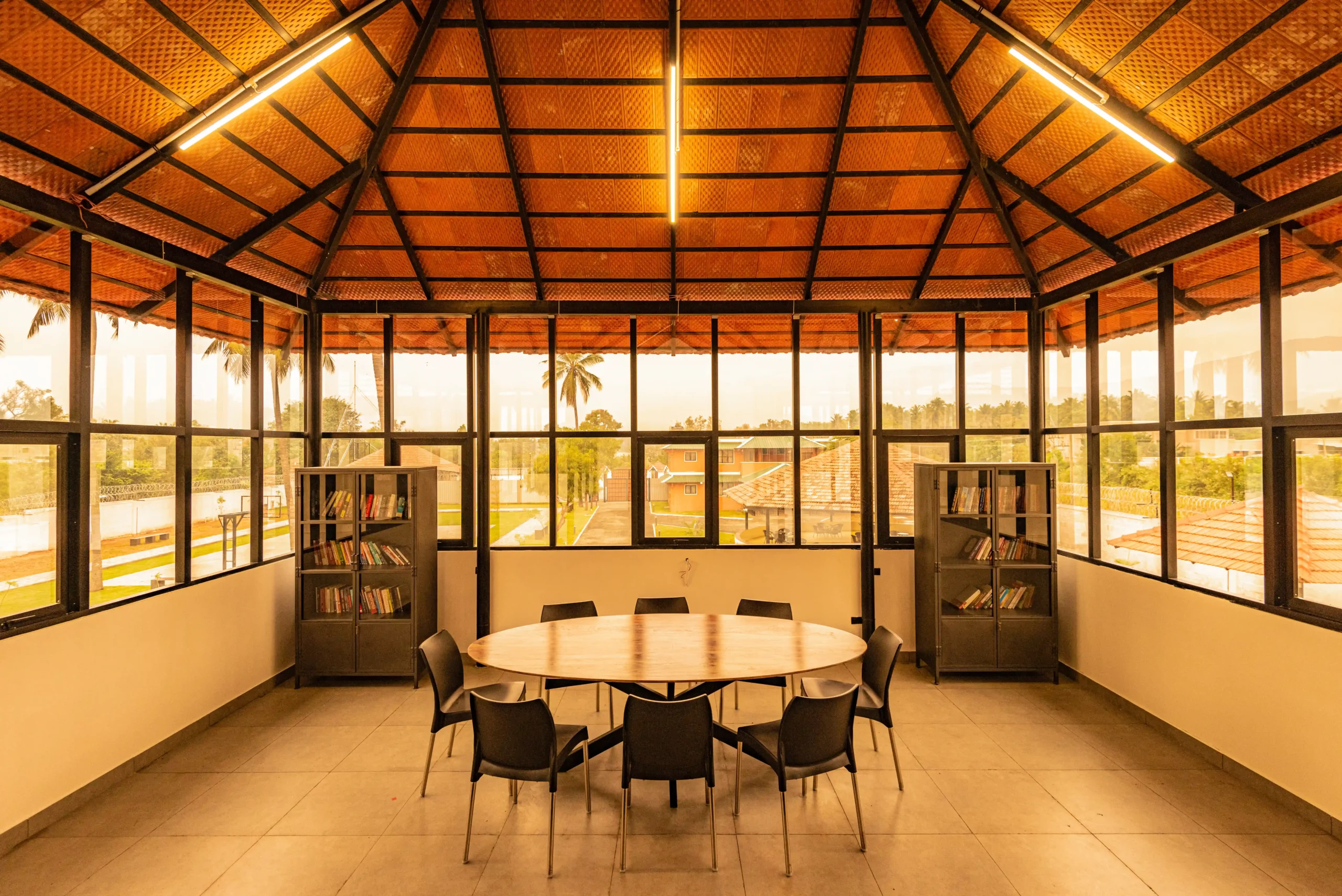
Thondamuthur is our flagship centre, open to all genders. It sits in a nature-enclosed campus near the Velliangiri Hills and the Western Ghats, about 30 minutes from Coimbatore city. Facilities include:
- A gym with modern equipment.
- Mindfulness and meditation spaces.
- A quiet library.
- Guided nature walks and trekking.
- Planned outings and festival celebrations.
- Care support 24 hours a day.
Women's centre | Female-only team
Sowripalayam
Sowripalayam is a women-only centre, with a female-only clinical and support team. Many families feel more at ease knowing their daughter, wife or mother is in a women-only setting, especially when trust and safety are already fragile.
- Women-only residential setting.
- Female-only clinical and support team.
- 24/7 medical staff.
- Hospital tie-ups for serious emergencies.
Abhasa Rehab and Wellness has two schizophrenia care centres in Coimbatore: Thondamuthur, a mixed-gender flagship centre near the Velliangiri Hills, and Sowripalayam, a women-only centre with a female-only team. Both centres have 24/7 medical staff and hospital tie-ups for serious emergencies.
You can learn more about our Thondamuthur centre and our women's centre in Coimbatore.
Why families choose us
Why Do Families Choose Abhasa for Schizophrenia Treatment in Coimbatore?
Families choose Abhasa for schizophrenia treatment in Coimbatore because the centres are close to home for Tamil Nadu families, visits are easy to plan, and a women-only centre is available. The programme allows enough time for rehabilitation, and family sessions are built in from the start rather than added at the end.
Close to home. For families in Coimbatore and across Tamil Nadu, the centres are within easy reach by road. Visits and family sessions are easier to keep up with.
Easy to reach from further away. Thondamuthur is about 45 minutes from Coimbatore Airport, and airport pickup is available for families travelling from other states.
A women-only option. Sowripalayam gives women a separate, female-led setting.
Time for rehabilitation. Programmes are long enough to work on daily skills, not just to settle symptoms.
Care for more than one condition. If your family member also uses alcohol or drugs, or has another mental health condition, the team plans for both. Read about our dual diagnosis care.
Many families begin their search by typing "best schizophrenia treatment in Coimbatore". The best option is the one that fits your family member's needs, and a consultation is the quickest way to find out what those are. For a wider view of our services in the city, see our rehabilitation centre in Coimbatore page.
When you're ready, speak to our admissions team.