Award-Winning Care
Cannabis Addiction Treatment in Coimbatore
- 1,500+ families have trusted us with their loved ones' recovery journey
MBBS, DPM (Psychiatry),Abhasa Rehab and Wellness
Clinical Lead with 20 years of experience in addiction psychiatry
Dr. Naveen Kumar V
MBBS, DPM (Psychiatry),Abhasa Rehab and Wellness
Clinical Lead with 20 years of experience in addiction psychiatry
- Last Medically Reviewed: 2026-09-05
- Published: 2026-09-05
- Last Updated:2026-09-05
- 16 min read


Centres in Coimbatore
Patients Treated
Google Rating
Success rate
Cannabis addiction treatment in Coimbatore is residential and outpatient clinical care for cannabis use disorder, delivered by psychiatrists, doctors and clinical psychologists.
It combines a medical assessment, supervised management of withdrawal, structured psychological therapy, and a plan for the months after discharge.
Coimbatore has become a common destination for this care because the city sits at the edge of the Western Ghats, which puts a real distance between a person and the routine that keeps their use going.
This page is about what that treatment actually looks like. Not how to choose a centre in the abstract – our guide to choosing a de-addiction centre covers that – but what happens, week by week, when someone comes here.
Key Takeaways
- Cannabis use disorder is a recognised clinical condition, and roughly one in ten people who use cannabis will develop it.
- Ganja, charas and hash oil differ mainly in potency, and higher potency tends to mean a harder withdrawal not a different treatment.
- Residential treatment at Abhasa Rehab and Wellness runs 30 to 90 days, and costs between ₹2,00,000 and ₹6,00,000 a month depending on programme and room.
- Cannabis use disorder has no approved medication anywhere. Psychological therapy is the treatment.
- Cannabis withdrawal is rarely dangerous on its own, but it is real, and it is the reason most attempts to stop at home fail in the first fortnight.
- Families are not bystanders in this. What they do in the first month changes the odds.
Why Families Across Tamil Nadu Come to Coimbatore for Cannabis Treatment
Families travel to Coimbatore because treatment works better when a person is away from the places, people and habits attached to their use.
The city offers residential facilities in the Western Ghats foothills – quiet, private, and a few hours from most of Tamil Nadu and Kerala – without the long journey that treatment elsewhere in India would require.
Cannabis is not a small or foreign problem here. The Ministry of Social Justice and Empowerment’s national survey, conducted with AIIMS-NIMHANS in 2019, found that about 2.8% of Indians aged 10 to 75 had used a cannabis product in the previous year – roughly 3.1 crore people.[1]
A hospital review of patients in treatment for alcohol and opioid dependence in India found cannabis use was common alongside them, which matters because mixed use changes what treatment has to handle.[15]
In Tamil Nadu, most families we speak to describe the same arc. It starts in a friend circle in college or at work. It becomes daily. Then it becomes the thing that organises the day.
By the time anyone searches for help, the person is usually not enjoying it very much any more – they are just uncomfortable without it.
Distance helps with that. When someone stays at home, the supply is a phone call away and so is every friend who uses.
Coimbatore also means you are not sending your son or your daughter across the country. For families in Erode, Salem, Tiruppur, Madurai or across the border in Kerala, it is a drive, not an expedition. Visiting is possible. Family therapy sessions can actually happen in person, which is not a small thing.
If you would like to talk through whether residential care is the right level for your situation, our team takes calls on +91 73736 44444.
2.8%
Of Indians aged 10–75 used a cannabis product in the past year - roughly 3.1 crore people. Magnitude of Substance Use in India, Ministry of Social Justice and Empowerment / AIIMS-NIMHANS, 2019. [1]
Why distance helps
When they are in a residential programme thirty minutes outside the city, in the hills, that whole architecture falls away for a while. It gives the therapy something to work with.
What Cannabis Addiction Actually Is - In Plain Language
Cannabis addiction is when someone keeps using cannabis even though it is clearly causing harm, and finds they cannot cut down when they try. Doctors call it cannabis use disorder. It isn’t about how much a person smokes. It’s about how much control they have lost over it.
The clinical term is cannabis use disorder. It sits in the same diagnostic family as alcohol and opioid use disorders, and the criteria used to identify it line up closely across the two main international systems doctors use.[7]
What it looks like in ordinary life is simpler than the criteria suggest:
Using more, or for longer, than intended
Wanting to cut down and not managing it
Time and money going into it in a way that has become noticeable
Skipping things that used to matter work, college, family, sport
Needing more than before for the same effect
Feeling restless, irritable or unable to sleep without it
Not everyone who uses cannabis develops this. Cannabis use disorder affects roughly one in ten people who use cannabis – about 10% – and the risk rises among those who start young or use daily.[2] That’s the honest picture. Most people who try it don’t end up here. Some do, and they are not weak for it.
There is one more thing worth naming gently. Cannabis use is associated with psychiatric conditions including psychosis, anxiety and depression, although the direction of cause is not always clear.[5]
For a family, the practical upshot is this: if there is anxiety, low mood or unusual thinking alongside the use, it needs treating too. Our dual diagnosis programme exists for exactly that overlap.
For the full clinical picture – criteria, severity levels, how doctors assess it – our cannabis page goes deeper than this one needs to.
Ganja, Charas, Hash Oil, Edibles: Does the Form Change the Treatment?
The form changes the strength, not the treatment. Charas and hash oil contain far more THC than herbal ganja, so dependence tends to build faster and withdrawal tends to be harder. The therapy that follows is the same. What changes is how closely the first two weeks need to be supervised.
Why potency matters more now
This matters more than it used to. THC concentration in herbal cannabis rose by roughly 0.29% each year between 1970 and 2017, while cannabidiol did not keep pace.[4] The cannabis available now is not the cannabis of a generation ago, which is part of why parents and children often talk past each other about it.
| Form | Common names | Relative THC | What it means for treatment |
|---|---|---|---|
|
Form
Herbal cannabis
|
Common names
Ganja, weed, grass
|
Relative THC
Lowest of the four
|
What it means for treatment
Dependence usually builds over months to years. Withdrawal is uncomfortable but generally manageable with supervision.
|
|
Form
Resin
|
Common names
Charas, hash
|
Relative THC
Several times higher than herbal
|
What it means for treatment
Faster tolerance. Withdrawal often sharper, particularly sleep disturbance and irritability.
|
|
Form
Concentrates
|
Common names
Hash oil, wax, dabs
|
Relative THC
Highest by a wide margin
|
What it means for treatment
Heavy daily use can produce marked tolerance quickly. Closer medical monitoring in the first fortnight.
|
|
Form
Edibles
|
Common names
Bhang, laddoo, brownies
|
Relative THC
Variable and hard to judge
|
What it means for treatment
Delayed onset leads to accidental heavy dosing. Acute distress and panic are more common reasons for presentation.
|
A few things are true across all of them. Cannabis potency raises psychosis risk, along with the risk of road traffic accidents and dependence – the three harms an umbrella review in the BMJ found the strongest evidence for.[6]
Regular high-potency cannabis use carries a similar risk profile in a European review of cannabinoid risks and benefits.[8] And the link between cannabis and psychosis is strongest in people who start young, which is why an adolescent presenting with heavy use is treated as a more urgent clinical situation, not a less serious one.[14]
None of this changes the therapy. Cognitive behavioural work does not become a different thing because the substance was charas rather than ganja. What changes is the first fortnight – how much medical cover is needed, how carefully sleep and mood are watched, whether a psychiatrist reviews daily or twice weekly.
If you are not sure what form is involved,that is common.
Assessment sorts it out. You can start one by calling +91-73736-44444.
What Does Cannabis Withdrawal Treatment Involve?
Cannabis withdrawal treatment means managing the symptoms that appear when a regular user stops – irritability, sleeplessness, loss of appetite, low mood, vivid dreams and strong cravings. It is done with medical monitoring, sleep and mood support, and daily clinical review, usually across the first two weeks.
For a long time, cannabis withdrawal was treated as something that did not really exist. It does. A clinical review in Addiction sets out the syndrome, its timing and its management, and notes that withdrawal is a common reason people relapse during early attempts to quit.[3]
Cannabis withdrawal symptoms typically begin within one to two days of stopping, peak during the first week, and settle across two to four weeks.
THE SINGLE MOST USEFUL THING A FAMILY CAN UNDERSTAND
Most attempts to stop at home fail in the first fortnight, and they fail because of withdrawal, not because of weak intent. Someone who has stopped three times and started again on day four has not proved they cannot recover. They have proved the fortnight is hard without support.
What supervised withdrawal management involves
- Medical assessment on arrival, including what else is being used. Mixed use with alcohol or opioids changes the risk picture entirely and needs a different plan.
- Symptom monitoring, particularly sleep, appetite, mood and agitation.
- Medication where it is clinically indicated - for sleep, anxiety, or a co-occurring psychiatric condition. This is important to say plainly: there is no approved medication for cannabis use disorder itself. Medication treats what sits alongside it.
- 24-hour nursing and medical cover, so that a bad night at 2 a.m. is met by a person rather than a locked door.
Thinking is also affected in this window. A systematic review in Biological Psychiatry found that cannabis has measurable acute effects on memory, attention and decision-making, with some effects persisting after use stops.[9]
Practically, that means someone in their first week may be foggy, forgetful and slow to take things in. It isn’t defiance. It lifts.
Our detoxification page explains the medical side in more detail, and our article on what happens after detox covers the part that matters more – the transition into therapy.
What Happens Week by Week in a Residential Programme?
QUICK ANSWER
A residential cannabis programme runs in four phases: assessment and settling in the first three days, withdrawal management across weeks one and two, the therapeutic core from weeks three to six, and consolidation and relapse-prevention rehearsal from weeks seven to twelve. Aftercare follows discharge.
A 90-day residential programme is the standard recommendation, with 30 and 60-day options depending on severity and circumstances. Here is the shape of it.
- Days 1–3
- Week 1–2
- Week 3–6
- Week 7–12
- Discharge and aftercare
Assessment and settling. Medical and psychiatric evaluation. History of use, including everything else being used. Physical health check. A treatment plan is written and shared. Sleep is usually the first thing that needs attention.
Withdrawal management. Daily medical review. Symptom monitoring. Light structure rather than heavy therapy – the mind is not yet in a state to do the harder work.
Family contact is usually limited early on, which is difficult and deliberate.
The therapeutic core. Individual psychotherapy several times a week. Group therapy daily. Cognitive restructuring, emotional regulation work, trigger mapping. Family therapy sessions begin. This is where most of the actual change happens.
Consolidation and rehearsal. Relapse prevention planning. Vocational and academic re-entry planning. Increasing responsibility and independence within the programme. Trial reintegration, so the first test of the plan happens while support is still close.
A written aftercare plan, follow-up appointments, and continued family sessions.
Digital tools now form a useful part of this: a review in Frontiers in Psychiatry describes technology-supported assessment and treatment for cannabis use disorder as a growing part of ongoing care.[10]
What runs alongside the clinical work
Alongside this runs the rest of the programme yoga and breathwork, meditation, art and music therapy, gym and outdoor activity, and structured recreation. These are not decoration. They rebuild the hours that cannabis used to fill, which is a real clinical problem in early recovery.
Our page on long-term residential treatment explains why length of stay tends to matter more than intensity alone.
What Does the Evidence Say About Recovery from Cannabis Addiction?
The evidence supports psychological treatment as the core of care for cannabis use disorder. Cognitive behavioural therapy, motivational approaches and contingency management all reduce use, and they work better in combination than alone.
Improvement is real and measurable, but relapse is common enough that aftercare is part of the treatment, not an optional extra.
A Cochrane review of psychosocial interventions for cannabis use disorder found that these therapies reduce the frequency of use and the severity of dependence, with the strongest effects from combined approaches delivered over more sessions rather than fewer.[12]
A broader meta-analysis of psychosocial interventions across substance use disorders in the American Journal of Psychiatry reached the same conclusion about the value of structured, evidence-based therapy over general counselling.[13]
No medication is approved anywhere for cannabis use disorder itself. Psychological therapy is the treatment.
That’s worth sitting with, because it sets a fair expectation. Anyone offering a tablet, an injection or a fortnight’s course that ends cannabis addiction is describing something the evidence does not support.
Digital and remote support adds to this rather than replacing it – a systematic review and meta-analysis in the Journal of Medical Internet Research found digital interventions produced modest reductions in cannabis use among young adults.[11] Useful in aftercare. Not a substitute for the first ninety days.
What the evidence does not promise
Here is the part that needs saying honestly. Recovery from cannabis use disorder is not usually a single clean line from using to not using. Relapse is common, particularly in the first year, and a return to use is information about what the plan is missing rather than proof that treatment failed.
Scope limitation, stated plainly: treatment outcomes vary with severity, duration of use, other substances involved, co-occurring mental health conditions, family support and how long a person stays engaged with aftercare.
No centre – including ours – can predict an individual outcome, and any that offers you a guarantee is not being straight with you.
Cannabis Addiction Treatment at Abhasa in Coimbatore
QUICK ANSWER
Abhasa Rehab and Wellness runs two centres in Coimbatore. Thondamuthur is the mixed-gender flagship, thirty minutes from the city and forty-five from the airport. Sowripalayam is women-exclusive, with female-only clinical and support staff.
Abhasa Rehab and Wellness runs two centres in Coimbatore.
Mixed-Gender Flagship
Thondamuthur
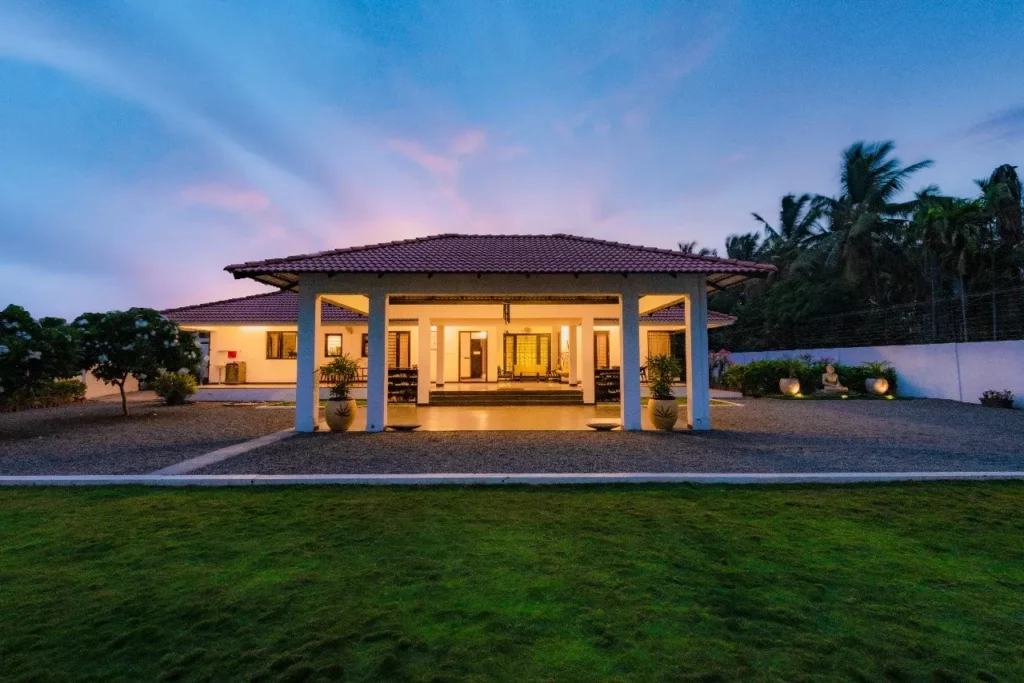
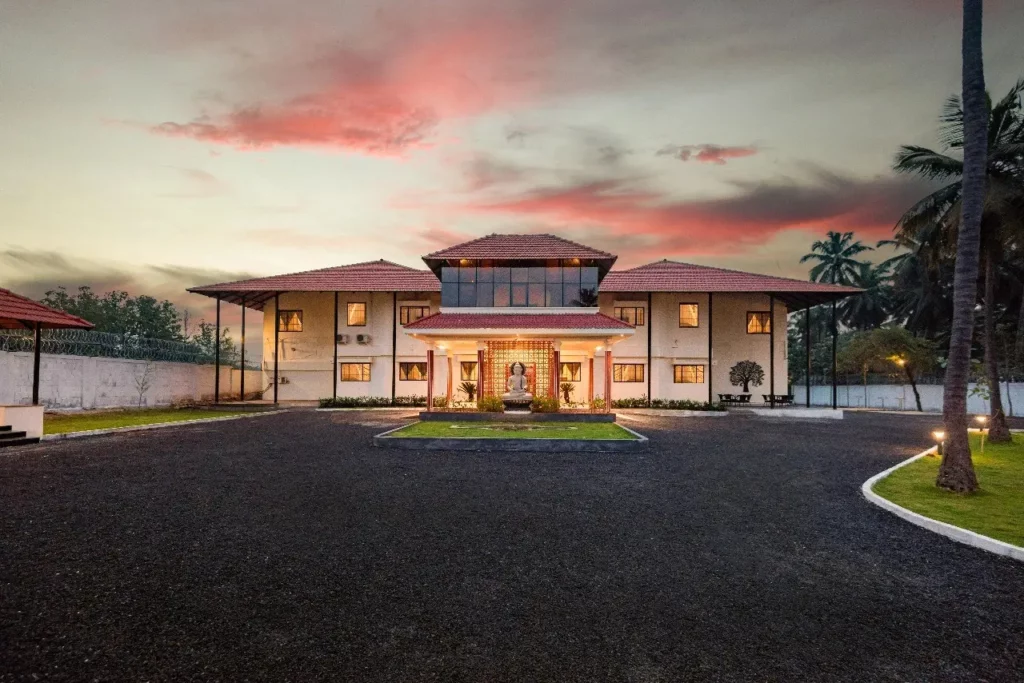
Thondamuthur is the flagship mixed-gender facility, opened in December 2022. It sits at SF No 898, 2 B, Kembanur Road, Thondamuthur, Tamil Nadu 641109 – about thirty minutes from Coimbatore city and forty-five minutes from the airport- enclosed by the Velliangiri Hills. It carries the widest range of therapies of the three Abhasa centres.
Women-exclusive care
Sowripalayam
Sowripalayam is India’s first women-exclusive luxury rehabilitation centre, at 500/3, 4, 5 Kannapiran Mill Road, Sowripalayam, Coimbatore, Tamil Nadu 641028. It opened in June 2019 and became women-exclusive in July 2023. Female-only clinical and support staff, gender-specific protocols, trauma-informed care. For a family where the person needing treatment is a woman and where privacy is the deciding factor this is usually the answer
What treatment includes at both centres
- Medical and psychiatric evaluation, and medical detoxification where needed
- 24/7 medical and nursing care
- Individual psychotherapy, group therapy and family therapy
- Medication management for co-occurring psychiatric and medical conditions
- QEEG brain mapping and neurofeedback, delivered under board-certified supervision
- rTMS where clinically indicated
- Yoga, pranayama, meditation and Yoga Nidra
- Art, music and movement therapy
- Gym, guided treks, horticultural therapy and outdoor activity
- Aftercare planning and initial follow-ups
Round-the-clock medical oversight is provided by resident medical staff, which matters most in the first fortnight when withdrawal is at its peak. For a wider view of what we offer locally, see our rehabilitation centre in Coimbatore and de-addiction centre in Coimbatore pages, or our nasha mukti kendra in Coimbatore page if that is the term you searched.
To ask what a programme would look like for your situation specifically,
Call +91-73736-44444 or write to Info@abhasa.in.
Getting There: Travel, Assessment and Admission
Admission begins with a phone conversation and a clinical assessment. Coimbatore International Airport is about forty-five minutes from the Thondamuthur centre, and airport pickup can be arranged. Most families complete the process within a few days of the first call.
A first conversation about what has been happening, what has been tried, and what everyone is worried about. No commitment at this stage.
Our admission guide sets out the paperwork, and our guide to a first visit to a rehabilitation centre in India covers what families should expect and ask.
How Families in Coimbatore and Tamil Nadu Can Help
QUICK ANSWER
Families help most by being clear and calm about the problem once rather than repeatedly, by removing the money that funds daily use without making it a punishment, by attending family therapy sessions, and by treating a relapse as information rather than betrayal.
Families almost always want to help. Very often, what they’re doing is making it harder – and nobody has told them, because nobody explained the difference.
What tends to help
- Being clear and calm about the problem, once, rather than raising it every day
- Removing the money that funds daily use, without turning it into punishment
- Turning up for family therapy sessions
- Treating a relapse as information rather than betrayal
- Getting support for yourself, because this is exhausting
What tends not to help
- Threats that are not followed through
- Covering for missed work or college
- Searching phones and rooms as the main strategy
- Making abstinence a condition of love
Where an adolescent is involved, family involvement is not optional – it is part of the clinical treatment, and reviews of substance use disorders in young people place family-based approaches at the centre of care.[16]
Our article on family therapy in addiction recovery explains how those sessions work.
You are allowed to ask for help before your relative agrees to any of this. Many families call us first, alone. +91 73736 44444.
Google Reviews:
Voices That Speak For Us
Hundreds have entrusted us with their journeys, shared openly,
in their own voice. Each review is a glimpse into real healing, in real words.
- My family and I had a wonderful experience with Abhasa. The care and comfort they provide is remarkable. Special mention to Mr.Antipas and Ms.Pretheka for their dedicated efforts
 Sanju Sara4/07/2026Abhsa wellness center is one of the best centres we came across in south india..we were happy with the treatment and postcare also..
We wish the doctors, psychologists and counsellers and other staff were excellent..
Cheers to the organisation .. renu depshikha4/09/2026Abhasa Rehab & Wellness provides excellent, compassionate care in a calm and supportive environment. The team is highly professional, dedicated, and genuinely caring. All departments work together smoothly, ensuring complete and holistic treatment. Every staff member is friendly, approachable, and supportive, making individuals feel safe, respected, and motivated throughout their recovery journey. Albin Shaji12/23/2025 - Once you come here it's gonna be hard for you to leave. But the team consisting of tephila ma'am, preethika ma'am, achudan, tabsheer were friendly supportive and helped me with a variety of things concerning my professional, mental and physical well being. I am grateful for them and the friends that I have made here. I hope to be never come back again. A Deepak WCFA3/09/2026Very comfortable and safe enviroment for women. The treatment is very different from other rehabs and they have evidence based approach. Definitely helps. Dr Naveen is one of the best psychiatrist we have met. It is very rare to see a psychiatrist to spend hours with clients during consultation but he does that with ease, he also spends enough time with family to understand the family dynamics and beautifully explains. Highly recommended.….👍 Manisha Unni3/27/2026Excellent doctors and team. All their team members are sincere, highly professional and dedicated. They diligently examine each client and support them during their stay. They provide report on daily basis and on discharge they provide detailed reports. The centre is fully secured and closely monitored. Truly a great place. Certainly, I will recommend to anyone who needs care and support. M Jambunathan4/30/2026
- Joined my father here. The staff and support members are very transparent to the family, with strict control over diet and electronic gadgets usage. Wishing a change in my father’s behaviour and habits. ENVY OP4/14/2026We had a good experience in the recovery process. Also we could see improvements in him. We are so grateful to Abasha Rehab for being more supportive in the whole recovery process with proper guidance and care… Jeeva Shri7/08/2026As a mental health professional, I appreciate the centre’s ethical, client-centered approach and strong clinical standards. The team provides compassionate, evidence-based care in a safe, non-judgmental environment. Highly recommended for quality mental health support. ANUSHA P RAJ4/30/2026


4.5
Begin a Confidential Conversation
Reach out for yourself or someone you care about. There’s no obligation, and the conversation stays private.
Confidential admissions line
For WhatsApp
Response within 24 hours
Send a Confidential Enquiry
You’ll hear back within 24 hours
Frequently Asked Questions
Residential treatment at Abhasa costs between ₹2,00,000 and ₹6,00,000 per month, depending on the programme, length of stay and whether the room is shared or a private suite. Abhasa is a private-pay facility and does not accept insurance.
Ninety days is the recommended programme, with 30 and 60-day options depending on severity. Extended care is available where it is needed. Shorter stays handle withdrawal; longer stays handle the reasons behind the use.
Often yes, with a time limit and a plan agreed in advance. Many people genuinely try and come unstuck in the first fortnight, when withdrawal peaks. If two or three honest attempts have already failed, that is the answer.
Treatment is confidential. Abhasa does not bill insurance, which means there is no insurance record of admission – a common reason families choose private-pay care.
Yes. The Sowripalayam centre in Coimbatore is women-exclusive, with female-only clinical and support staff and gender-specific treatment protocols.
Not during residential treatment. Vocational and academic re-entry planning is part of the later phase, and most people return to work or study after discharge with a plan in place.
Seeking medical treatment for substance use is a health matter. Clinical staff can talk you through your specific circumstances during the assessment call.
A written aftercare plan, follow-up appointments and continuing family sessions. This is the part that most determines whether the ninety days holds, and it is not optional.
Taking the Next Step
If you have read this far, you already know something is wrong. That was the hardest part, and it’s behind you.
The next step is smaller than it looks. It is a phone call, and a conversation, and an honest assessment of where things actually stand. Nobody is admitted on the strength of a phone call.
Nothing is decided today. So what does the first call actually involve? A conversation, nothing more.
Earlier is easier – not because anything terrible is about to happen, but because habits that are two years old come apart more readily than habits that are ten years old. That is the only urgency here.
Call +91 73736 44444, or reach us through our contact page. Someone will pick up.
Continue Learning
References
[1] Ambekar A, et al. Magnitude of Substance Use in India: National Survey. Ministry of Social Justice and Empowerment / AIIMS-NIMHANS, 2019. https://socialjustice.gov.in/writereaddata/UploadFile/Survey%20Report.pdf
[2] Connor JP, Stjepanović D, Le Foll B, Hoch E, Budney AJ, Hall WD. Cannabis use and cannabis use disorder. Nature Reviews Disease Primers, 2021. https://pubmed.ncbi.nlm.nih.gov/33627670/
[3] Connor JP, Stjepanović D, Budney AJ, Le Foll B, Hall WD. Clinical management of cannabis withdrawal. Addiction, 2022. https://pubmed.ncbi.nlm.nih.gov/34791767/
[4] Freeman TP, et al. Changes in delta-9-tetrahydrocannabinol (THC) and cannabidiol (CBD) concentrations in cannabis over time: systematic review and meta-analysis. Addiction, 2021. https://pubmed.ncbi.nlm.nih.gov/33160291/
[5] Cannabis and Mental Health: A Review. JAMA Internal Medicine, 2026. https://pubmed.ncbi.nlm.nih.gov/41801216/
[6] Solmi M, et al. Balancing risks and benefits of cannabis use: umbrella review of meta-analyses of randomised controlled trials and observational studies. BMJ, 2023. https://pubmed.ncbi.nlm.nih.gov/37648266/
[7] Hasin DS, et al. Diagnostic Concordance between DSM-5 and ICD-10 Cannabis Use Disorders. Addictive Behaviors, 2016. https://pubmed.ncbi.nlm.nih.gov/26922159/
[8] Cannabis, cannabinoids and health: a review of evidence on risks and medical benefits. European Archives of Psychiatry and Clinical Neuroscience, 2025. https://pubmed.ncbi.nlm.nih.gov/39299947/
[9] Broyd SJ, van Hell HH, Beale C, Yücel M, Solowij N. Acute and Chronic Effects of Cannabinoids on Human Cognition – A Systematic Review. Biological Psychiatry, 2016. https://pubmed.ncbi.nlm.nih.gov/26858214/
[10] Applications of technology in the assessment and treatment of cannabis use disorder. Frontiers in Psychiatry, 2022. https://pubmed.ncbi.nlm.nih.gov/36339845/
[11] Digital Interventions for Recreational Cannabis Use Among Young Adults: Systematic Review, Meta-Analysis, and Behavior Change Technique Analysis of Randomized Controlled Studies. Journal of Medical Internet Research, 2024. https://pubmed.ncbi.nlm.nih.gov/38630515/
[12] Gates PJ, Sabioni P, Copeland J, Le Foll B, Gowing L. Psychosocial interventions for cannabis use disorder. Cochrane Database of Systematic Reviews, 2016. https://pubmed.ncbi.nlm.nih.gov/27149547/
[13] Dutra L, Stathopoulou G, Basden SL, Leyro TM, Powers MB, Otto MW. A meta-analytic review of psychosocial interventions for substance use disorders. American Journal of Psychiatry, 2008. https://pubmed.ncbi.nlm.nih.gov/18198270/
[14] Cannabis and Psychosis. Child and Adolescent Psychiatric Clinics of North America, 2023. https://pubmed.ncbi.nlm.nih.gov/36410907/
[15] Assessment of Cannabis use among alcohol and opioid dependent subjects based on urinalysis – A retrospective review. Asian Journal of Psychiatry, 2020. https://pubmed.ncbi.nlm.nih.gov/32911458/
[16] Substance-Use Disorders in Children and Adolescents. Deutsches Arzteblatt International, 2022. https://pubmed.ncbi.nlm.nih.gov/35635442/
Based on evidence from NIAAA, SAMHSA, and peer-reviewed research.

- Medically Reviewed by
- Senior Consultant Psychiatrist & Medical Director
- Abhasa Rehab and Wellness
If you or someone you know is in immediate danger:
Emergency Helplines:
- Vandrevala Foundation: 1860-2662-345 (24/7 Mental Health Crisis)
- iCall: 9152987821 (Mon-Sat, 8 am-10 pm)
- NIMHANS Helpline: 080-46110007 (Psychiatric Emergency)
- National Mental Health Helpline (India): 1800-599-0019 (Toll-free)
Abhasa 24/7 Helpline: +91-73736-44444
Email: Info@abhasa.in
If experiencing a medical emergency, call 112 or visit your nearest emergency room.